Reading a Data Release: Beat, Miss, In-Line
Every data release answers one question: did the number land above, below, or in line with the consensus expectation? The three possible verdicts are beat, miss, and in-line, and the market reaction follows the size of the gap between expectation and arrival, never the raw number alone.

Think of the consensus as a bullseye drawn in advance, and the print as where the dart lands; the market scores the distance, never the throw. A 3.4 percent inflation reading means nothing in isolation. It means everything if the bullseye was drawn at 3.1.
An earlier lesson this level covered why expectations drive prices and how surprises move markets. The previous lesson showed you the economic calendar and where the consensus column comes from. This one is about scoring the result once the number is public.
Every Data Release Follows the Same Pattern
The mechanics never change. The announcement time is fixed and published well in advance. Through the week leading up to it, economists submit their forecasts and a consensus forms. At the scheduled second, the print lands. Within moments, the market compares the arrival to the expectation and prices the gap.
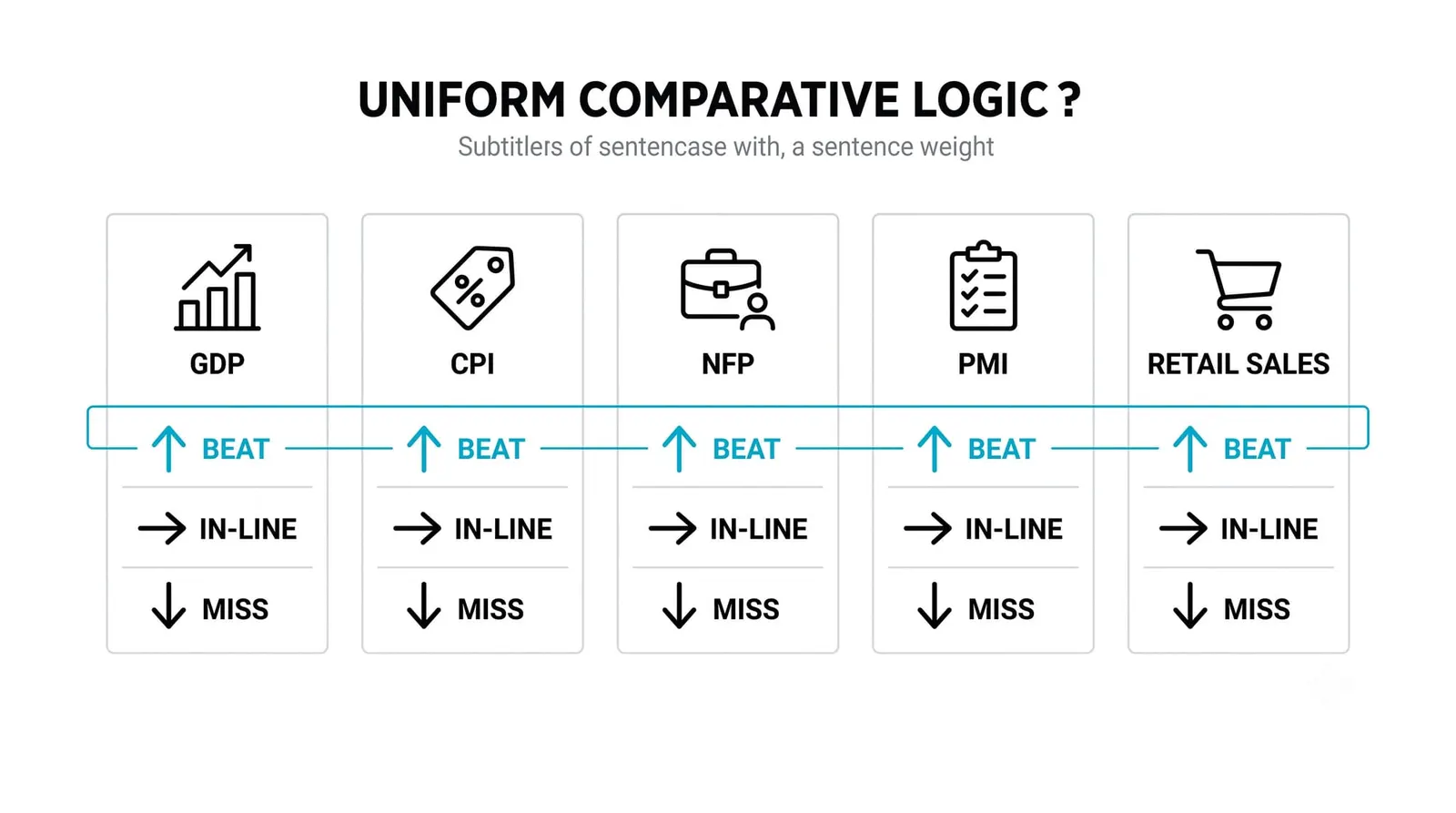
This pattern holds whether the report is jobs, inflation, or growth. A payrolls release and a GDP release look different on the page, but the scoring process is identical. Expectation exists first. Reality arrives second. The spread between them is the trade.
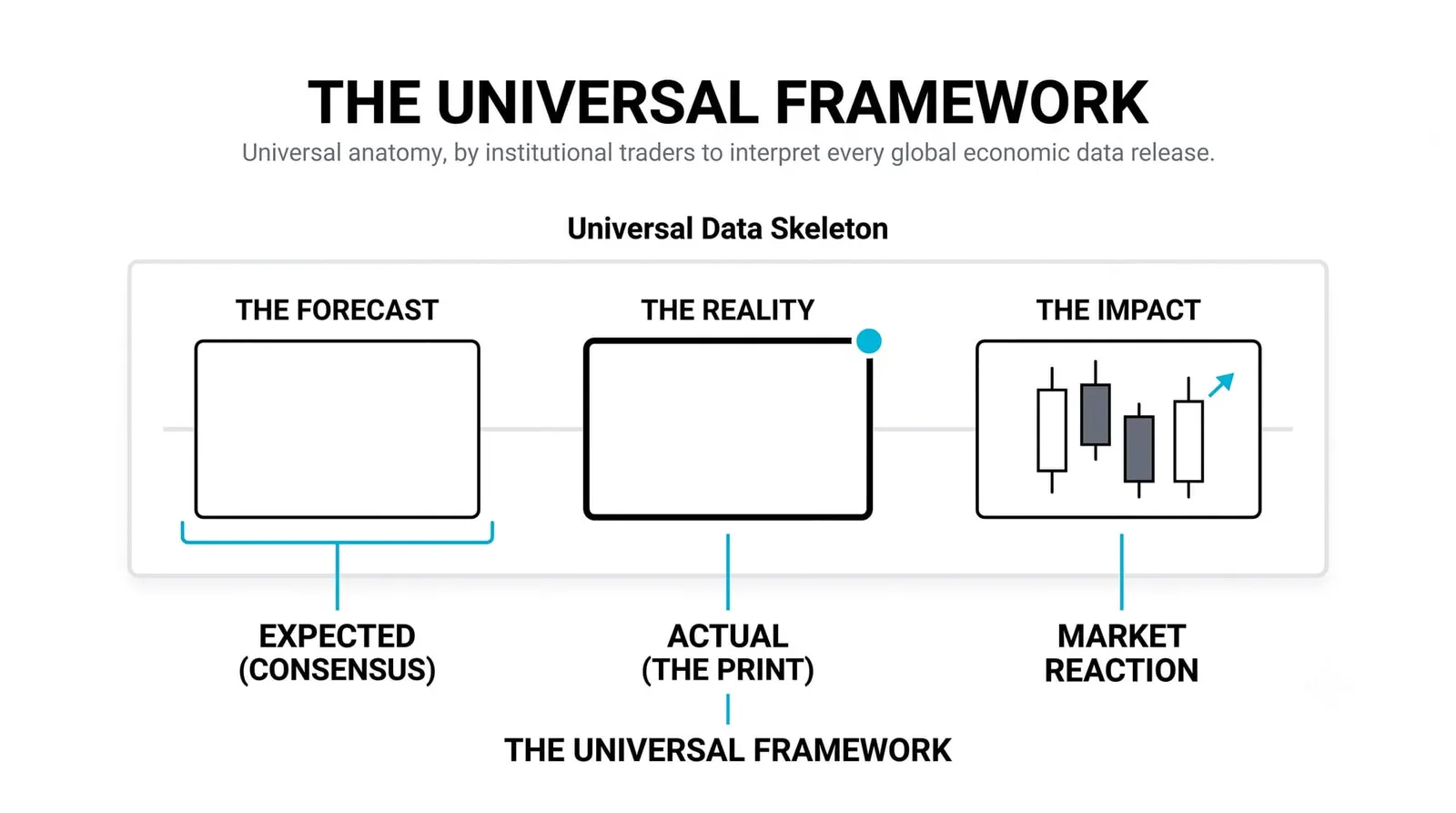
That consistency is a gift. You do not need a new method for every indicator. You need one method applied with discipline: know the bullseye, watch the dart, measure the distance.
The raw number still matters for the economy itself. A weakening jobs trend is real news for households and policymakers. But for the price you see on your screen in the first hour, the gap is the story.
Where "Expected" Comes From
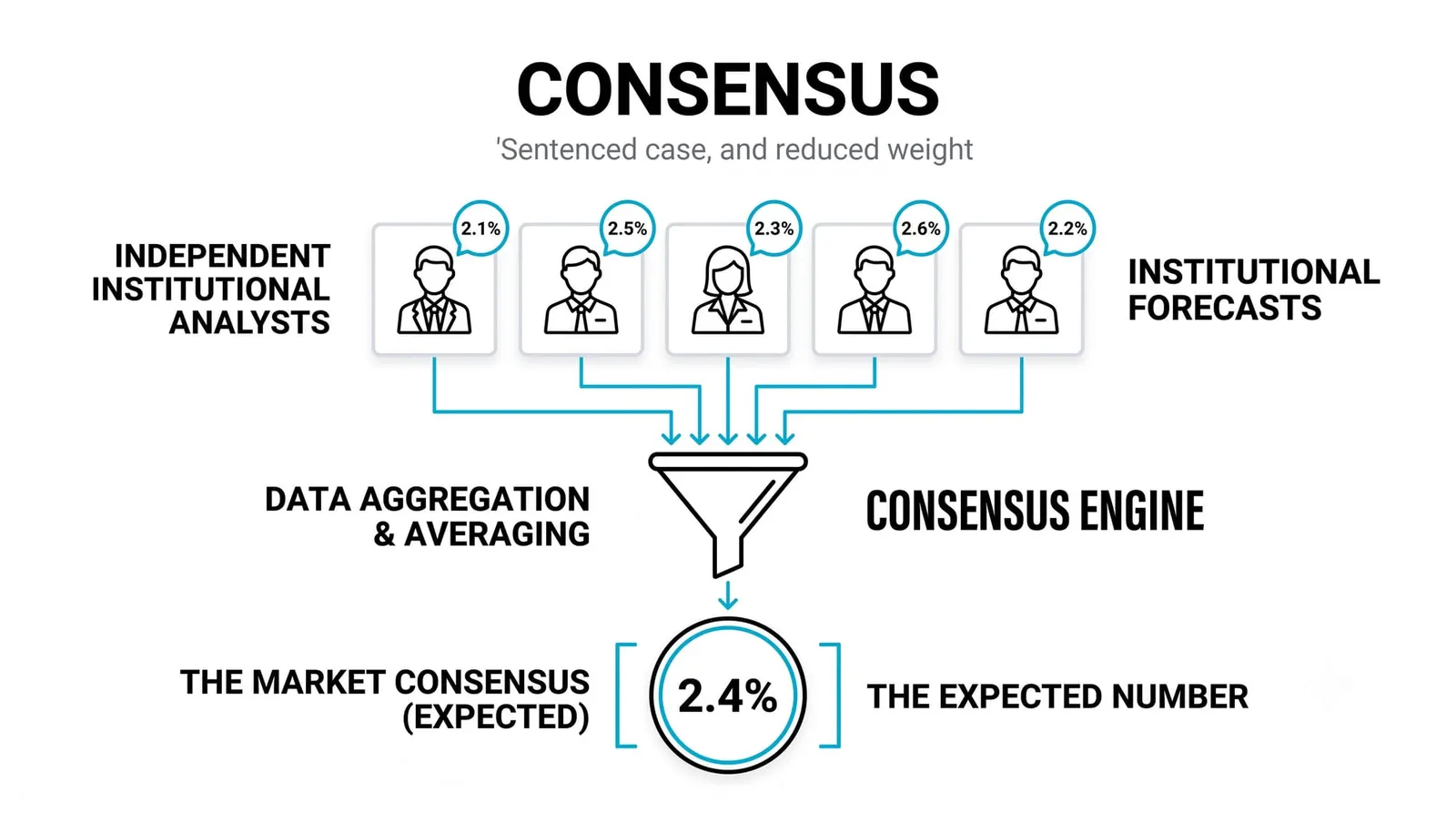
The consensus is a survey, plain and simple. Data providers poll dozens of economists at banks, research firms, and institutions, then publish the median of those individual forecasts. That median becomes the number on your calendar.
The median is a reasonable summary, but it is not wisdom. Crowds of forecasters share the same public information, read the same prior reports, and often cluster together. When everyone leans the same way, the median can be confidently wrong in one direction.
There is also a quieter layer. Large funds and trading desks run their own models and private estimates, sometimes more aggressive than the published consensus. When a print matches the public median but the market still moves hard, one common explanation is that the money was positioned for something different. The whisper number and the printed consensus are not always the same target.
So treat the consensus as the official bullseye, useful and necessary, but remember it is a human artifact. It is drawn by a crowd, and crowds have moods.
Reading Beat, Miss, and In-Line Across Different Report Types
An in-line inflation print is not the same event as an in-line jobs print. Each report carries its own context, and the verdict only makes sense inside it.
Trend changes everything. A third straight strong surprise on inflation reads very differently from a one-off strong print after two soft ones. Markets price paths, and a repeated beat in the same direction forces a bigger repricing than a single stray dart.
Direction of travel matters too. A jobs report that misses slightly after a long run of strength may get a shrug. The same miss after two weak prints in a row confirms a turn, and confirmation moves prices more than novelty.
Some reports matter through revisions more than the headline. A payrolls release can print on the nose while the prior two months get revised down sharply, and the revision becomes the real news. Always scan the revision lines before you call a release quiet.
Details inside the report can override the verdict as well. A headline beat built on one volatile component reads weaker than the same beat spread broadly across categories. Traders who only read the top line get surprised by the second move, the one that comes once the market digests the internals.
Pulling It All Together: Your Data-Reading Checklist
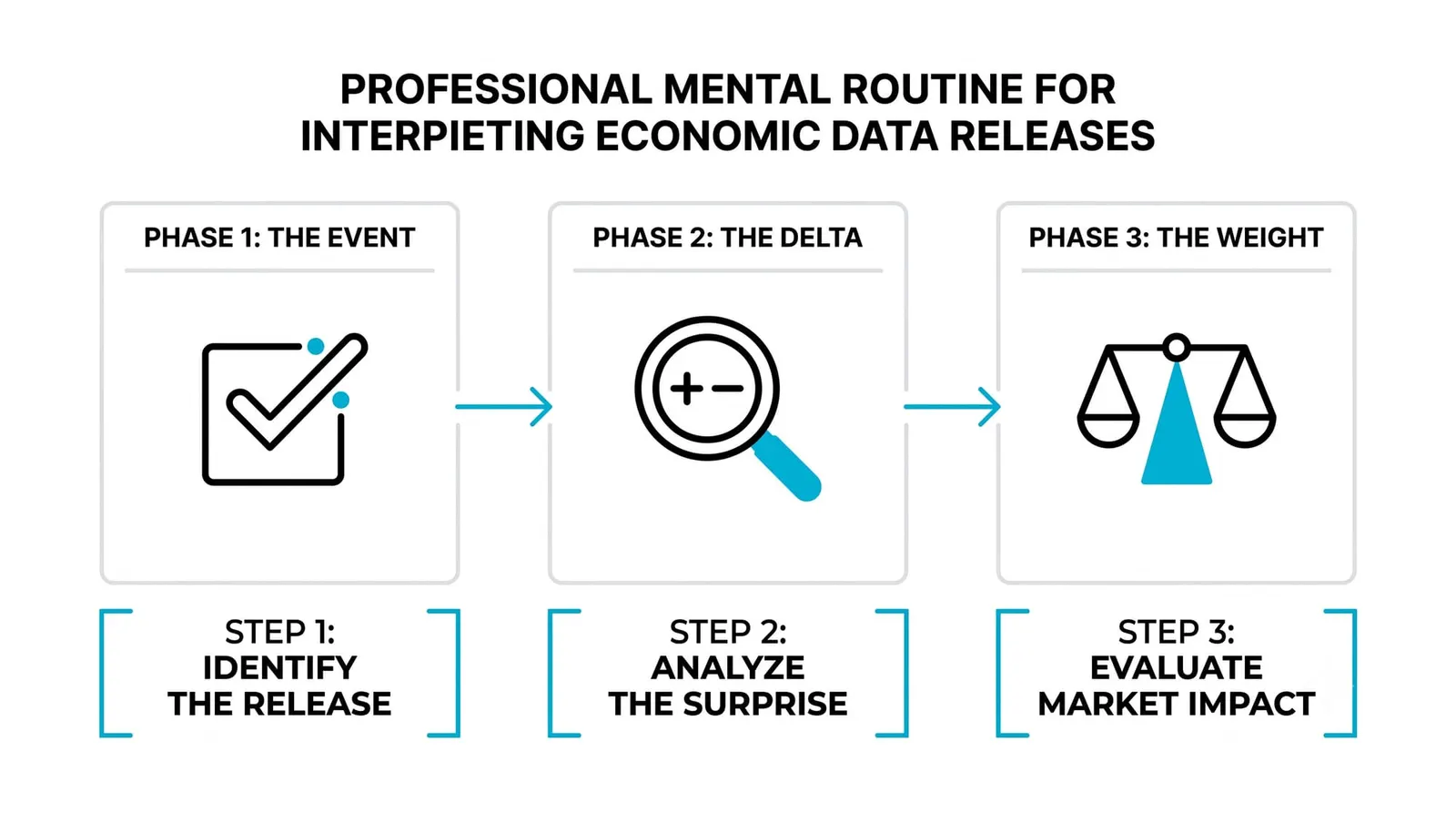
Four steps, done in order, every time.
- Know the consensus before the print. Write down the median forecast and, if available, the range of estimates. You cannot measure a gap without the bullseye.
- Know the recent trend and revisions. Check the last few prints and whether prior months were revised. Context decides how a new surprise will be scored.
- Score the gap. Compare arrival to expectation. Big gap, big potential repricing. Small gap, small reaction, unless revisions or details say otherwise.
- Watch the first minutes from the sidelines. The opening move is often fast, thin, and prone to reversal. Let the market show you its scoring before you commit anything.
The big individual reports, CPI, NFP, and PCE, each get their own lessons right after this one, where these steps get applied to their specific quirks.
One Release, Three Headlines
Here is a hypothetical illustration with round numbers. The market expects an inflation report at 3.1 percent. The bullseye is drawn. Now watch three different darts.
Scenario one: the print lands at 3.4 percent. That is a miss for anyone counting on cooling inflation. Bonds sell off, yields rise, and rate expectations shift toward hikes. The same raw number that sounds small in everyday life is a large gap against a 3.1 target, and the market prices the distance.
Scenario two: the print lands at 2.9 percent. A beat on the cooling front. The trade runs in reverse: bonds rally, rate expectations soften toward cuts. Same report, opposite dart, opposite market.
Scenario three: the print lands at exactly 3.1 percent. In-line, a shrug, at first. Then a detail line inside the report, say a sticky services component running hotter than expected, starts circulating, and prices begin to move anyway. The headline scored zero distance, but the internals redrew the bullseye.
One release, three different markets. The score was always the distance from the drawn bullseye, plus whatever the fine print added.
| Verdict | What it is | How markets usually read it |
|---|---|---|
| Beat | The print lands on the favorable side of consensus | Prices move in the direction the surprise implies, sized by the gap |
| In-line | The print matches or nearly matches consensus | Little initial movement, unless details or revisions disagree |
| Miss | The print lands on the unfavorable side of consensus | Repricing against the disappointed positioning, often sharp |
| Revision | A change to a previously released figure | Can outweigh the headline, rewriting the story of past prints |
Reading a Data Release, Answered
Is an in-line release ever a big move?
Yes, and it happens more often than beginners expect. If positioning was skewed toward a surprise in one direction, an in-line print forces those traders to unwind, and the unwind itself moves prices. Details and revisions inside the report can also turn a quiet headline into an active session.
Who decides what counts as a beat?
No single authority does. The published consensus median is the reference point, but each desk and fund compares the print against its own expectations. The market's verdict is the aggregate of all those comparisons, which is why reactions sometimes look odd against the official number.
Why do revisions matter as much as prints?
Because the trend is built from past prints, and revisions change the past. A downward revision to two prior months can flip a "resilient" narrative into a "fading" one without any new headline at all. Markets price the updated story as much as the newest line.
Should I trade the release itself?
For most new traders, no. The first seconds are dominated by speed, thin liquidity, and false starts, and the edge belongs to participants built for that environment. Your checklist works just as well from the sideline, and the cleaner opportunities often appear after the initial scoring settles.
Next in this level, the checklist goes to work on the reports themselves: CPI first, then NFP, then PCE, each with its own internals, revision habits, and ways of fooling the unprepared.