Trading Stocks and Equities
Trading stocks means buying and selling shares of individual companies on organized exchanges during fixed market hours. It is the market most beginners already half-understand, and that familiarity is a real advantage. You have spent years hearing about companies, products, and earnings reports. That background knowledge transfers directly.
What Stock Trading Actually Is
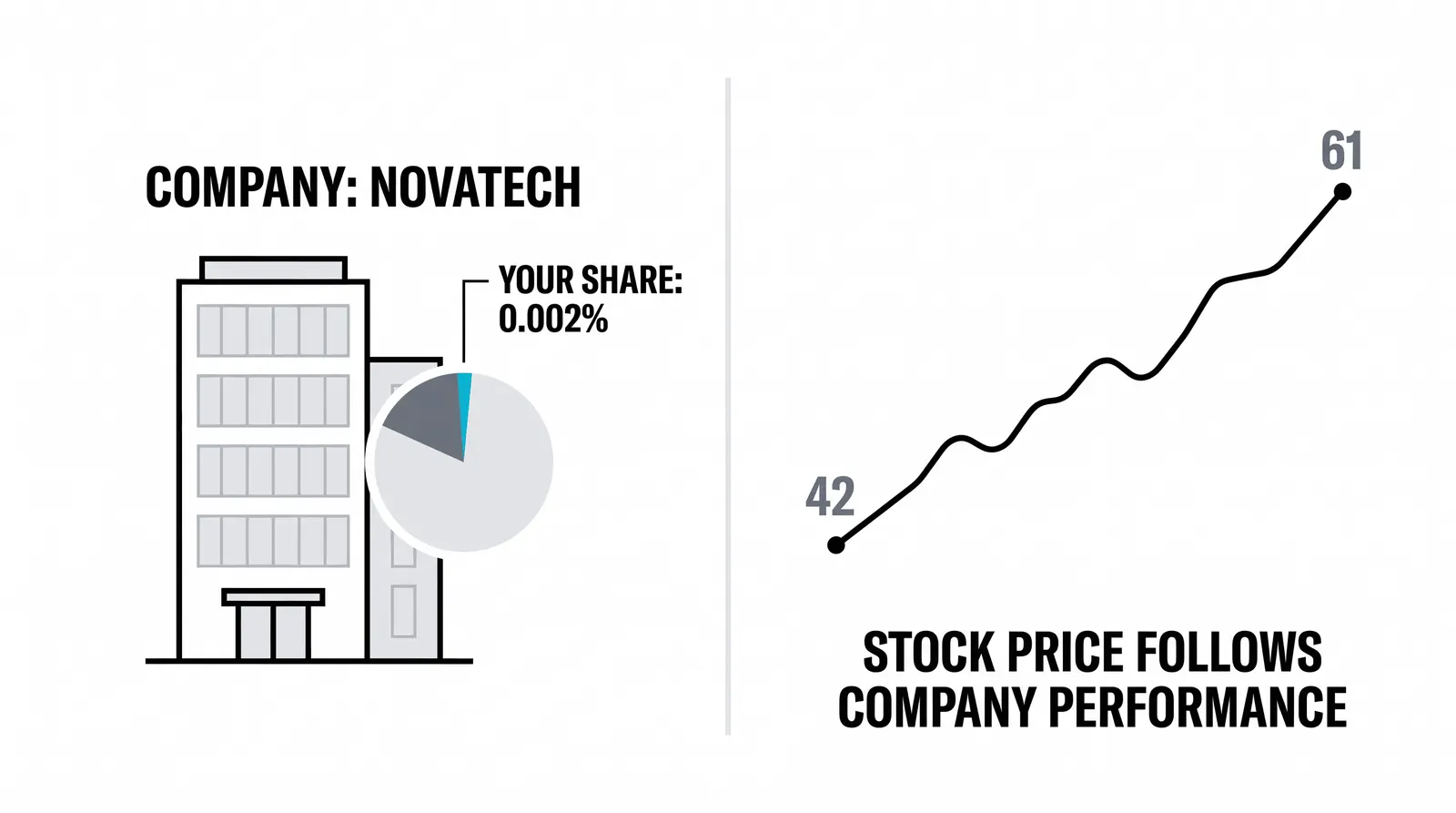
A share is a small slice of ownership in a real business. When you buy one, you own a tiny piece of a company with employees, products, debts, and profits.
You are trading the price, not running the business. But the price is not arbitrary. It tracks what buyers and sellers believe that company is worth, based on earnings, growth, and management decisions.
Every share is a slice of a real business, so stock trading is the only major market where the thing behind the price files reports you can actually read.
This matters for your analysis. A currency pair reflects two economies. An index reflects hundreds of companies at once. A single stock reflects one company, and that company publishes its numbers every quarter.
How Stock Markets Work
Stocks trade on central exchanges with fixed sessions. In the US, the regular session runs six and a half hours, from the opening bell to the closing bell. Other countries run their own exchanges on their own schedules.
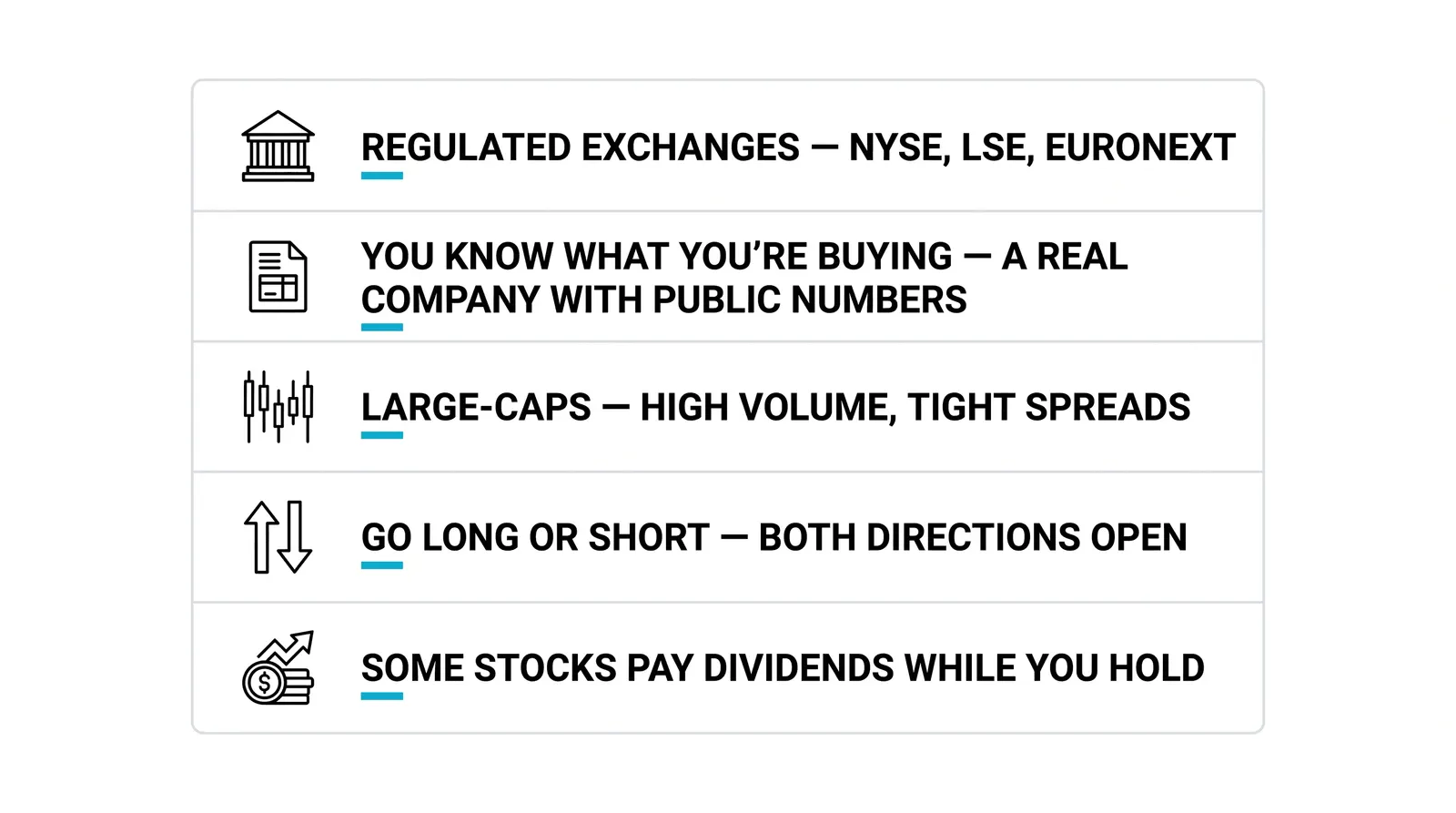
Matching happens by auction. Buyers post bids, sellers post offers, and trades execute where they meet. During the main session, popular stocks are extremely liquid. Your order fills in a fraction of a second at a fair price.
Pre-market and after-hours sessions exist, but they run thin. Fewer participants means wider spreads and jumpier prices. A small order can move the price more than it should. Beginners are usually better off trading the regular session.
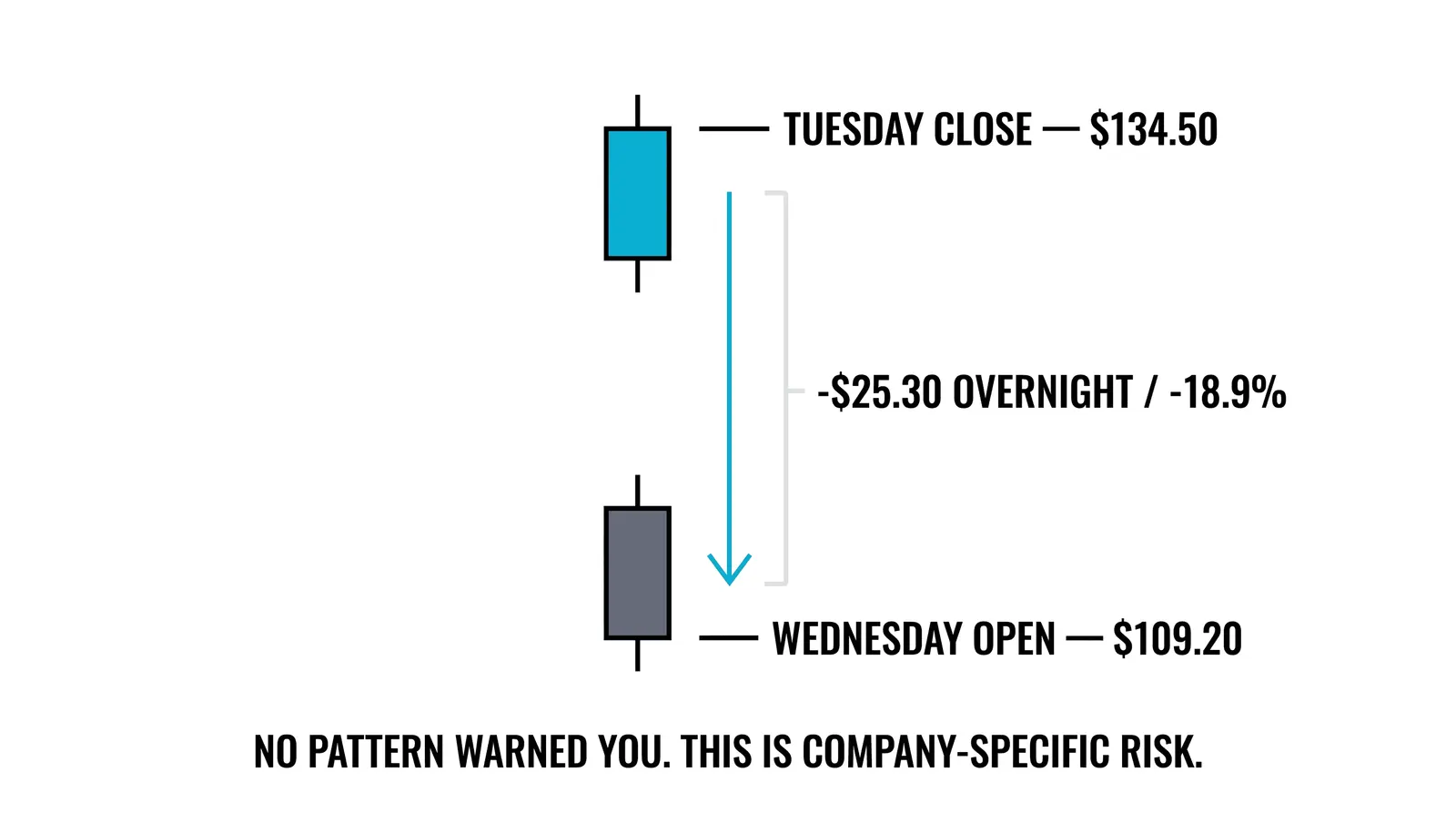
The closing bell is real. When the session ends, trading in that stock essentially pauses until the next open. News does not pause. That mismatch creates one of the defining risks of this market, which we will get to shortly.
What Moves Individual Stocks
Four forces drive most single-stock price action:
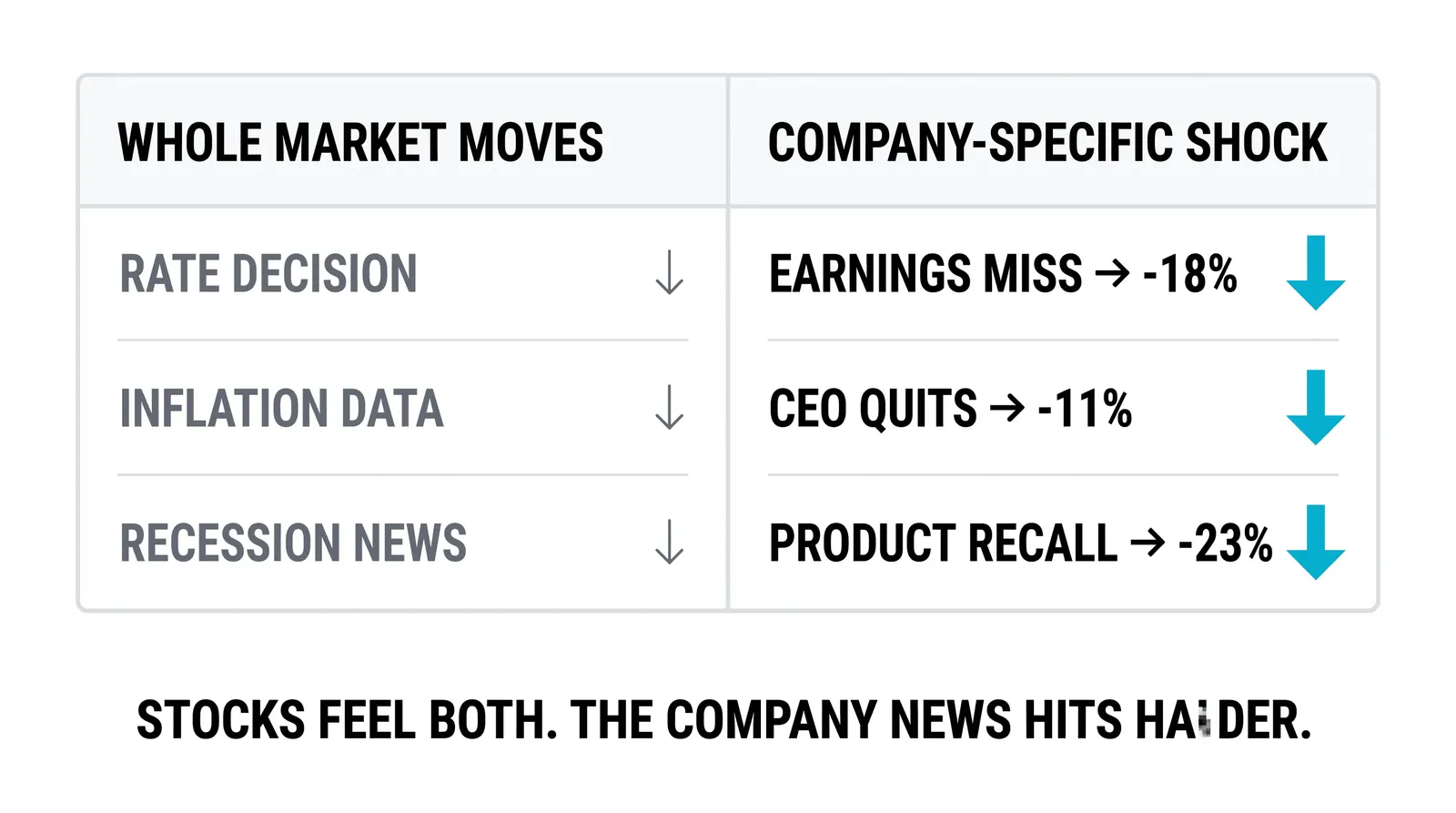
- Earnings and guidance. Four times a year, a company reports results and updates its outlook. These events routinely move a stock five, ten, or twenty percent in a day.
- Sector news. A regulatory change or a competitor's announcement can lift or sink an entire industry group at once.
- The overall market's mood. When the broad indexes fall hard, most stocks fall with them, good company or not.
- Company-specific events. Product launches, lawsuits, management changes, and analyst upgrades all hit individual names.
The analysis lessons you already completed covered how to read these forces. Fundamental context plus price action on the chart. Nothing about that changes here. You are simply applying it to one company at a time.
Why Traders Choose Stocks
Familiarity comes first. You already know what many of these companies do. That gives you a head start on understanding what you are trading.
Transparency comes second. Public companies must disclose their financials on a fixed schedule, under regulation, with penalties for lying. Few markets give you this much verified information about the thing behind the price.
Choice comes third. Thousands of listed companies span every sector and every temperament. You can find sleepy dividend payers that drift for months, or violent movers that travel ten percent in a week. Whatever style you settled on in the earlier lessons, there is a corner of the stock market built for it.
Position sizing is also flexible. You can buy a single share. A small account can take a real position in a real company without needing margin tricks. Fractional shares at many brokers push this even further.
The Demanding Side
Overnight gap risk is the price of admission. A stock can close at one price and open the next morning far below your stop. There is nothing you can do about it. Your stop order becomes a market order at the open, and it fills wherever the market is.
Earnings dates are scheduled landmines. You know the date weeks in advance, and you know the stock may gap violently when the report drops. Holding through earnings is a gamble on the announcement, not a trade on your analysis.
The sheer number of choices cuts both ways. Thousands of stocks invite wandering. New traders jump from name to name, chasing whatever moved that day, and never build depth in anything. Ten stocks you know well will serve you better than a hundred you glance at.
None of this makes stocks a bad choice. It makes them a choice with known hazards, and known hazards can be planned for.
A Worked Example
Here is a hypothetical with round numbers. A trader buys 50 shares at $40. That is a $2,000 position. They set a stop at $38, risking $100, and target $46.
The company reports strong earnings. Over six weeks, the stock climbs to $46 and the trade exits there. Gain: $300 on a $2,000 position, a clean three-to-one reward on the risk.
Now the mirror scenario. Same entry at $40, same stop at $38. The stock drifts up to $44. Then the company cuts its guidance after the close. The next morning it opens at $36, far below the stop. The order fills at $36. Loss: $200, double the plan.
The gap is the lesson. Stops limit losses during the session. They cannot protect you while the market is closed. This is why experienced stock traders cut position size ahead of earnings, or step aside entirely. The math of your risk changes when a scheduled event can teleport the price overnight.
Stocks vs Forex vs Indices
| Stocks | Forex | Indices | |
|---|---|---|---|
| Hours | Fixed exchange sessions, roughly 6.5 hours in the US | 24 hours, five days a week | Index futures trade nearly around the clock |
| What mainly moves it | One company's earnings, news, and sector | Interest rates and macro data from two economies | The broad economy and overall market sentiment |
| The overnight question | Real gap risk on individual names, especially around earnings | Market stays open, so gaps are rare except over weekends | Futures keep trading, so cash-session gaps are usually modest |
No row in that table is a verdict. Each market trades convenience against a different kind of risk. Stocks ask you to accept overnight gaps in exchange for transparency and choice.
Who Stock Trading Fits
Stocks suit people who like understanding businesses. If reading about what a company does and why it might earn more next year sounds interesting rather than tedious, this market rewards that curiosity.
They suit swing traders with day jobs. The fixed session means you can analyze in the evening, place orders for the next day, and let the market work without watching every tick.
They suit longer horizons. Position traders can hold for months, riding a genuine business trend rather than noise.
They fit scalpers and pure day traders less well. The hours are short, and the best intraday movement concentrates in the first and last hour.
Questions About Stocks
Are stocks good for beginners?
Yes, for most beginners stocks are the most forgiving starting point. The information is public, the mechanics are simple, and you can trade tiny positions while you learn. The main trap is gap risk, which you now understand and can size around.
How much capital do I need to trade stocks?
You can start with a few hundred dollars if your broker offers fractional shares. A few thousand gives you room to take properly sized positions across two or three names. What matters more than the number is risking a small, fixed fraction of the account per trade, as the risk per trade lesson covers.
Can I trade stocks part-time?
Yes, and stocks are arguably the best market for it. Swing trades unfold over days or weeks, so evening analysis and pre-placed orders cover most of the work. You do not need to watch the screen during the session.
Why did my stock gap through my stop?
Because stops only work while the market is open. News released after the close reprices the stock instantly at the next open, and your stop fills at the new price, not the old one. Check earnings dates before entering, and reduce size when a scheduled event sits inside your holding period.
You now know what the stock market offers and what it demands. The next lessons put it side by side with forex, indices, and crypto, so you can pick the market that matches your schedule, your temperament, and the style you have already chosen.