Trading Indices
Indices are baskets of companies tracked as a single number, and trading indices means betting on the movement of that whole basket rather than on any one company inside it. When you trade an index, you are taking a position on a market or a sector as a whole. You are not picking winners. You are expressing a view on the direction of the group.

Trading an index instead of picking stocks is the difference between betting on the whole race field and betting on one horse. That trade-off shapes everything about this market, so it is worth understanding the mechanics before you commit to it.
What an Index Actually Is
An index is a calculated number. A provider selects a group of companies, applies a weighting method, and publishes the result as one figure that rises and falls through the day.
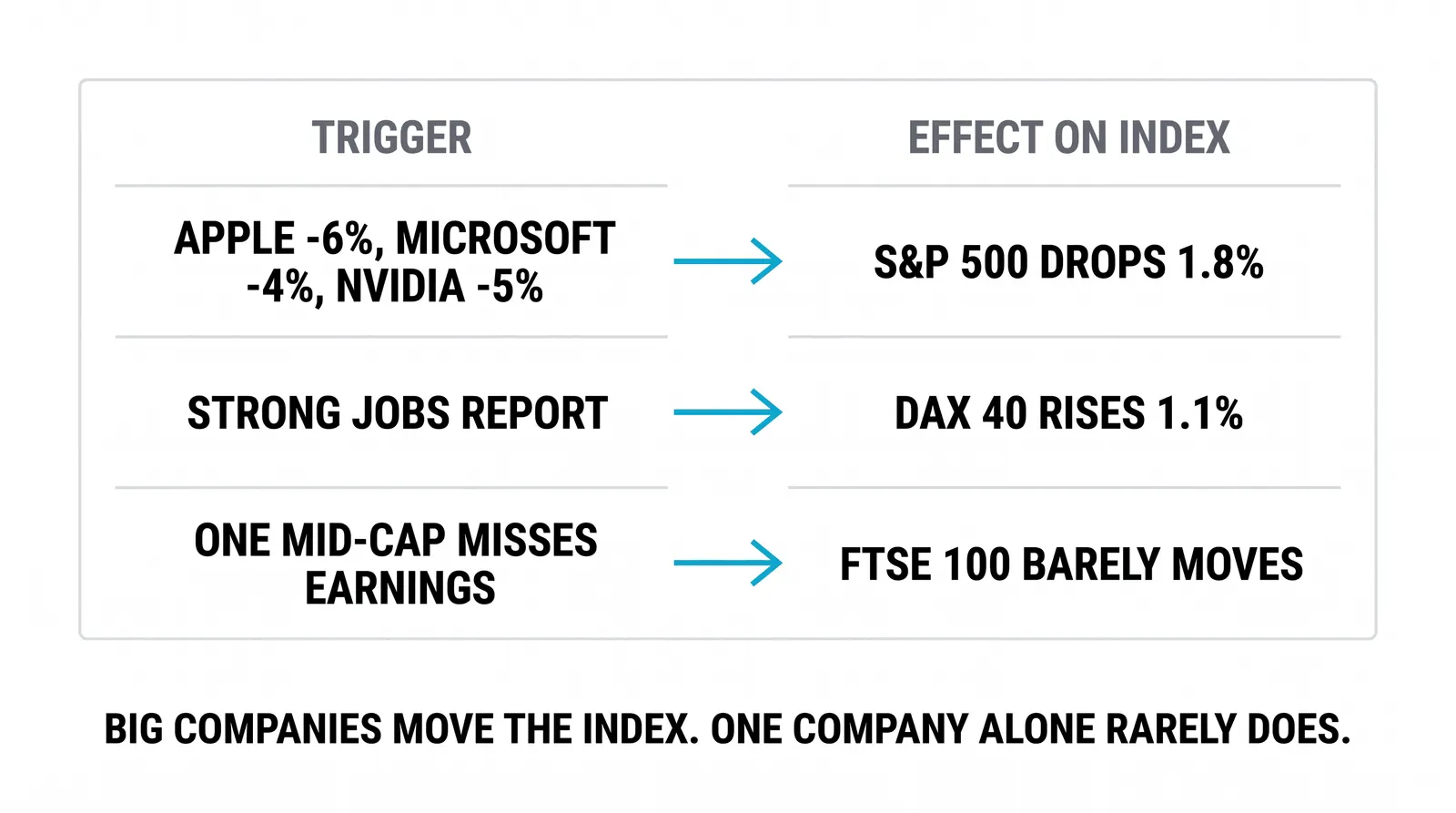
Most major indices are weighted by company size. The biggest companies in the basket move the number the most. A 2 percent drop in a giant company can outweigh a 10 percent rally in twenty small ones.
You cannot trade the number itself. It is a calculation, not an asset. You trade instruments that track it, and those instruments come in a few standard wrappers.
- Index funds and ETFs hold the basket for you and are built for longer holding periods.
- Index futures are exchange-traded contracts that let you speculate on the index level with margin-based sizing, and they trade nearly around the clock.
- Contracts for difference, where regulation allows them, let you speculate on the index price without owning anything, again on margin.
Each wrapper has its own costs, risks, and account requirements. Each gets its own lesson later in the course. For now, hold onto one point: the wrapper changes, the underlying basket does not.
How Index Trading Works in Practice
The mechanics depend on the wrapper you choose. An index fund investor buys and holds for months or years, accepting the market's average return. A futures trader takes shorter positions, long or short, using margin to control a large notional value with a smaller deposit. A CFD trader does something similar through a broker rather than an exchange.
What unites them is the exposure. Every one of these traders is long or short the same basket. The fund holder and the futures scalper disagree on timeframe and risk, not on what they are trading.
That means your analysis transfers across wrappers. If you learn to read an index chart on the daily timeframe, the same levels and the same drivers apply whether you hold for a year or an hour.
What Moves an Index
The forces are the same ones that move individual stocks, just aggregated. Earnings seasons matter because the companies in the basket report results. Interest rate decisions matter because they change the value of every future cash flow in the basket at once. Economic data matters because it shifts expectations for the whole group.
Then there is concentration, and this is the part most beginners miss. In most major indices, a handful of giant companies carry a large share of the weight. When those few names move together, they drag the entire basket with them.
The index is less diversified than it sounds. You own a slice of every company in the basket, but your result is often decided by five or ten of them. Check the top holdings and their combined weight before you assume you are spread thin and safe.
The Appeal and the Cost
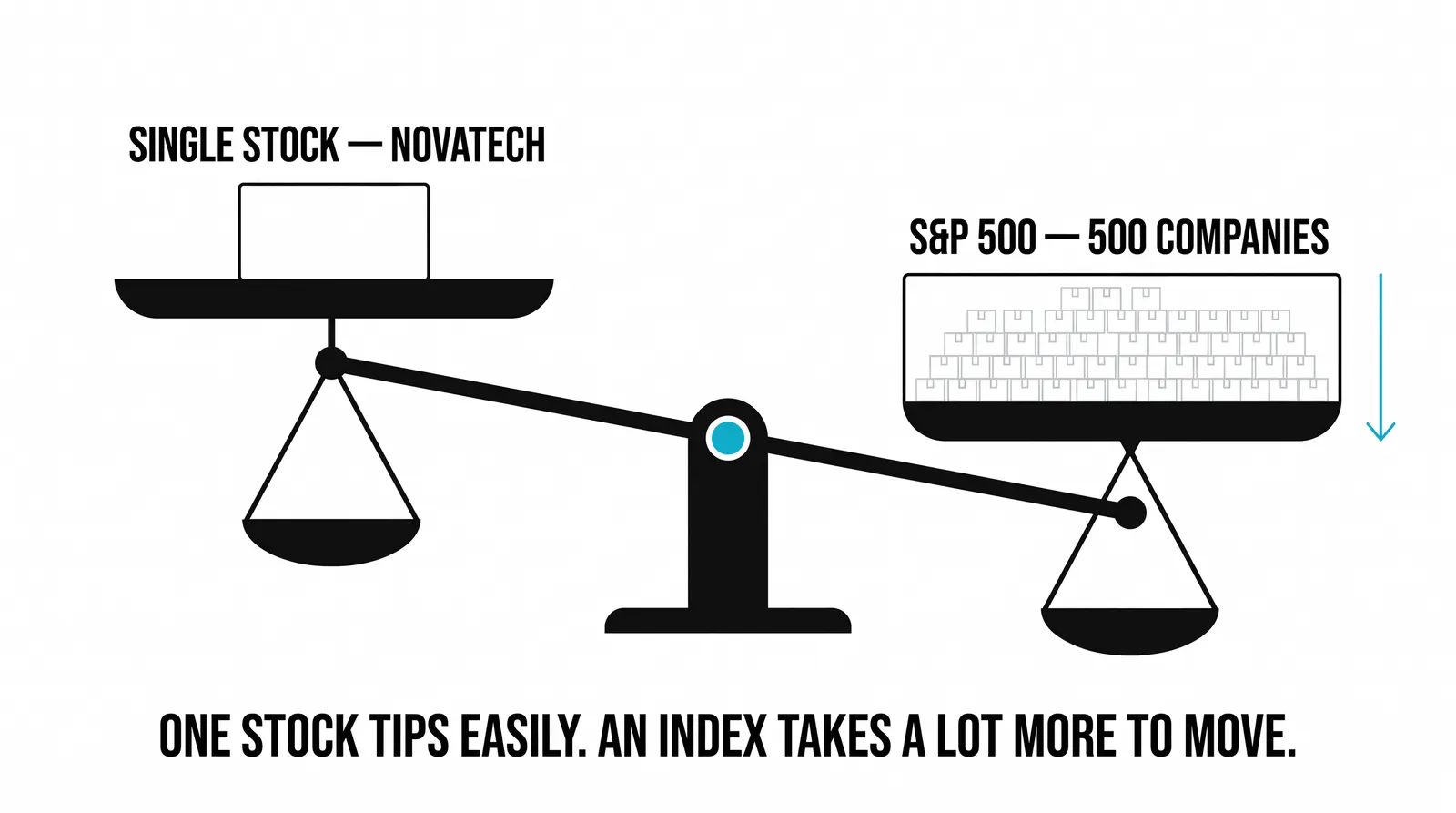
The strongest argument for indices is the removal of single-company blowup risk. One accounting scandal, one failed product, one fraud cannot zero your position. The company gets hurt, the index absorbs the hit, and the other ninety-nine names cushion the fall.
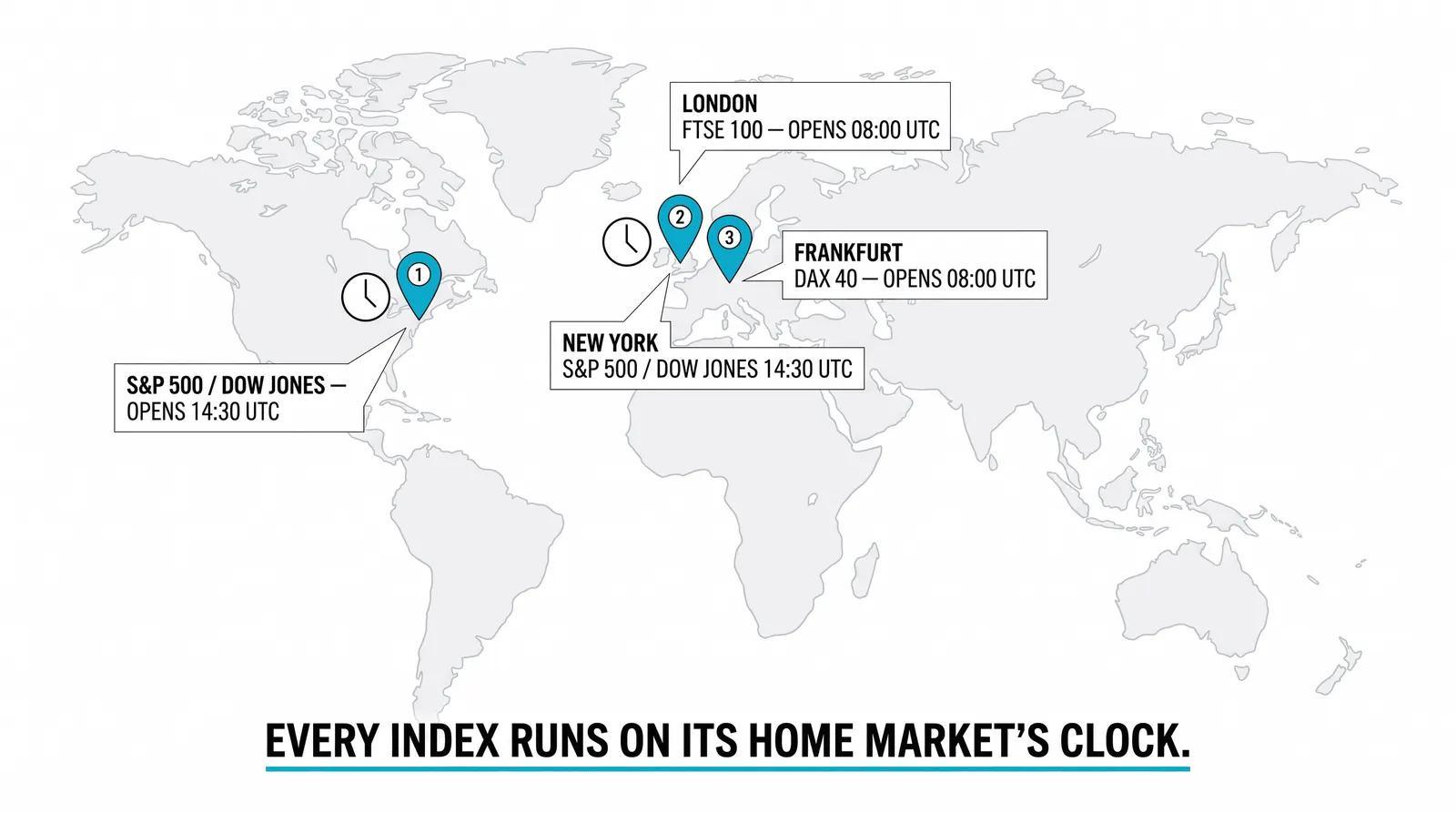
Index charts also tend to respect technical levels cleanly. These markets are watched by enormous numbers of participants, so widely observed support and resistance zones attract real order flow. Add long trading hours through the futures session, and you get a market you can trade around most schedules.
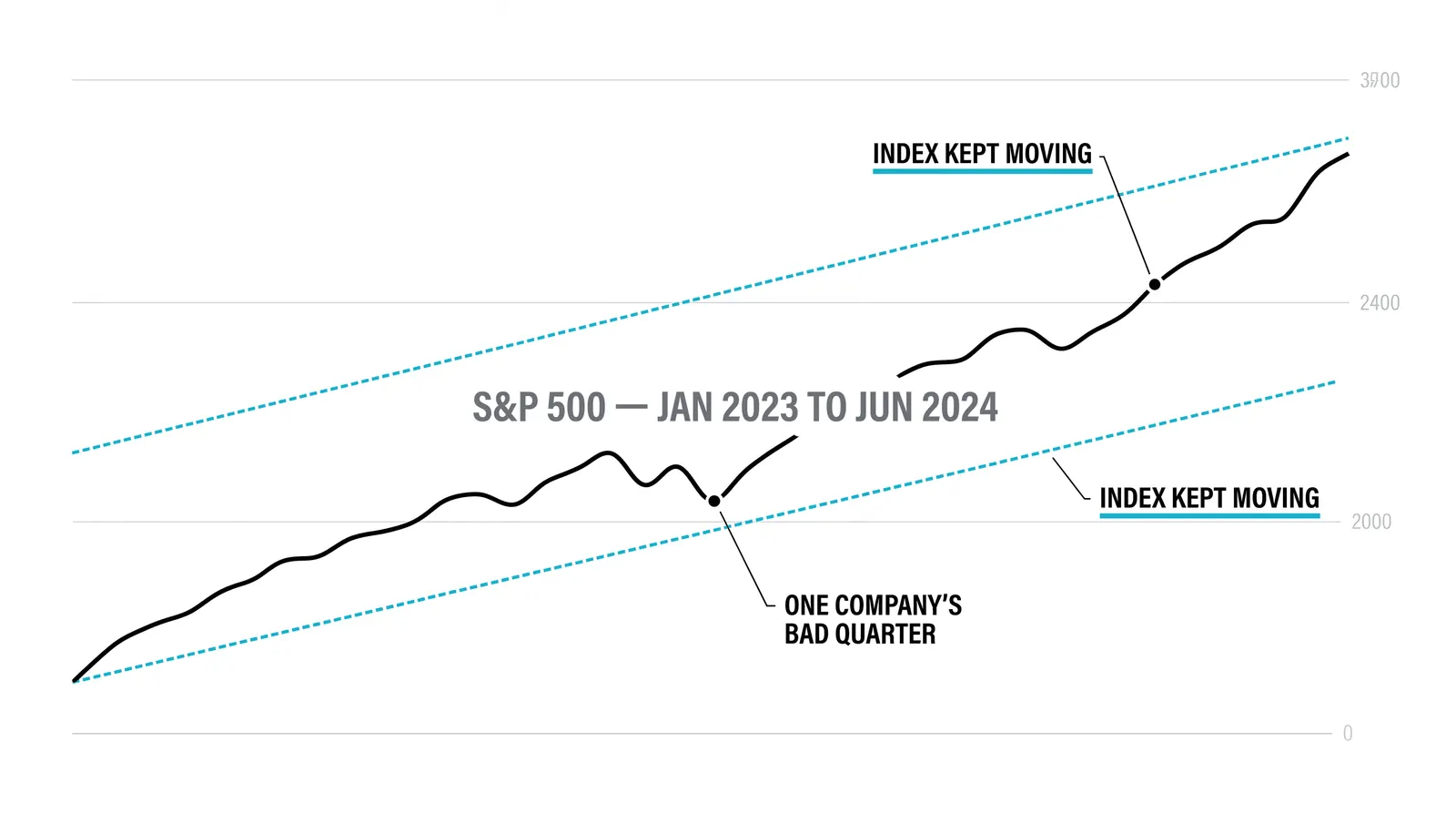
Now the honest costs. The index only ever gives you the average. You will never catch the one stock that doubles while the market grinds sideways. If your edge is company research, an index throws that edge away.
Margin-based sizing is standard on index futures and contracts. That leverage magnifies gains and losses equally, and it is where most new index traders get hurt. The instrument is diversified. Your account is not, if you size it carelessly.
A Worked Example, With Round Numbers
Imagine a hypothetical market of 100 companies, and two traders who both expect it to rise over the next quarter.
The stock-picker buys one company at 100 per share. If the thesis on that company is right, it might reach 130. If the company stumbles while the market rises, it might fall to 70. The outcome depends on one firm's execution, management, and luck.
The index trader takes the basket at 5,000 with a target of 5,200. If the market rises as expected, the position returns 4 percent. That 4 percent is guaranteed to match the market's move, and it is guaranteed never to be the outlier. No 130. No 70 either.
Less thrill, fewer surprises. For many traders, that is exactly the point.
Indices vs Single Stocks vs Commodities
| Indices | Single Stocks | Commodities | |
|---|---|---|---|
| What you are betting on | The direction of a whole market or sector | The fortunes of one company | The price of a raw material |
| What mainly moves it | Rates, earnings in aggregate, economic data | Company results, news, management decisions | Supply, demand, weather, geopolitics |
| Single-event risk | Low; one company's failure is diluted | High; one headline can gap the price hard | Moderate; one supply shock can move it sharply |
None of these is superior in the abstract. They reward different skills. Indices reward reading the broad economy. Stocks reward company analysis. Commodities reward understanding physical supply chains.
Who Index Trading Fits
Index trading suits people who think in terms of the whole market's mood. If you find yourself more interested in what the economy is doing than in what one company is doing, this is your natural home.
It also fits macro-inclined swing traders. Central bank meetings, employment reports, and rate cycles are the bread and butter of index movement, and swing timeframes give those forces room to play out.
Finally, it fits anyone who has been burned by single-stock surprises. If an earnings gap ever wiped out a month of careful work, the appeal of a basket that cannot gap on one company's news is obvious. Be honest with yourself, though: indices remove one kind of risk and concentrate another. The mega-caps still run the show, and margin still cuts both ways.
Questions About Indices
Is index trading good for beginners?
Yes, with a condition. The diversified basket forgives the single-company mistakes that punish new stock traders, and the clean technical behavior makes charts easier to read. The condition is sizing: beginners should start without margin-based leverage or with the smallest position available, because the leverage, not the index, is what ends most new accounts.
Can an index go to zero?
Effectively, no. For a broad index to reach zero, every company in the basket would have to become worthless at the same time, which would imply an economic collapse far beyond a trading problem. Individual companies fail constantly. Entire baskets of the largest companies in an economy do not.
Why do index levels feel cleaner than stock charts?
Because of participation and averaging. Millions of traders watch the same round numbers and the same swing highs on a major index, so orders cluster at those levels and the price reacts to them. Averaging across many companies also smooths out the erratic, news-driven jumps that make individual stock charts noisy.
How do I choose which index to trade?
Start with the market you understand best and can watch during your available hours. Then compare concentration, since some indices are dominated by a few companies while others spread weight more evenly, and check the trading hours of the futures session against your schedule. Pick one, learn its temperament, and resist the urge to watch five at once.
Your next step is the wrappers. The lesson on index funds, futures, and contracts for difference will show you how each one is priced, what it costs to hold, and which account types it demands, so you can match the instrument to the trading style you chose in the earlier lessons.