Trading Forex
Forex trading means buying one currency while selling another, always in pairs, in the largest and most liquid market in the world, open around the clock five days a week. If you have finished the lessons on trading styles and timeframes, this is the point where you decide whether currencies are the right market for your temperament and your schedule. This lesson gives you the honest version: what forex is, how it works, what it offers, and what it demands.

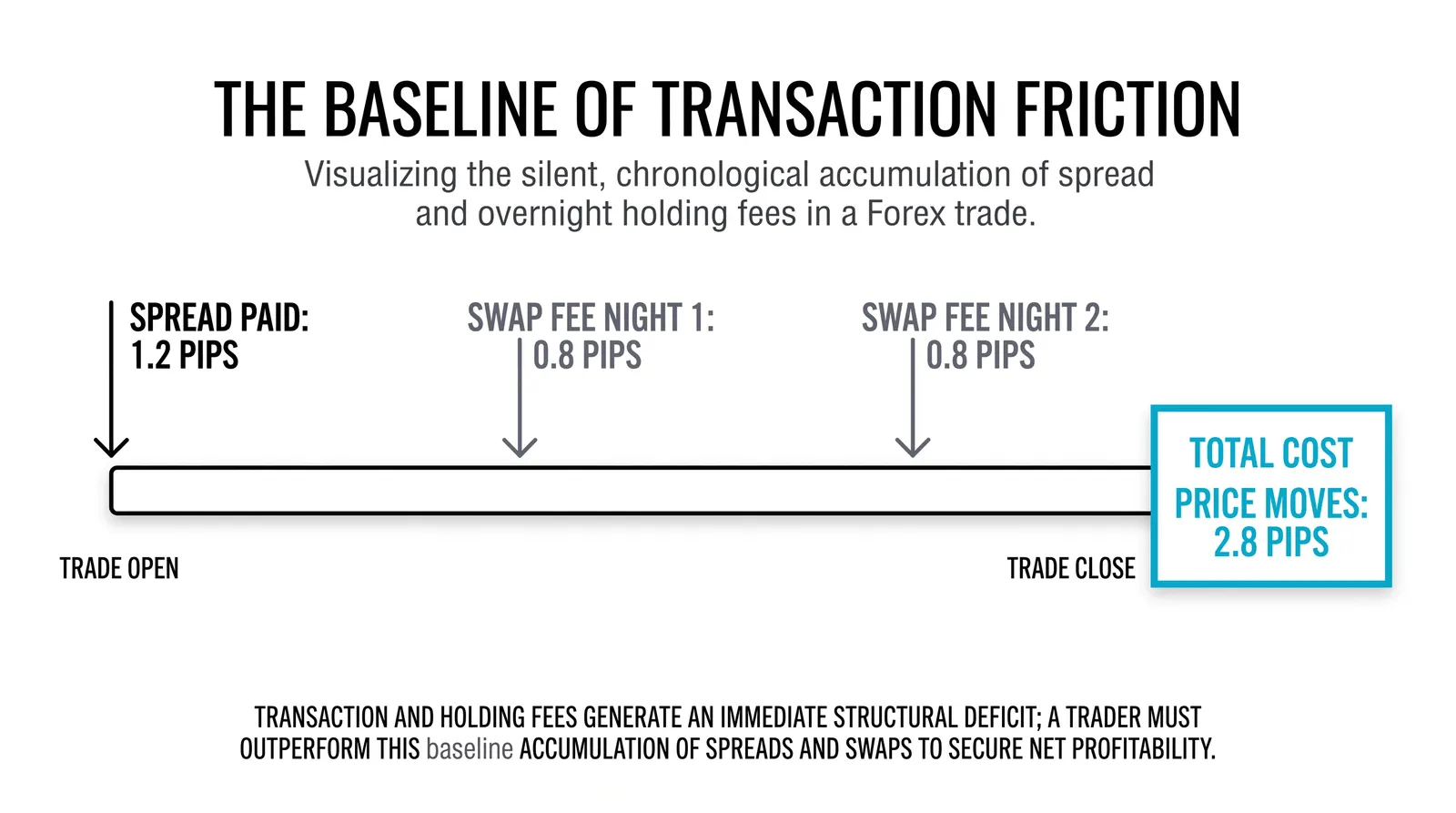
What You Actually Buy
You never buy a currency on its own. You trade a pair, like EUR/USD, which quotes how many US dollars one euro costs. When you buy EUR/USD, you are long the euro and short the dollar at the same time. You profit if the euro strengthens against the dollar, and you lose if it weakens.
Think of it as an exchange at an airport done a million times larger, except you are betting on which currency will be worth more tomorrow.
Price moves are measured in pips, the smallest standard increment, and position size is measured in lots. A standard lot is 100,000 units of the base currency; a mini lot is 10,000; a micro lot is 1,000. That is all you need for now. Position sizing is a skill of its own, and it gets its own lesson.
A Market With No Home
Unlike stocks, forex has no central exchange. It is a decentralized network of banks, brokers, and dealers quoting prices to each other around the clock. Your broker connects you to that network.
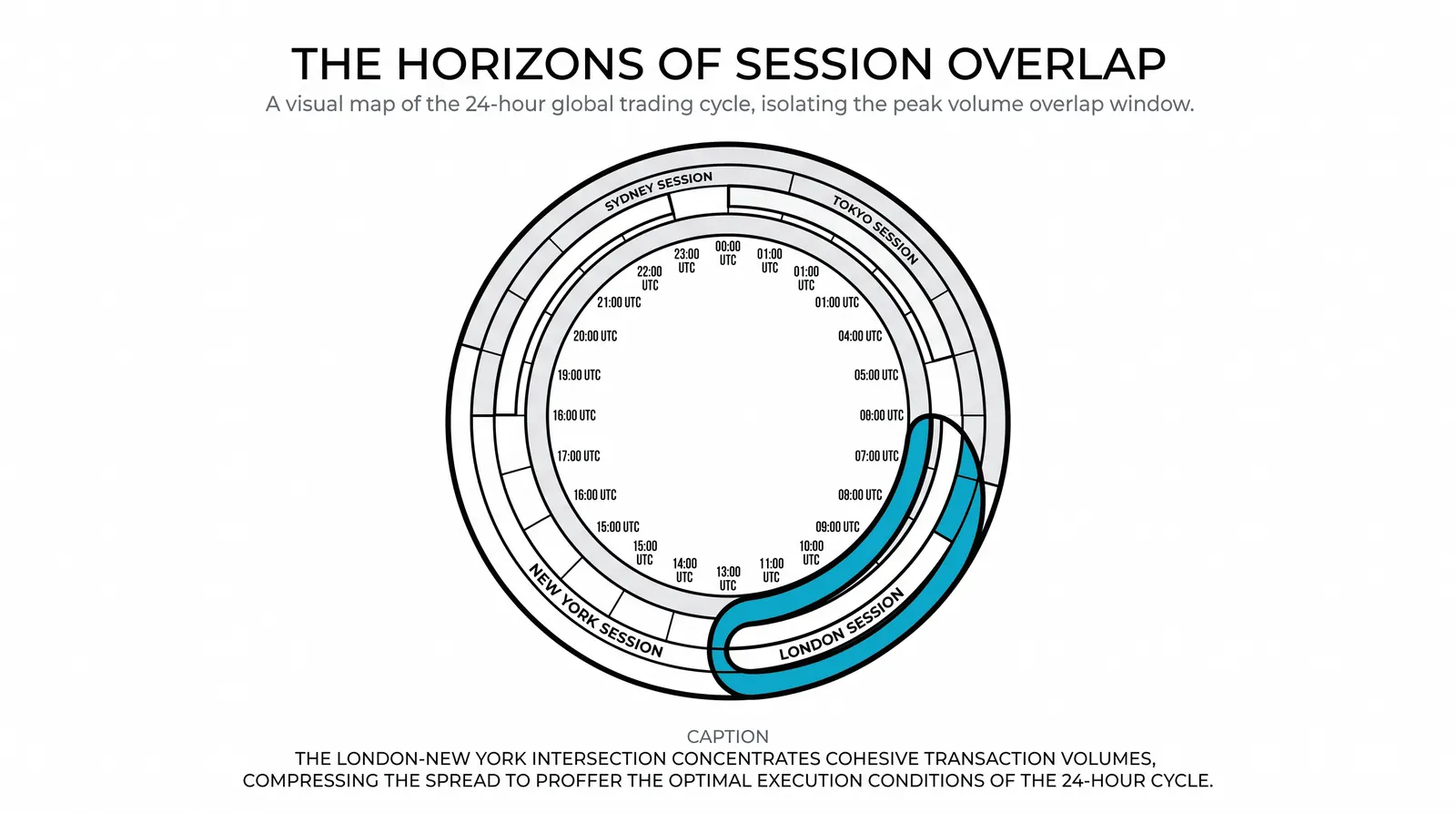
Trading follows the sun through four major sessions: Sydney, Tokyo, London, and New York. As one closes, another opens, which is why the market runs 24 hours a day from Monday morning in Asia to Friday evening in New York.
The busiest window is the London-New York overlap, roughly the morning hours in New York. That is when volume peaks, spreads tighten, and the biggest moves tend to happen. If you can only trade a few hours a day, this window matters.
What Moves Currencies
Currencies price the relative strength of two economies. Three forces do most of the work:
- Interest-rate differences. Money flows toward higher yields. When one central bank raises rates while another holds, the first currency usually strengthens.
- Inflation and growth surprises. Data that lands far from expectations moves price fast, because it changes what traders expect central banks to do next.
- Risk mood. In calm markets, traders chase yield. In fearful markets, they crowd into perceived safe currencies like the US dollar, Japanese yen, and Swiss franc.
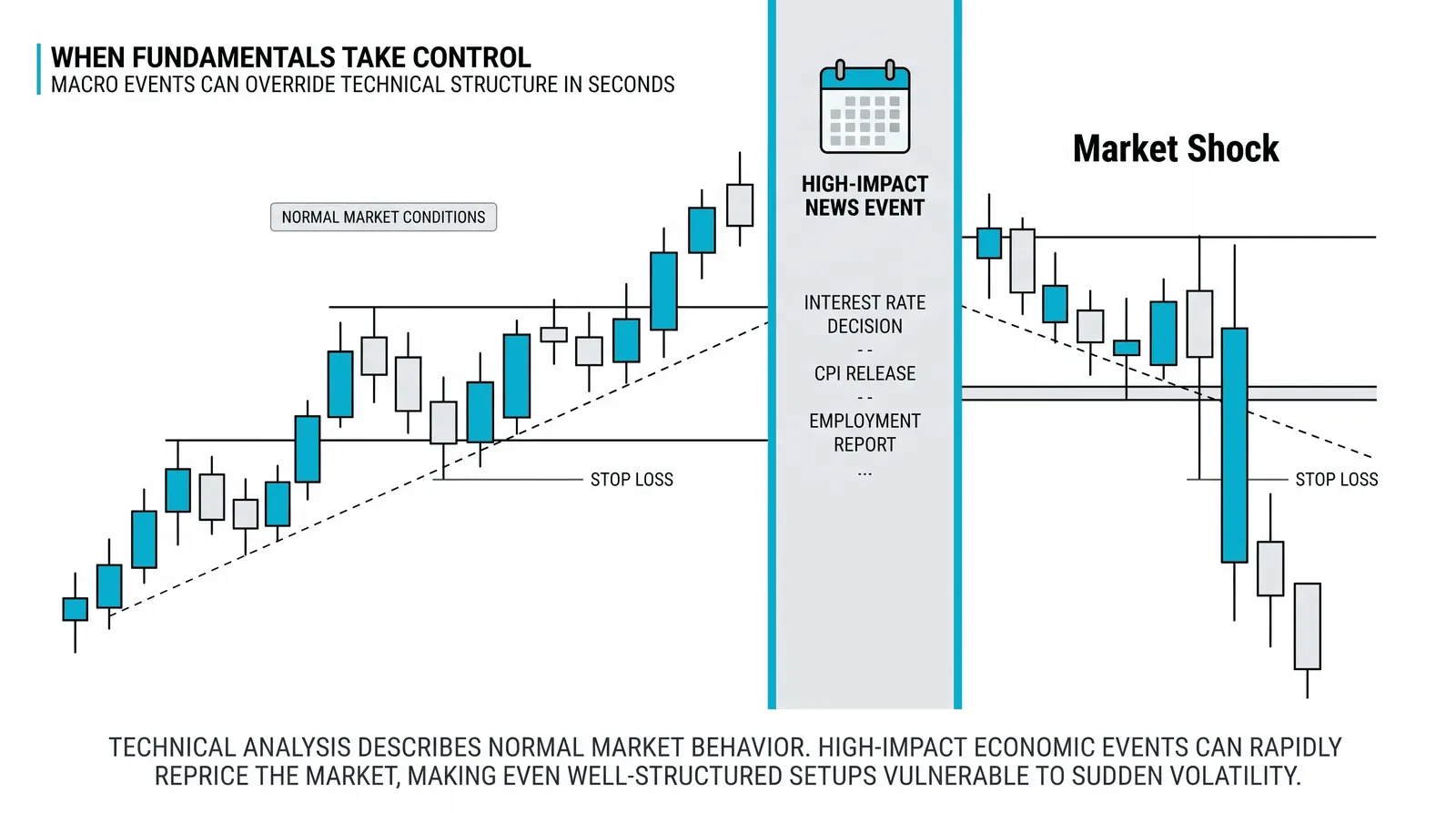
The mechanics of specific data releases, like jobs reports and inflation prints, are covered in the economic indicators lesson. Here, just accept this: forex is a macro market. Scheduled news matters more here than in almost any other market you could trade.
Why Traders Choose Forex
The appeal is real, and it is worth stating plainly:
- Deep liquidity on the majors. Pairs like EUR/USD and USD/JPY trade in enormous volume. You can enter and exit at fair prices with minimal slippage in normal conditions.
- Around-the-clock access. If you work a day job, you can trade the Asian session in your evening or the London open before work. Few markets fit odd schedules this well.
- Low entry barriers. Accounts can be opened with modest capital, and micro lots let you trade small while you learn.
- Tight spreads on the most traded pairs. On EUR/USD, the spread is often a fraction of a pip, which keeps transaction costs low for active traders.
What Makes It Demanding
The marketing leaves the next part out.
Margin-based position sizing is standard in forex. Brokers routinely offer sizing of 30:1, 50:1, or more depending on your jurisdiction, meaning you control positions far larger than your account. This is leverage in the literal trading sense, and it is a double-edged sword. Small price moves become large account swings, in both directions. It deserves respect, and it gets its own lesson.
Because there is no central exchange, pricing and spreads vary by broker. Two traders on the same pair at the same moment can see slightly different quotes. Choosing a well-regulated broker is not optional housekeeping; it is part of your edge.
And because currencies move on macro forces, you cannot ignore the calendar. A position that looks clean on the chart can be repriced in seconds by a central-bank statement. If you dislike tracking news, forex will frustrate you.
A Worked Example
Suppose, purely as a hypothetical, that EUR/USD trades at 1.1000. You buy one mini lot, 10,000 units of euros.
Price rises to 1.1050. That is 50 pips. On a mini lot, each pip is worth about one dollar, so the gain is roughly 50 dollars.
Now the part that surprises new traders: at 100:1 sizing, that 10,000-unit position might have required only about 100 dollars of margin. So a 50-dollar gain is a 50 percent return on the margin posted, from a move of less than half a percent in the exchange rate.
Flip it around and the math is identical. A 50-pip drop is a 50-dollar loss, half your margin gone on a move the chart barely notices. That symmetry is why gains and losses in forex both feel bigger than the account. Respect it before you fund anything.
Forex vs Stocks vs Crypto
| Forex | Stocks | Crypto | |
|---|---|---|---|
| Hours | 24 hours, Monday to Friday | Exchange hours, roughly 6.5 hours per weekday | 24/7, including weekends |
| Typical costs on the liquid end | Very tight spreads on major pairs | Low commissions, small spreads on large caps | Wider spreads and fees, varying by exchange |
| What mainly moves it | Interest rates, macro data, risk mood | Company earnings, sector trends, broad economy | Sentiment, adoption news, liquidity flows |
None of these is objectively best. The right choice depends on your schedule, your interests, and how much volatility you can sit through without flinching.
Who Forex Fits
Forex suits part-time traders who need flexible hours. The rolling sessions mean there is almost always something moving, whatever your time zone.
It also suits macro-curious traders, the ones who enjoy connecting a central-bank decision to a price move and building a view on economies rather than companies. If earnings reports bore you but interest-rate decisions fascinate you, that is a signal.
It fits less well if you want set-and-forget positions with no news risk, or if the idea of margin-based sizing tempts you to bet too big. Be honest with yourself here. Temperament beats enthusiasm.
Questions About Forex
Is forex good for beginners?
Yes, with conditions. The low entry costs, micro lots, and deep liquidity on major pairs make it accessible, but the standard use of margin-based sizing means beginners can lose money quickly if they trade too large. Start with micro lots and treat the first months as tuition, not income.
How much capital do I need to trade forex?
Technically, some brokers let you start with under 100 dollars. Practically, a few hundred to a few thousand dollars gives you room to trade micro and mini lots without one bad week ending the account. Only fund with money you can afford to lose entirely.
When is the best time to trade forex?
The London-New York overlap, roughly 8 a.m. to noon New York time, offers the highest volume and tightest spreads. If that window does not fit your schedule, the Tokyo session works for yen and Australian dollar pairs, with quieter conditions.
Why do so many forex traders lose money?
Most lose because they trade positions too large for their account, not because their analysis is terrible. Oversized positions turn normal pullbacks into account-ending losses, and emotion takes over from there. Small size, a written plan, and patience fix most of it.
Your next step is the lesson on margin, because in forex nothing else matters until you understand exactly how much a pip costs you.