The Federal Reserve: Mandate and Markets
The Federal Reserve is the central bank of the United States, built around a dual mandate of stable prices and maximum employment, run through a committee called the FOMC, and watched harder than any other institution in markets because its decisions reprice everything and the dollar sits on one side of most of the world's trades.

Think of the Fed as the largest ship in the canal: when it turns, every smaller boat feels the wake, whatever cargo they carry. A trader in Frankfurt holding German bonds, a fund in Singapore holding commodities, a bank in São Paulo setting loan rates, all of them move when Washington moves.
That reach is what makes one national institution a global event. Central banks in general were the subject of the previous lesson, how they set rates and manage money supply. This one focuses on the single bank that towers over the rest, and why its calendar entries matter more than any other date in macro trading.
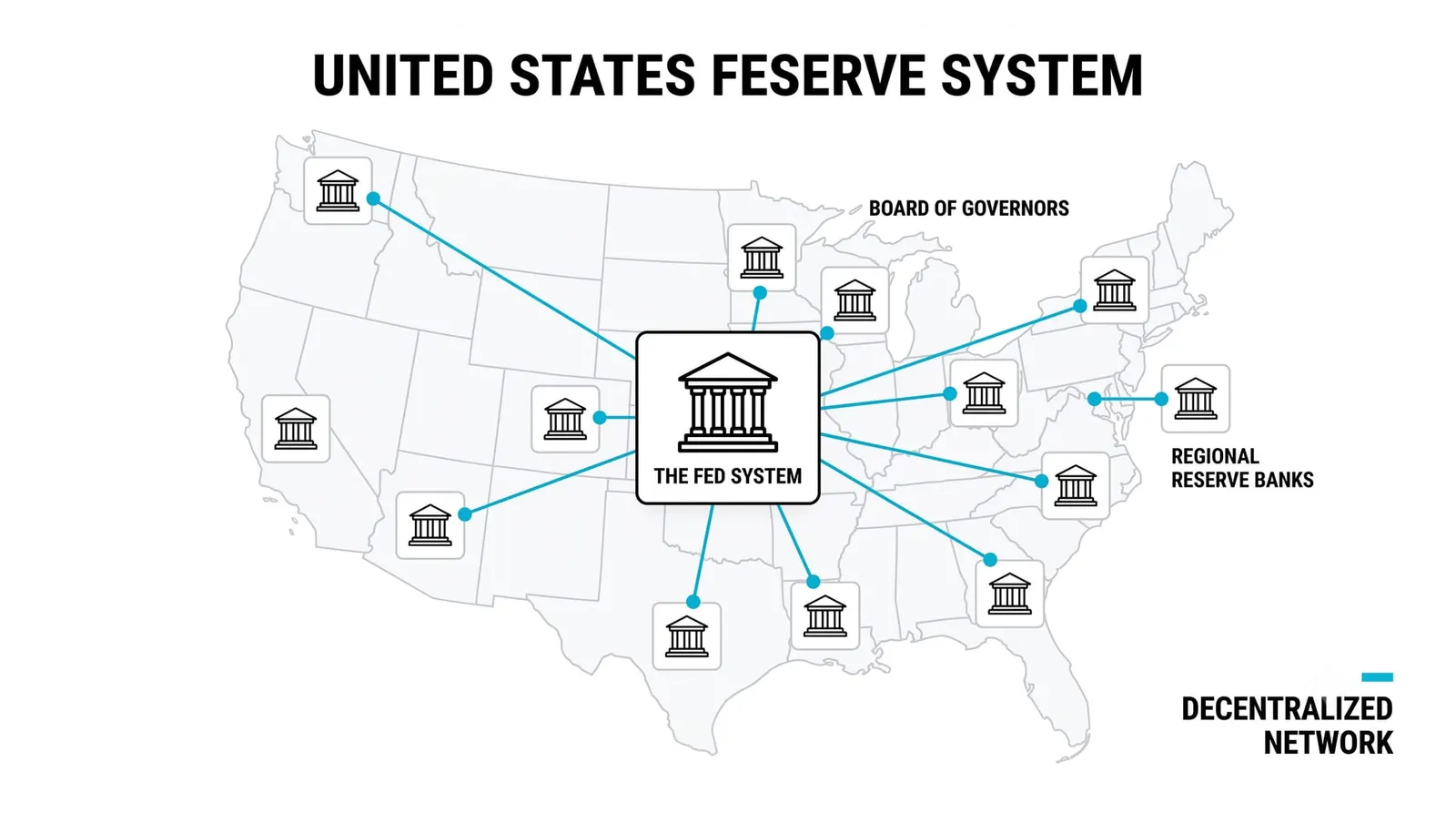
The Federal Reserve's Structure: How It's Built
The Fed is not one building with one person in charge. It is a system with three main parts, and knowing which part does what saves you from most beginner confusion.
At the top sits the Board of Governors in Washington, a small group of members appointed for long terms. The Board oversees the system, writes regulation, and includes the Chair, whose public words markets parse syllable by syllable.
Spread across the country are twelve regional Reserve banks, one each in districts like New York, Chicago, and San Francisco. They gather economic information from their regions, supervise banks, and feed local conditions into national policy. The New York Fed also carries out the market operations that put policy into practice.
The third piece is the one traders care about most: the Federal Open Market Committee, the FOMC. This is the body that actually votes on interest rates. Everything else in the structure exists to inform or execute what the FOMC decides.
| Component | What It Is | What It Decides or Signals |
|---|---|---|
| Board of Governors | Small leadership group in Washington | Sets the policy direction; the Chair's words signal intent |
| Regional Reserve banks | Twelve banks across US districts | Feed regional data into policy; rotate into voting seats |
| FOMC | The voting committee | Decides the policy interest rate |
| Statement and press conference | The published output of each meeting | Signals the path ahead, often moving markets more than the rate itself |
The Fed's Dual Mandate: What It's Actually Trying to Do
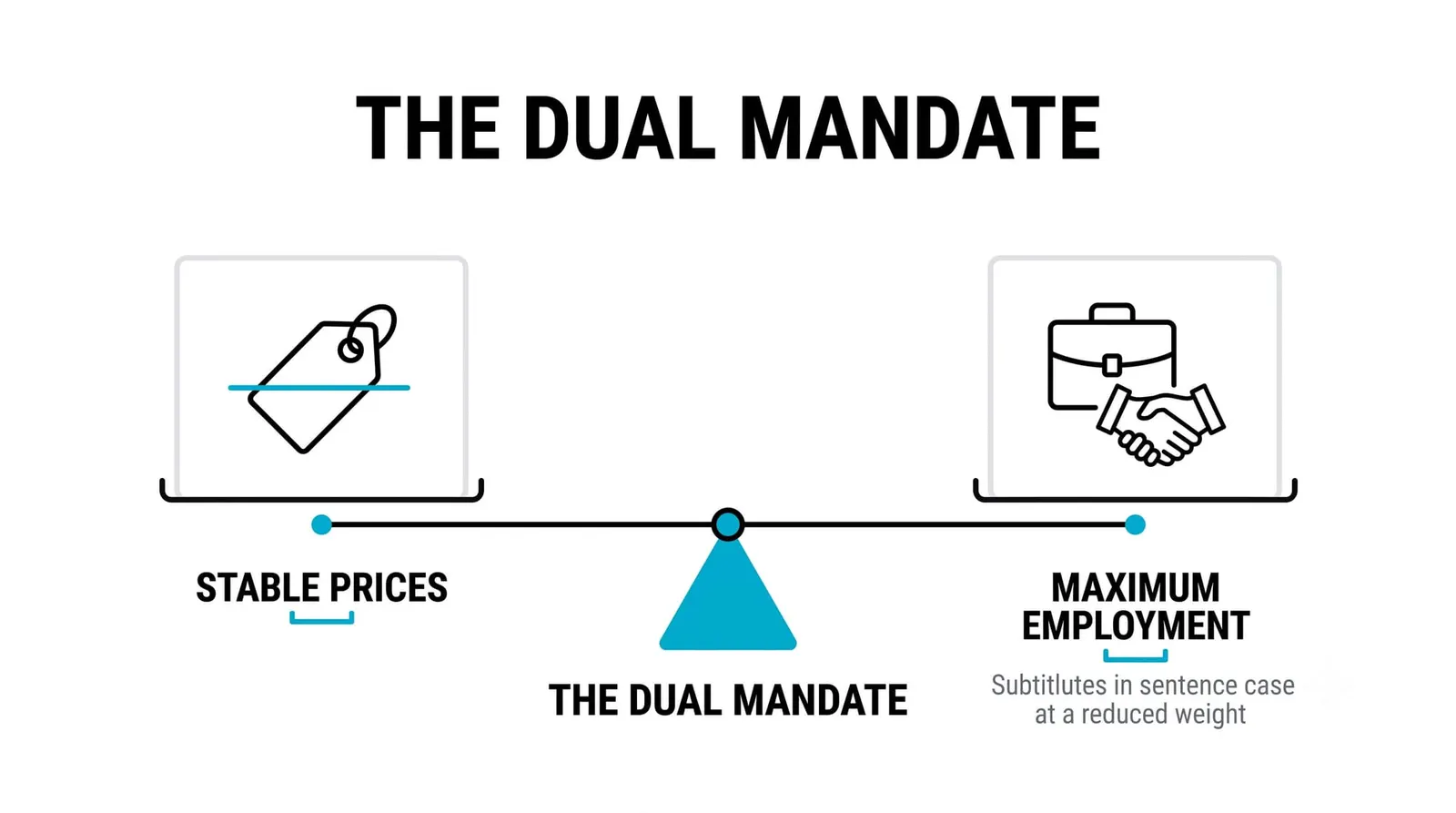
Congress gave the Fed two jobs, written into law: stable prices and maximum employment. Most central banks get one primary target. The Fed has to balance two, and that balancing act is the engine behind almost every debate you will read about Fed policy.
Stable prices means low, predictable inflation. The Fed frames this as inflation running around two percent a year over time, a target that is a structural feature of how it operates. Two percent is high enough to keep the economy clear of deflation's trap and low enough that people can plan.
Maximum employment means the strongest job market the economy can sustain without overheating. There is no single number for it. It shifts with demographics and structure, which is why the Fed talks about it in estimates rather than targets.
Here is the tension. Lower rates tend to support hiring but can feed inflation. Higher rates tend to cool inflation but can cost jobs. When the two goals pull apart, markets stop asking what the Fed wants and start asking which goal it is protecting right now. Read the language through that lens and most Fed commentary becomes legible.
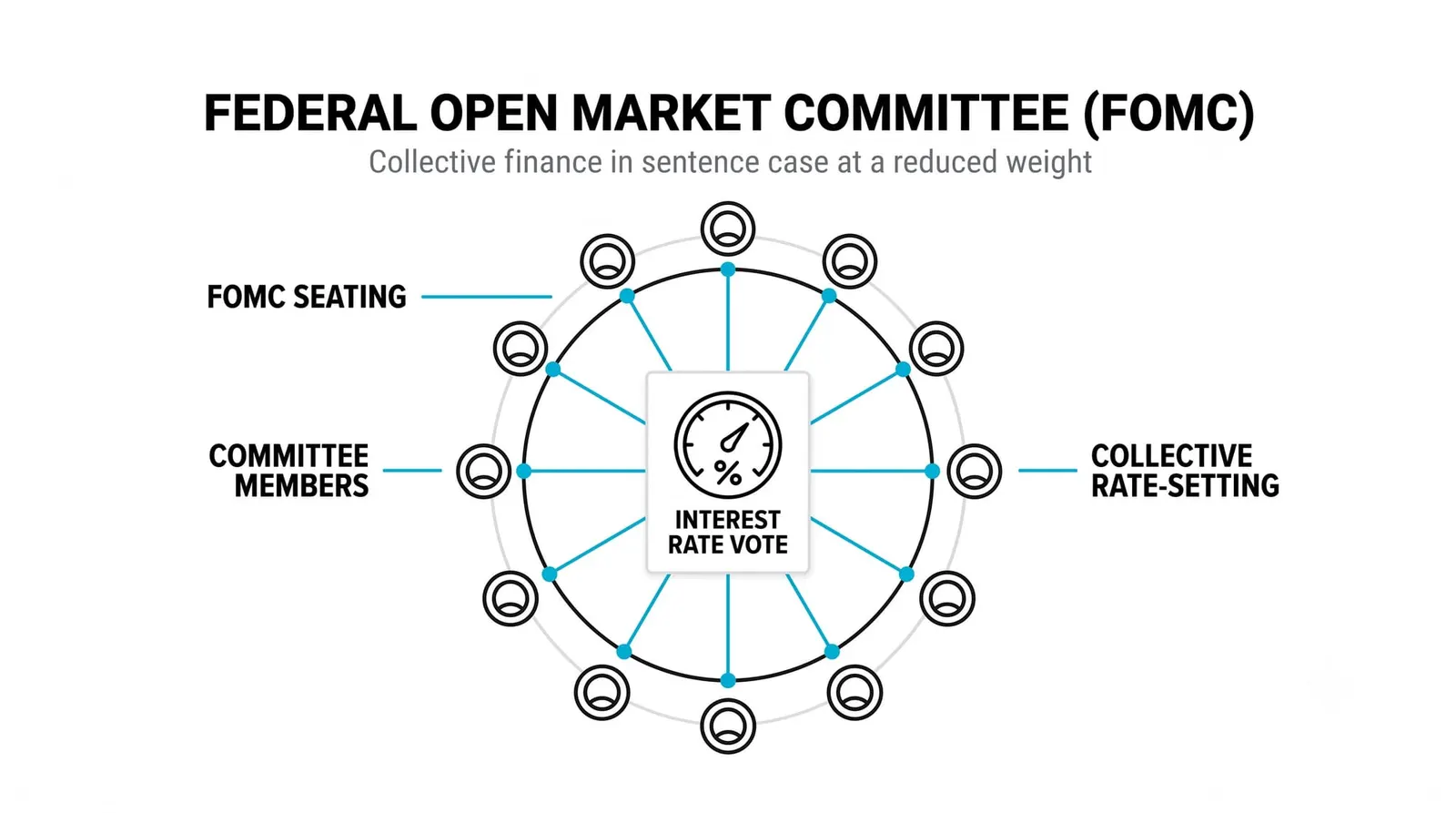
Who Makes the Decisions: The FOMC
Twelve voting members decide US interest rates. Seven come from the Board of Governors, one seat always belongs to the New York Fed president, and the other four rotate among the remaining regional bank presidents. A dozen people, one vote each, one rate.
The committee meets eight times a year on a published schedule. These are scheduled events with expectations priced in well before the day arrives, which means they run exactly on the news mechanics you learned earlier in this level: what matters is expectation versus surprise, not the raw announcement.
Each meeting produces three outputs, and each moves markets differently:
- The statement. A short, formulaic document announcing the rate decision and describing the economy. Traders compare it word by word against the previous statement. One changed adjective can move billions.
- The projections. At certain meetings, members publish their individual forecasts for rates, growth, inflation, and unemployment. These sketches of the expected path get traded as hard information.
- The press conference. The Chair takes questions. Tone, hesitation, and emphasis here can reprice markets minutes after the statement already did.
A blunt truth: the rate number is often the least surprising part of the day. The words around it carry the surprise.
Later lessons in this level take the trading side further: hawkish versus dovish language, how to approach rate decisions as trades, and the central bank meeting calendar as a planning tool. For now, hold the structure and the mechanics.
Why the Fed Moves Markets More Than Any Other Central Bank
Size alone does not explain it. Three structural facts do.
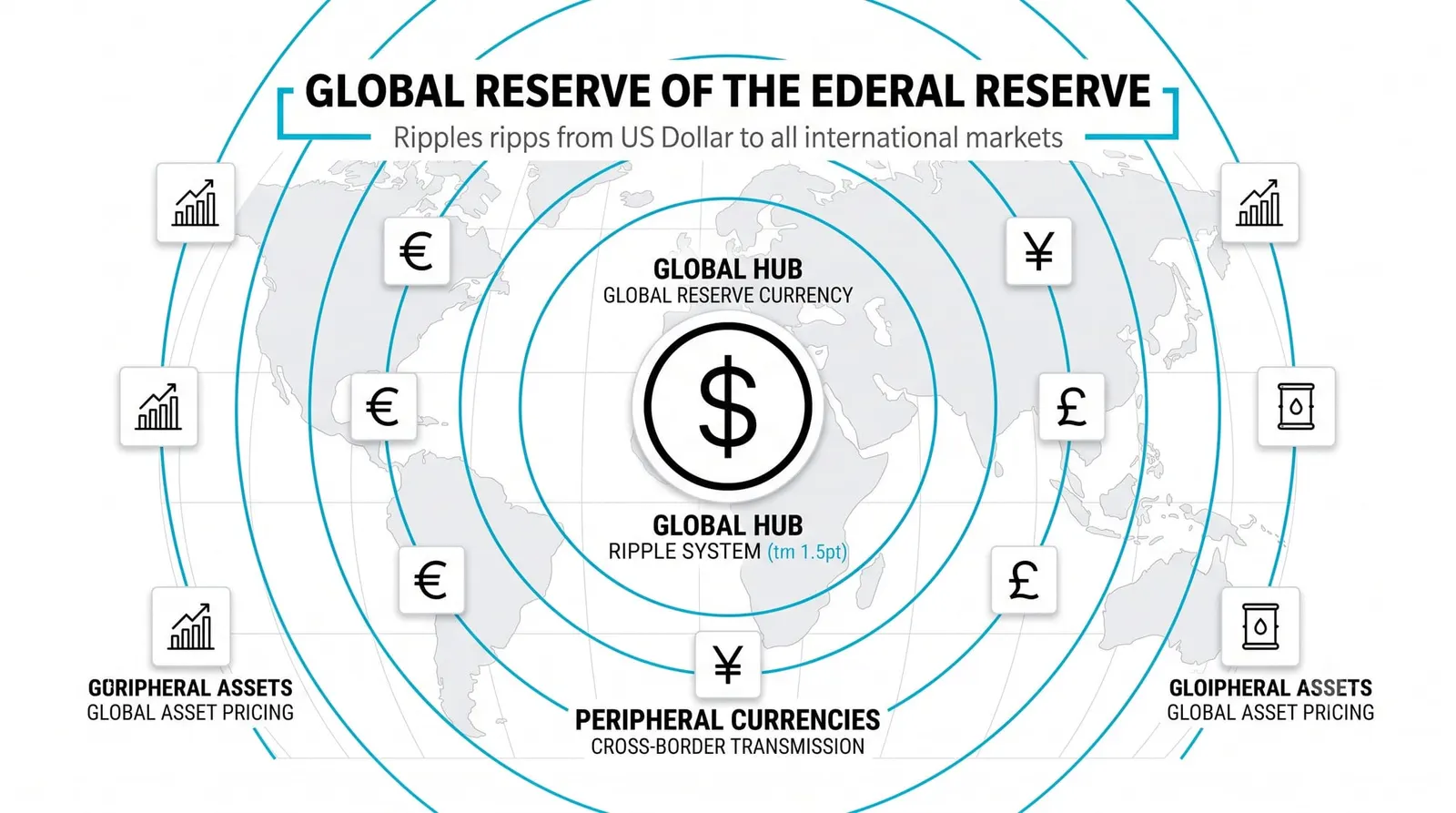
First, the dollar is the world's main trade and invoicing currency. A huge share of global commerce is priced and settled in dollars, even between two countries that are not the United States. When the Fed changes the price of dollars, it changes the cost of doing business on every continent.
Second, major commodities, oil, gold, most metals and grains, are quoted in dollars. A stronger dollar mechanically pressures those prices, because each dollar buys more. A commodity trader who ignores the Fed is trading with one eye closed.
Third, US interest rates are the baseline the rest of the world borrows against. Governments, banks, and companies worldwide hold dollar debts and dollar assets. When the Fed raises rates, borrowing costs rise far beyond US borders, capital flows toward the higher yield, and other central banks get forced into reactions they never chose.
Put the three together and the ship-in-the-canal image earns its place. When the Fed turns, currencies, bonds, stocks, and commodities all feel the wake in the same session.
One Meeting, Four Markets
Picture a hypothetical FOMC day with round, invented numbers. Markets expect a pause. Consensus positioning says the rate stays at 5.00%.
At the announcement, the Fed raises the rate to 5.25%. A quarter point nobody priced in. The same-day path follows the logic you already know:
- The dollar firms. Higher US rates mean higher yield on dollar assets. A dollar index jumps, say, half a percent within minutes.
- Bonds sell. Existing bonds paying lower coupons lose appeal. A benchmark yield climbs from 4.00% toward 4.15%.
- Stocks wobble. Higher rates squeeze valuations and borrowing costs. An index drops one percent in the first flush.
- Commodities slip. The firmer dollar weighs on dollar-priced goods. Gold gives back a few dollars an ounce.
Then the twist. The statement drops one sentence, a hint that the hiking cycle is nearly done. Traders do the arithmetic: one more quarter point today, but nothing after it. That path is easier than the one they feared.
Within the hour, half the move reverses. The dollar surrenders part of its gain, bonds claw back, stocks trim their loss. The number said tighter. The words said almost finished. The words outweighed the number.
That is expectation versus surprise applied twice in one afternoon, once to the rate, once to the language. The mechanics are the ones you learned earlier in this level. The Fed just gives them their biggest stage.
The Federal Reserve, Answered
Is the Fed independent from politics?
Yes, in structure. Governors serve long terms that span election cycles, funding comes from the Fed's own operations rather than congressional budgets, and rate decisions do not require approval from any elected body. Political pressure exists in practice, but the institutional design is built to resist it.
What is the difference between the Fed and the US government?
The government taxes and spends; the Fed manages money and interest rates. Fiscal policy, budgets, taxes, debt issuance, belongs to Congress and the Treasury. Monetary policy, the policy rate and money conditions, belongs to the Fed. They interact constantly but decide separately.
Why does the whole world watch an American institution?
Because the dollar sits at the center of global trade, commodity pricing, and international borrowing. A Fed decision changes financing costs and capital flows in countries that have no vote and no say, so everyone watches whether they like it or not.
How do I follow the Fed without drowning in jargon?
Start with the three outputs: the statement, the projections, the press conference. Read the statement against the previous one, note what changed, and ask which half of the dual mandate the language favors. That small routine covers most of what markets react to.
Next in this level, the language itself: how to read hawkish and dovish signals, and how traders actually position around rate decisions. You now have the institution. The vocabulary comes next.