Major Central Banks Beyond the Fed
Major central banks beyond the Fed run monetary policy for the world's other big currencies, and central banks as a group set the price of money everywhere traders operate. The European Central Bank, the Bank of England, the Bank of Japan, the Bank of Canada, and the Reserve Bank of Australia each do for their currency what the Fed does for the dollar: set a policy rate, manage the money supply, and signal where policy is heading.

Each one has its own mandate, its own meeting rhythm, and its own market temperament. Think of them as pharmacists for their economies: the goal is the same everywhere, but each patient gets a different dosage on a different schedule. Earlier this level you learned what central banks are and how the Fed works. This lesson covers the rest of the major institutions. The language of policy, hawkish versus dovish, gets its own lesson next, so we will touch it lightly here.
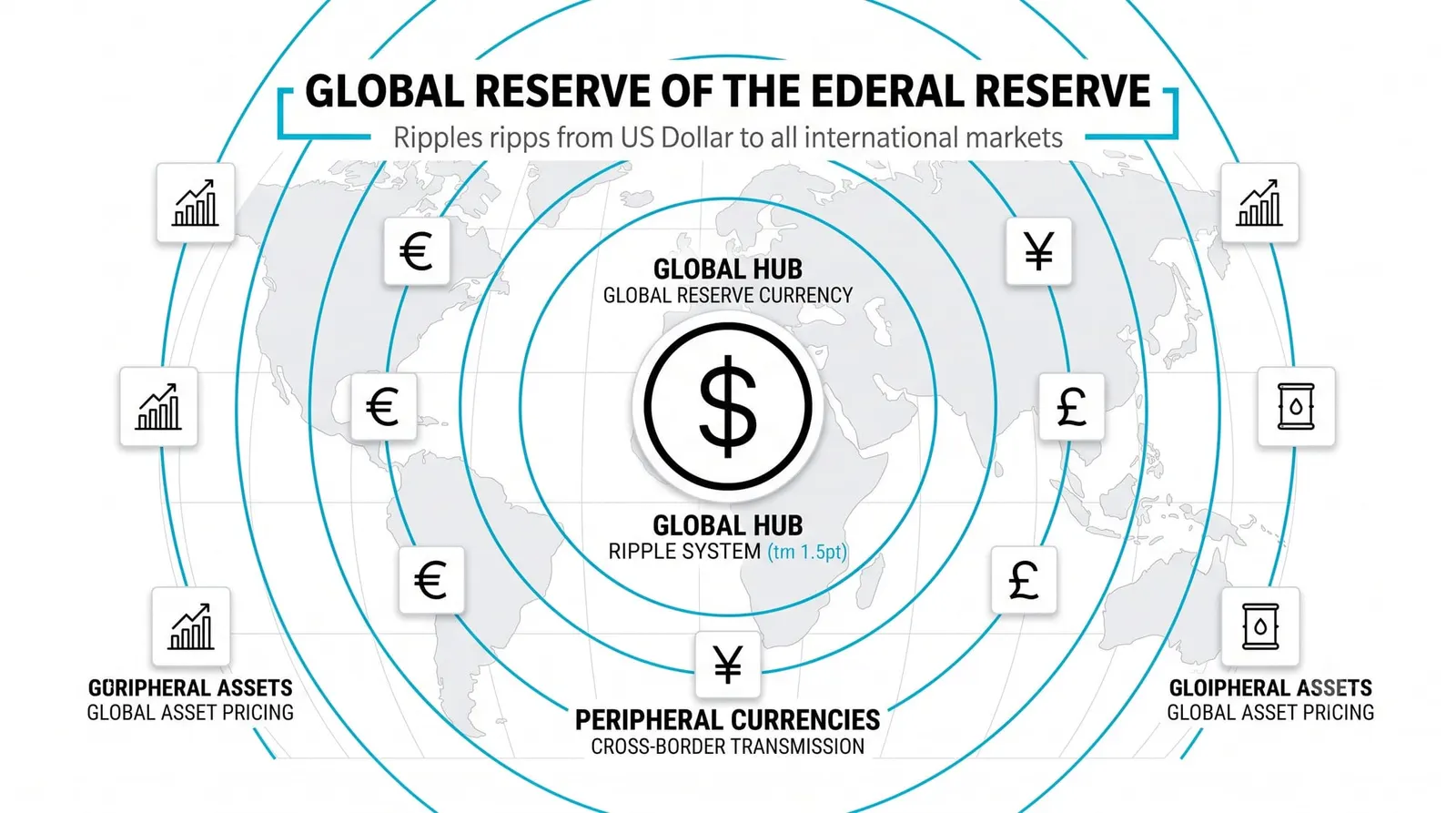
Why These Five Matter to Traders
Every one of these banks sets the rate on a currency you will trade or trade against. The ECB controls the euro. The Bank of England controls the pound. The Bank of Japan controls the yen. The Bank of Canada controls the Canadian dollar. The Reserve Bank of Australia controls the Australian dollar.
Interest rates drive currency values. When a bank raises rates or sounds like it might, its currency usually attracts capital. When it cuts or sounds soft, the currency tends to weaken. That is the core mechanism, and it plays out across every forex pair involving these currencies.
The reach goes further than forex. Rate decisions from these banks move global bond markets, because their government bonds compete with Treasuries for the same pool of global capital. They also shift risk appetite. A surprise from a major bank can lift or sink equity indices on the other side of the world within minutes.
You do not need to master all five at once. You need to know they exist, what each one watches, and when each one speaks. The meeting calendar tells you when. This lesson tells you the rest.
The ECB: One Bank, Many Countries
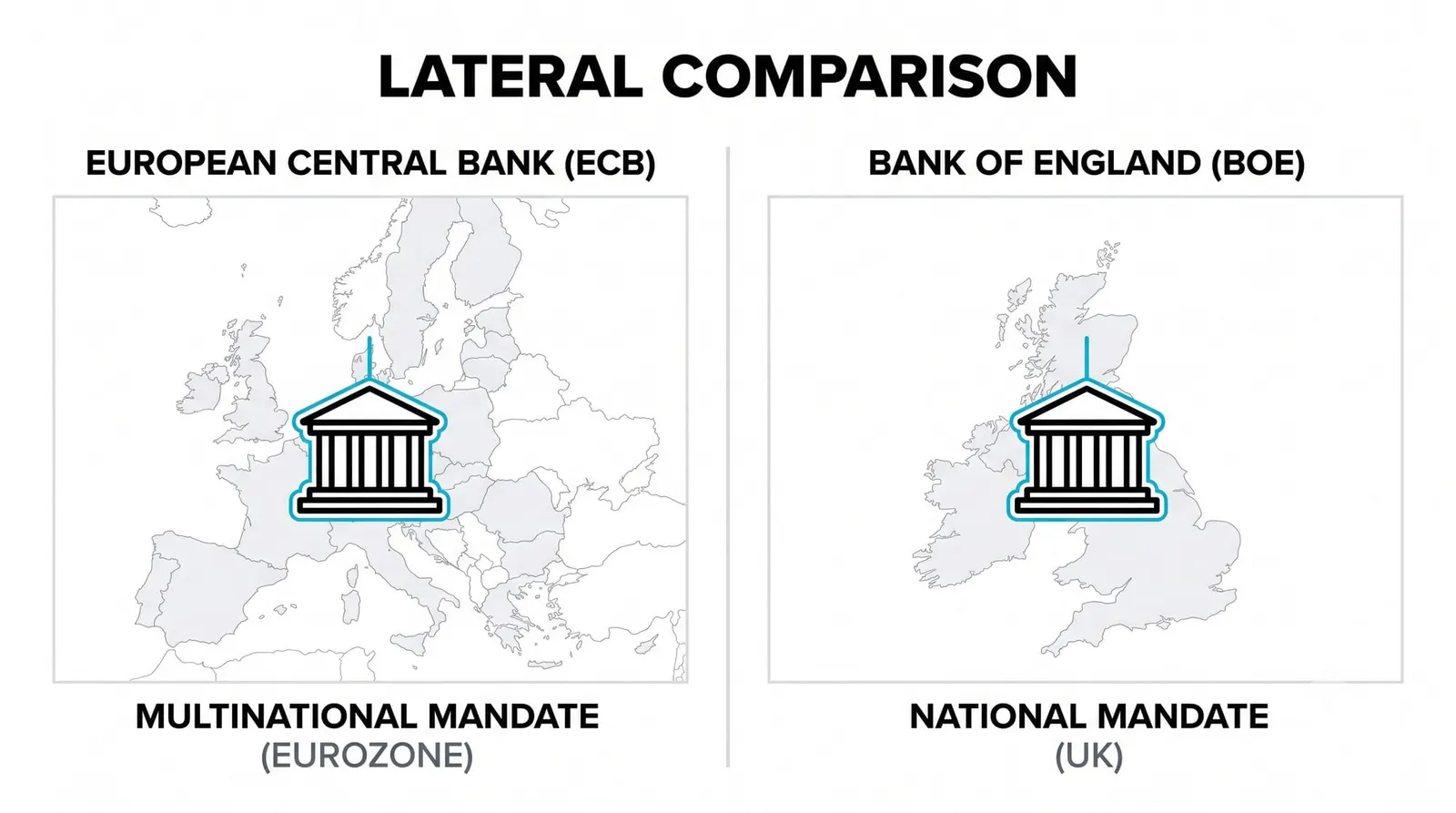
The European Central Bank runs one monetary policy for a group of countries that share the euro but keep their own governments, budgets, and economies. That structure is unlike anything else in the central banking world. The Fed answers to one federal government. The ECB answers to many.
Its mandate centers on price stability. The bank defines that as inflation at a target rate over the medium term, and it treats that goal as its primary job. Growth and employment matter, but the legal foundation puts inflation first.
Decisions come from the Governing Council, which brings together the heads of the national central banks of the eurozone countries plus an executive board. That composition creates the bank's signature feature: internal tension. A country with weak growth wants easier policy. A country with strong inflation pressure wants tighter policy. The Council has to speak with one voice anyway.
For traders, ECB meetings matter because the euro is the second most traded currency in the world. The press conference after each decision often moves the euro more than the decision itself, because the wording reveals where the internal balance of opinion sits. Watch the language around inflation persistence and growth risks. Those phrases carry the hints.
The BOJ: The Different Apprentice
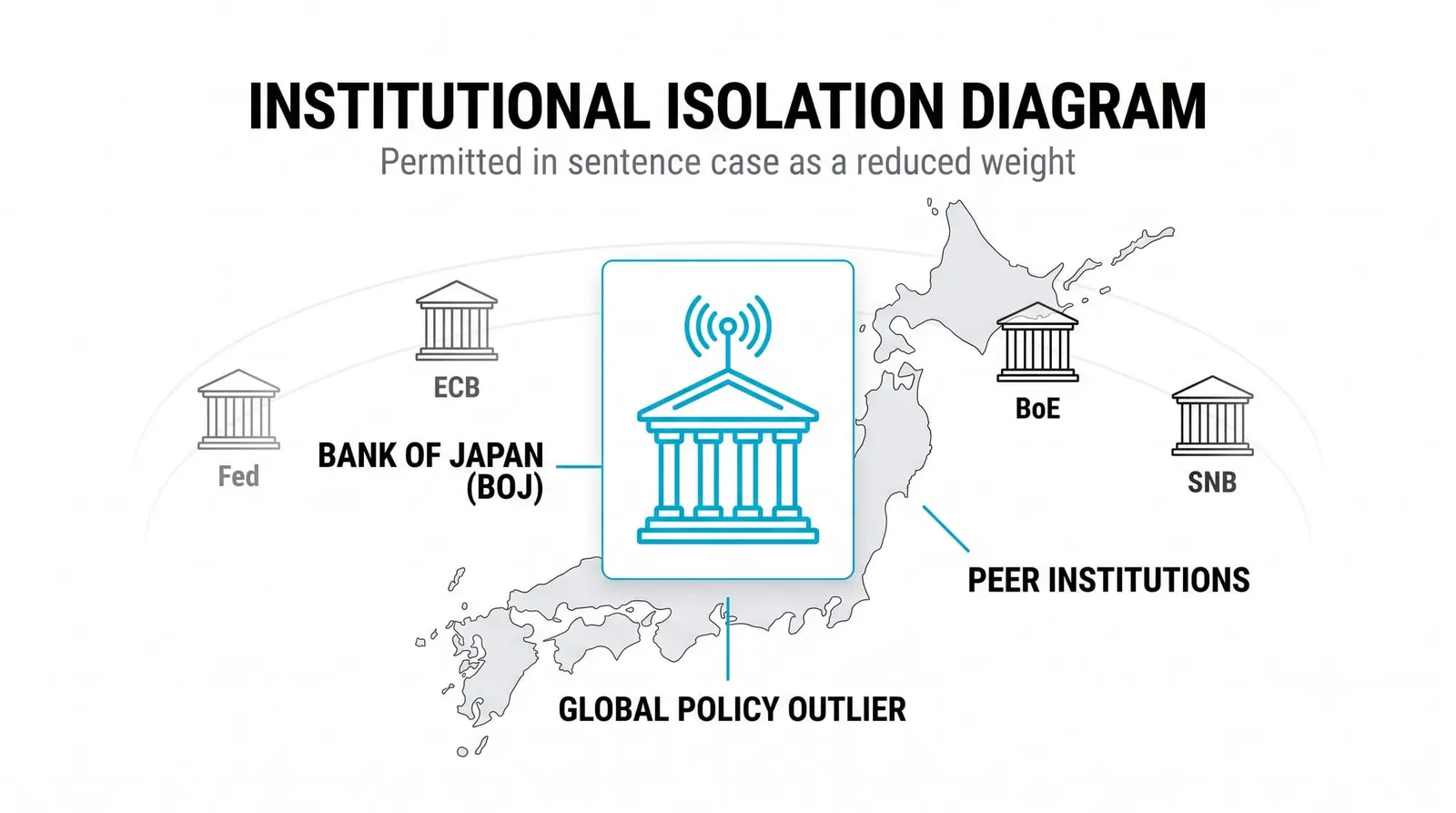
The Bank of Japan spent decades doing things no other major central bank had tried. Fighting persistent deflation and weak growth, it pioneered large-scale asset purchases, kept rates at or below zero for years, and at times directly capped government bond yields to hold borrowing costs down.
That history matters because it shaped the yen's temperament. While other banks raised and lowered rates in cycles, Japan's policy sat pinned near the floor. The yen became the classic funding currency: traders borrowed cheap yen to buy higher-yielding assets elsewhere. Any hint that Japanese policy might normalize threatened that trade worldwide.
When the BOJ did begin moving away from its extreme settings, it moved slowly and signaled each step far in advance. Gradualism is the bank's defining trait. It fears shocking a fragile economy more than it fears being late.
The practical takeaway: the yen reacts differently from other majors when Japanese policy shifts. A small BOJ adjustment can produce an outsized yen move, because so many global positions were built on the assumption that Japan would stay loose forever. Treat BOJ meetings as low-frequency, high-impact events.
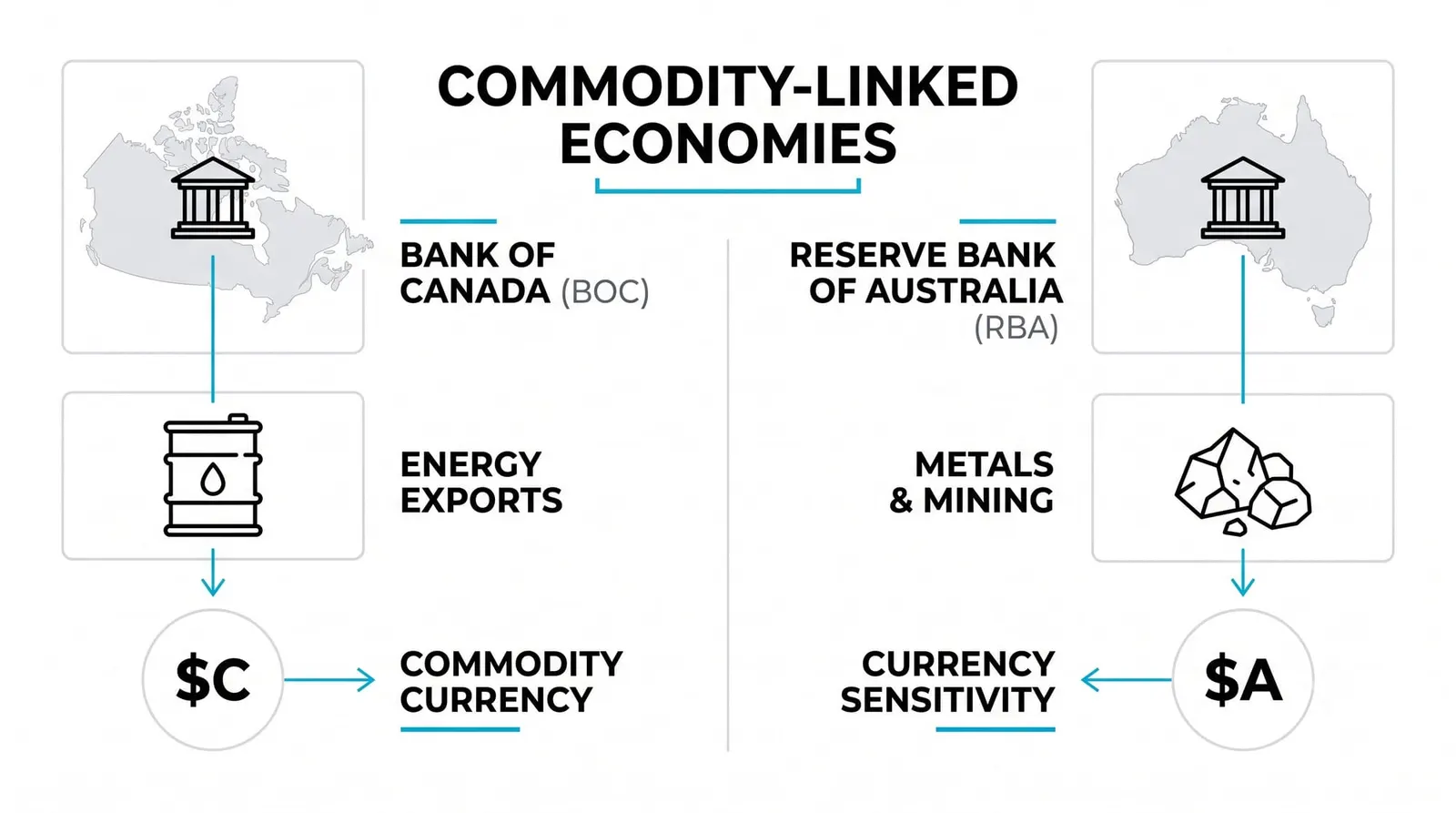
The BOC and RBA: The Commodity Pair
Canada and Australia share a structural trait: both economies lean heavily on raw materials. Canada's exports center on oil and energy. Australia's center on iron ore, coal, and other minerals shipped largely to Asia.
That shapes their currencies. The Canadian dollar often moves with oil prices. The Australian dollar often moves with iron ore prices and Chinese demand. Traders call both "commodity currencies" for this reason.
Their central banks know it. Statements from the Bank of Canada and the Reserve Bank of Australia regularly reference global demand, commodity prices, and trade conditions alongside the usual inflation and employment language. When you read their releases, expect a section on the global outlook that the Fed or the ECB might keep shorter.
Both banks run standard inflation-targeting frameworks and meet on regular schedules. Neither is exotic in structure. What makes them distinct is what they watch. A surge in oil can let the BOC stay patient while other banks tighten, or force it to act sooner. A slump in Chinese construction can push the RBA toward caution regardless of domestic data. Follow the commodities and you will often anticipate the tone.
Comparing the Central Banks: Mandates, Meetings, and Temperaments
Start with rhythm. Each bank holds scheduled policy meetings roughly every six to eight weeks, with minutes or press conferences attached. The exact count differs, but the pattern is the same: a decision, then communication, then weeks of interpretation until the next one.
The ECB's temperament is consensus friction. Because its Council spans many countries, its statements are negotiated documents. A single adjective can represent a hard-fought compromise. Traders read ECB language for shifts in emphasis, because small changes signal real movement inside the room.
The BOJ's temperament is gradualism. It telegraphs changes well ahead and prefers tiny steps. When it does surprise, the market reaction is violent precisely because surprises are rare.
The Bank of England sits between the two. It faces a single national economy like the Fed, but one sensitive to both energy imports and global finance. Its communication style is direct, and its votes are published by member, so split decisions are visible and traded.
The commodity banks round out the set. The BOC and RBA communicate plainly and tie their outlooks to resource markets. The same hawkish word lands differently from each bank. From the ECB, "vigilant" might signal a hike within two meetings because the word had to survive negotiation. From the BOJ, the same word might mean a change next year. Context is the bank's history, and you learn it by reading a few cycles of statements.
One Shock, Five Banks
Here is a hypothetical illustration with invented round numbers. Suppose the global oil price doubles overnight, from 50 to 100 units per barrel, due to a supply disruption. Same shock, five different concerns.
The Bank of Canada watches an export boom. Canada sells oil, so national income rises. Its worry is the flip side: higher fuel costs feeding domestic inflation while the economy is already getting a revenue windfall. It leans toward tightening faster than peers.
The Reserve Bank of Australia watches transport and input costs. Australia exports energy in some forms but imports refined fuel. Its concern is inflation passing through freight and fuel into consumer prices, balanced against what expensive oil does to its Asian customers' demand for iron ore.
The ECB watches the trade balance worsen. The eurozone imports most of its energy. A doubled oil price acts like a tax on the whole region, slowing growth while pushing inflation up. That is the worst combination for a central bank: tightening risks killing growth, easing risks feeding inflation.
The Bank of Japan watches import costs for a resource-poor economy. Japan imports nearly all its energy. The shock raises inflation, but the BOJ has spent decades fighting too little inflation, so it weighs whether this price pressure is the healthy kind or a cost squeeze that will choke demand.
The Bank of England balances both sides. Britain has some domestic energy production but is also a major importer and a finance-heavy economy. It watches consumer energy bills hit spending while keeping an eye on the pound, since a weaker currency would make the imported oil even more expensive.
One event, five different reaction functions. That is why the same headline moves these currencies in different directions and sizes.
| Central Bank | What It Sets | What Its Decisions React To |
|---|---|---|
| ECB | Policy rate for the euro | Eurozone-wide inflation, growth across member countries |
| BOE | Policy rate for the pound | UK inflation, wages, energy costs, consumer spending |
| BOJ | Policy rate and bond-yield settings for the yen | Inflation sustainability, wage growth, import costs |
| BOC and RBA | Policy rates for the Canadian and Australian dollars | Domestic inflation plus commodity prices and global demand |
Major Central Banks, Answered
Which central bank moves markets the most?
The Fed moves global markets the most because the dollar anchors world trade and finance. Among the rest, the ECB comes next because the euro is the second most traded currency, and its decisions ripple through European bonds and global risk sentiment.
Why does the Bank of Japan matter for global markets?
Because decades of ultra-loose Japanese policy made the yen the world's funding currency. Countless global positions were built on cheap yen borrowing, so any shift in BOJ policy forces those positions to adjust, which moves assets far beyond Japan.
Do central banks coordinate their decisions?
Formally, no. Each bank sets policy for its own mandate and economy. They communicate through international forums and watch each other closely, and in genuine crises they have acted together, but day-to-day decisions are independent.
Which currency pairs do these banks affect?
Each bank most directly affects pairs containing its own currency: EUR/USD for the ECB, GBP/USD for the BOE, USD/JPY for the BOJ, USD/CAD for the BOC, and AUD/USD for the RBA. Cross pairs like EUR/JPY react to two banks at once, which doubles the event risk you need to track.
Next in this layer, you will learn the language these banks speak: what hawkish and dovish actually mean, how to read a policy statement line by line, and why the wording often moves markets more than the rate decision itself.