Earnings Season: How to Trade Around It
Earnings season is the several-week stretch each quarter when most public companies report their results, and it is the one scheduled-news event stock traders cannot avoid. It arrives four times a year, it follows a rough order by industry, and while it runs, the market's temperament visibly changes. Volumes shift, gaps widen, and single headlines move prices faster than almost anything else on the calendar.

Think of earnings season as a parade that passes through town in sections. The banks lead, the retailers follow, and the whole town adjusts its routine while it lasts.
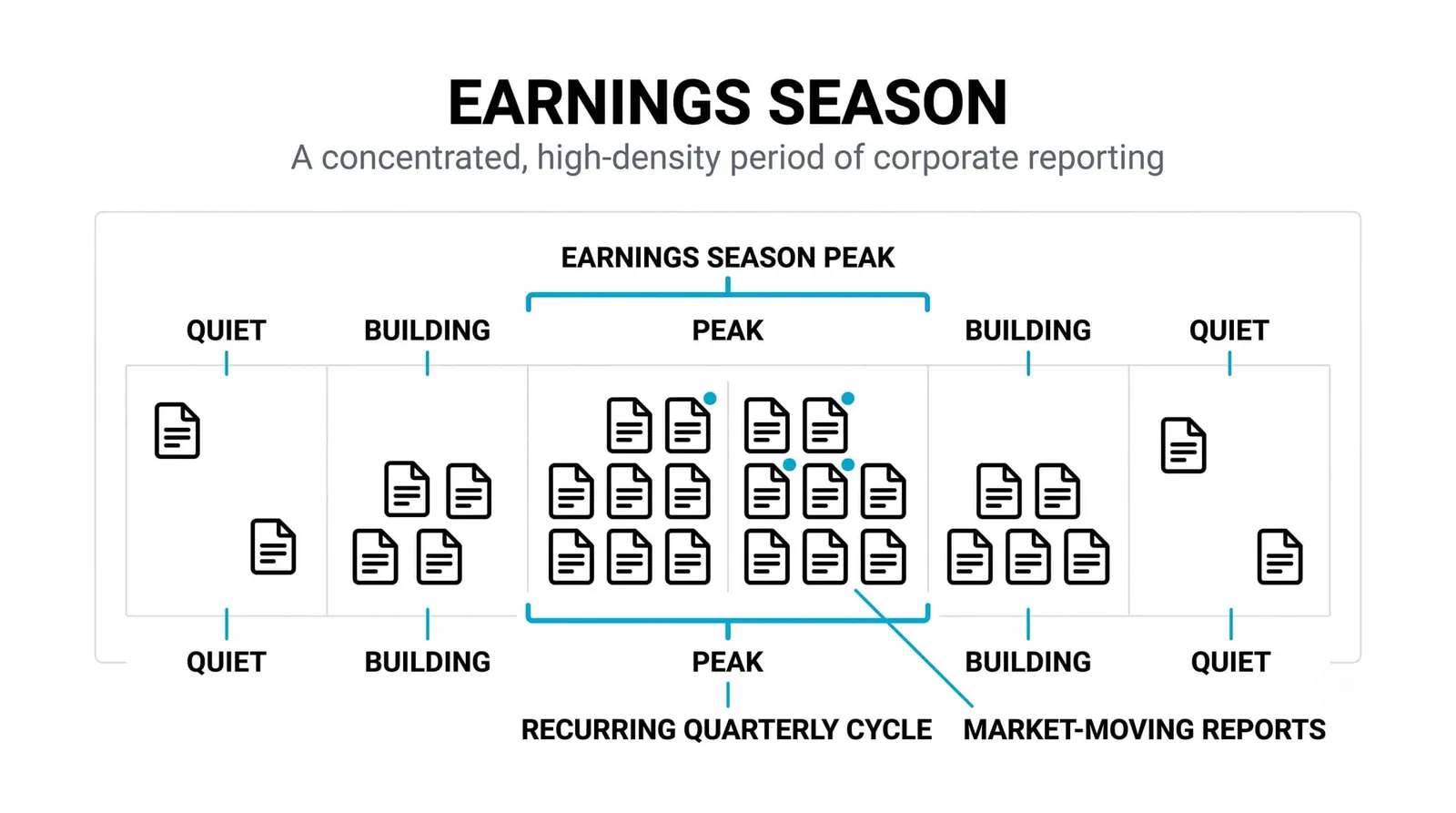
What Earnings Season Actually Is
Public companies report results every quarter. The reports cluster in the weeks just after each quarter ends, so the market gets four dense reporting windows a year rather than a steady drip. Most large companies publish within a few weeks of quarter-end, which compresses thousands of releases into a short span.
The waves arrive in a recognizable order. The big banks typically report first, which is why their results get treated as an early read on credit, lending, and consumer health. Large technology and consumer companies follow. Retailers tend to report later, because their quarters close on a slightly different schedule. By the time the last wave lands, the market has absorbed most of the quarter's corporate information in one compressed burst.
This concentration is what makes it a "season" rather than a series of isolated events. On a heavy day, dozens of major companies report before the open and after the close. The calendar itself becomes a market force. One term you'll see constantly is earnings per share, the profit slice assigned to each share; that number gets its own lesson right after this one.
Why the Whole Market Feels Different During These Weeks
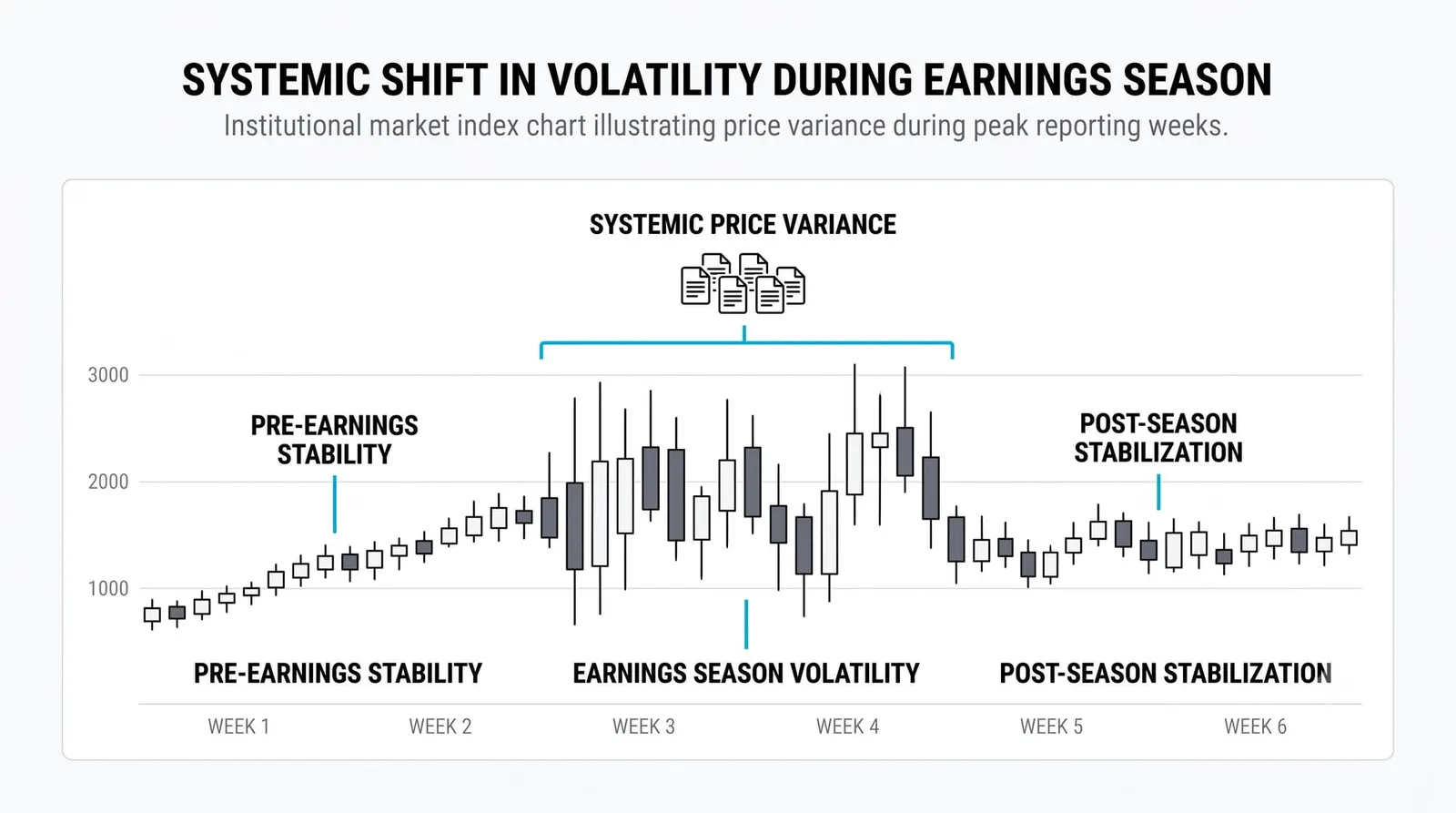
Volatility clusters around report dates. A stock that normally drifts quietly can move several percent in minutes when its numbers hit the wires. Multiply that across hundreds of companies reporting in the same window, and the entire market's pulse quickens.
The index effect matters even if you never trade individual stocks. Indexes are weighted by size, and the largest companies tend to report in the same few weeks. When a handful of mega-weights gap on their results, the index gaps with them. A trader holding an index product during earnings season is indirectly holding exposure to dozens of single-stock events.
Gaps are the practical hazard. Earnings are released outside regular trading hours, so the first tradable price after a report can be far from the last price before it. Stops placed inside that gap do not protect you at your level. The market simply reopens somewhere else.
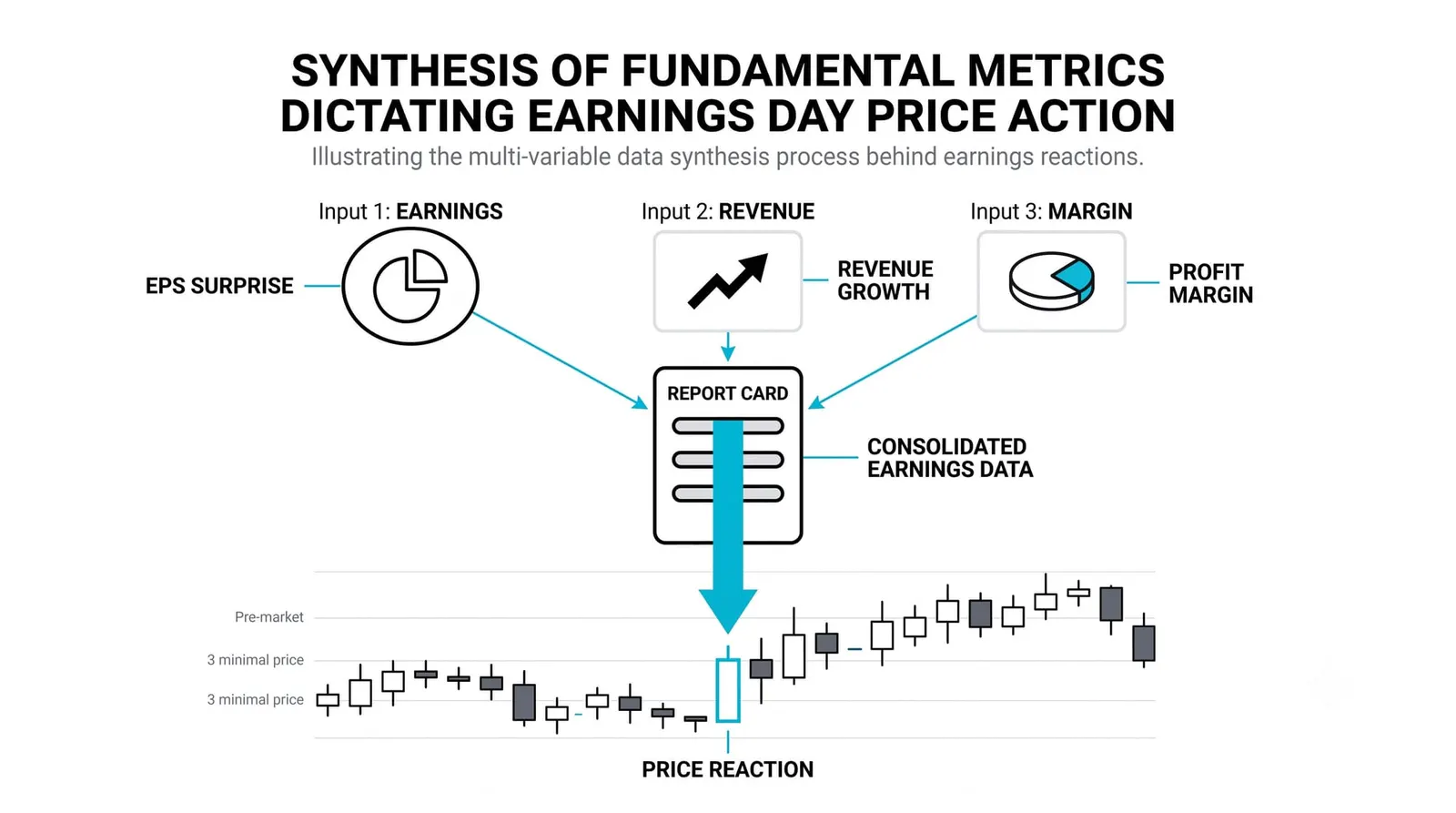
What Moves Price on Earnings Day: Beyond Just EPS
The headline number is one line of a much longer document. Traders who only watch whether the profit figure beat or missed are reading the first sentence of a full page.
Revenue is the second line everyone checks. A company can beat on profit while sales disappoint, and the market often punishes that combination, because cost cuts have limits while revenue growth is what funds the future. Forward guidance usually matters most of all: management's own forecast for the coming quarter or year tells investors what to expect next, and a cautious outlook can erase a strong quarter in seconds.
Margins round out the picture. Profit earned on shrinking margins tells a different story than profit earned on expanding ones, even when the headline number is identical. The market prices the whole package: what happened, what it cost, and what comes next. The surprise that moves price is the gap between that full package and what was priced in, not any single line.
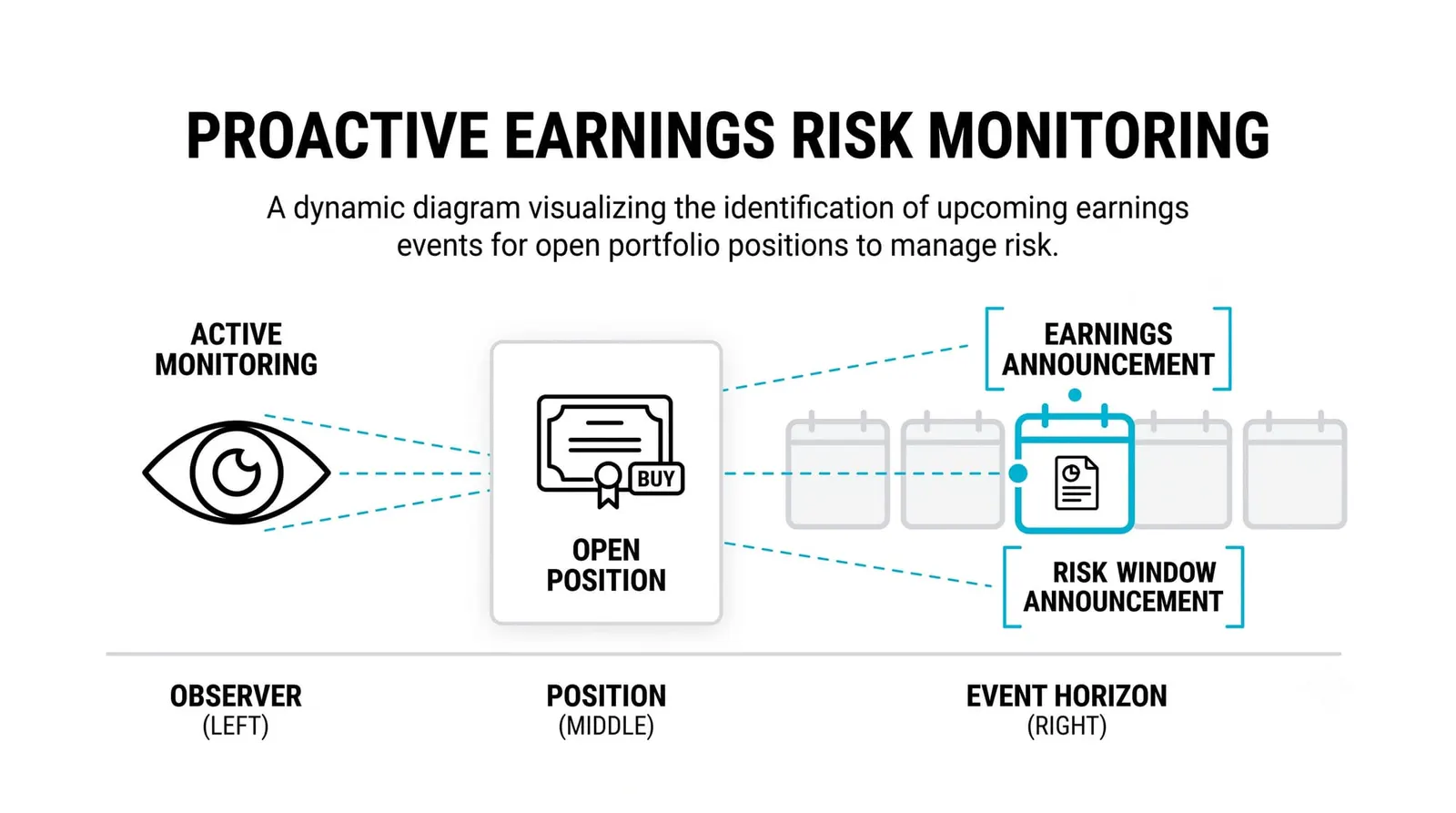
Trading Around Earnings Without Getting Caught Off Guard
Know the date before you hold through it. Every company publishes its report date in advance, and checking it takes seconds. Holding a stock into earnings without knowing you are doing it is not a strategy; it is an accident waiting to happen.
Decide your exposure in advance, while nothing is moving. Reasonable choices include sizing the position down so a gap cannot hurt you, closing before the release and reassessing after, or deliberately holding through with full acceptance of the gap risk. What does not work is improvising the decision in the first chaotic minutes after the numbers drop.
Those first minutes belong to machines. Algorithms parse the release and trade the headline faster than any human can read it, and the opening move frequently reverses once humans digest the details. The disciplined read happens after the conference call, when guidance, margins, and management's tone are all on the table. Patience is not passivity here. It is the edge.
One Stock, One Earnings Day
Here is a fully hypothetical illustration with round numbers. Imagine a company expected to report earnings per share of 1.00. The release prints 1.05, a clean five-cent beat. Headlines flash the beat. Then the stock falls 6 percent in after-hours trading.
Why? Buried further down the release, management guided next quarter's profit below what analysts had penciled in. The quarter that just ended is history; the market prices the future. A small beat on old news lost to a large disappointment on the forward view, and the forward view won easily.
Now consider what a trader holding through that release actually owned. They did not own a bet on whether 1.05 beats 1.00. They owned exposure to the entire package: the headline, the revenue line, the margins, the guidance, and the market's reaction to all of it, delivered as a single overnight gap they could not exit inside of. That is the real position earnings creates, whether the trader named it or not.
| Component | What it is | Typical effect on price |
|---|---|---|
| The beat | Reported EPS above the consensus estimate | Often lifts price, but only if the rest of the report cooperates |
| The revenue miss | Sales below expectations, even with profit intact | Frequently drags price down; signals weakening demand |
| The guidance cut | Management lowers its outlook for coming periods | Commonly the heaviest hit; can overwhelm a strong quarter |
| The margin story | Profit earned on expanding or shrinking margins | Shapes the quality read; shrinking margins can spoil a beat |
Earnings Season, Answered
Should I hold a stock through its earnings report?
Only if you decided to in advance and sized the position for a gap. Holding through earnings is a legitimate choice, but it is a bet on the whole release, including guidance you have not seen. If the potential overnight move would force you to react emotionally, reduce the position or step aside before the report.
Why do stocks fall on good earnings?
Because price reacts to the full package against expectations, not to the headline. A beat on profit can arrive alongside weak revenue, shrinking margins, or lowered guidance, and any of those can dominate. Sometimes the good news was already priced in, and the report simply confirmed what buyers had paid for weeks earlier.
When exactly is earnings season?
It begins a few weeks after each quarter ends and runs for several weeks, four times a year. There is no official start date, but the big banks reporting early in the window are the conventional opening signal, and the late-reporting retailers mark the tail end.
Does earnings season matter for indexes?
Yes, because indexes carry the same reporting companies as their largest weights. When the biggest names report in the same weeks and gap on results, the index moves with them. Even a pure index trader is exposed to earnings season, just in diluted form.
Next in this level, we take apart the number at the center of all of this: earnings per share, how it is built, and why two companies with identical profits can report very different EPS figures.