What Is a Financial Statement
A financial statement is a standardized document that reports what a company earned, what it owns and owes, or how its cash moved, prepared under rules every public company follows so outsiders can compare businesses they will never see from the inside. It comes down to one line: a company you cannot visit still has to tell you its story in numbers, and it has to tell that story in a fixed format.

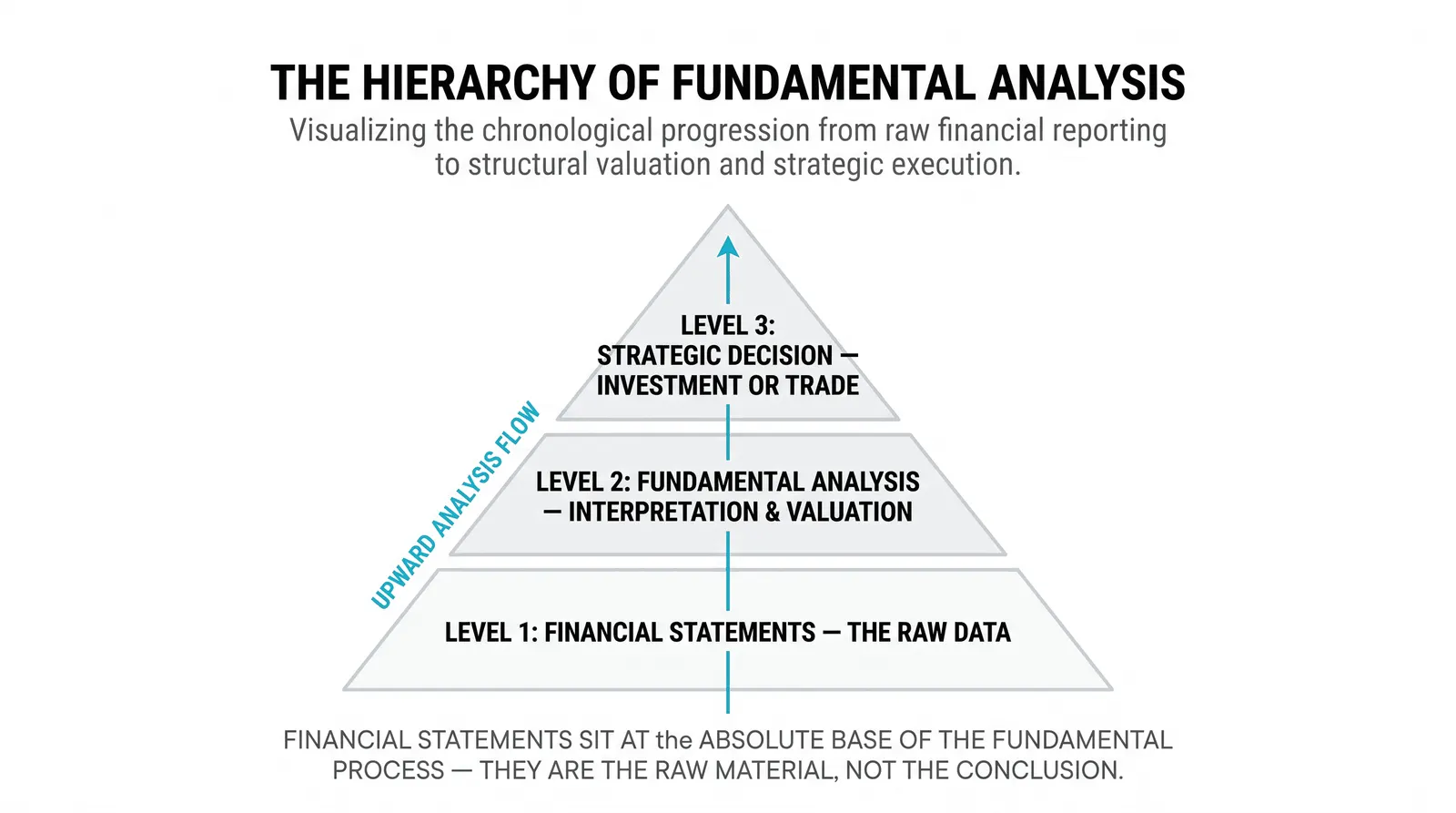
Think of a financial statement as a nutrition label for a company. The format is fixed, so any shopper can compare two products shelf by shelf without trusting the marketing on the front of the box. You have already worked with the outputs of these documents. The EPS, P/E, P/B, and DCF work from the valuation cluster all ran on numbers pulled straight out of financial statements. Now you go one layer down and read the source.
What a Financial Statement Actually Reports
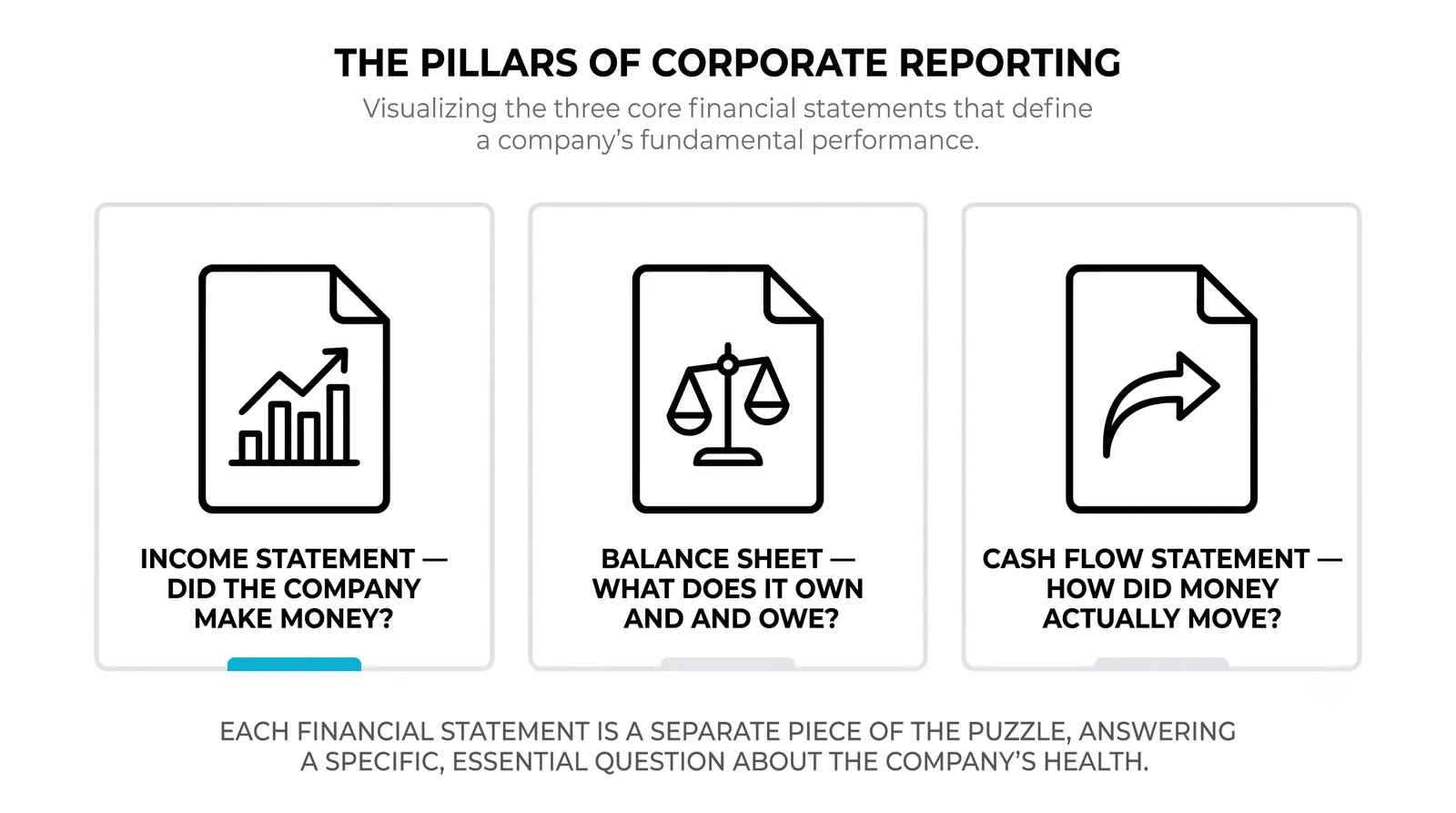
Three core documents make up the set, and each answers a different question.
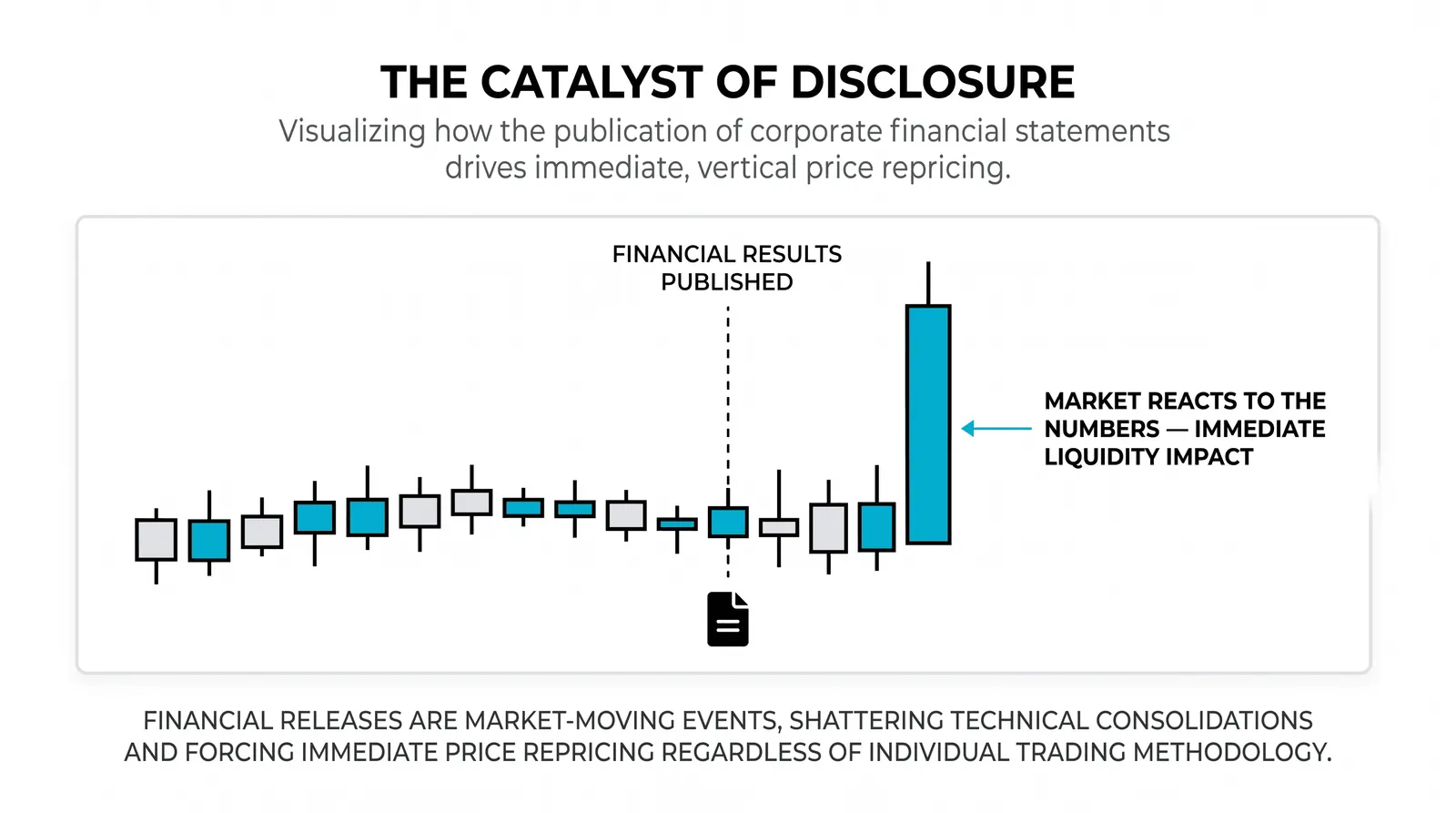
The income statement covers a period of time, usually a quarter or a year. It starts with revenue, subtracts costs, and ends with profit. It answers: did the business earn money during this stretch?
The balance sheet is a snapshot on one specific date. It lists what the company owns (assets) and what it owes (liabilities), and the difference between the two belongs to shareholders. It answers: what is the financial position right now?
The cash flow statement tracks actual cash moving in and out during the period. Profit and cash are different things, and this document shows the gap. It answers: did real money come through the door?
Alongside these three sit the notes. The notes explain the accounting choices behind the numbers: how revenue was recognized, how assets were valued, which assumptions were used. They are long and dry, and they matter more than most beginners expect.
All of this is prepared under shared accounting rules, such as GAAP or IFRS. Those shared rules are what make comparison possible at all. Without a fixed standard, every company would report in its own language, and no two statements would line up.
Why Companies Publish Them
Public companies publish financial statements because the law requires it. Once a company sells shares to the public, regulators demand regular, standardized disclosure so investors are not flying blind.
Regulation is only part of the pressure. Lenders want statements before they extend credit. Investors want them before they buy shares. A company that refused to report would find its funding drying up fast.
The reporting rhythm is quarterly and annually. Quarterly reports are the faster pulse: shorter, quicker, and enough to keep the market informed between big releases. The annual report is the fuller document, with audited numbers, more detail, and deeper notes.
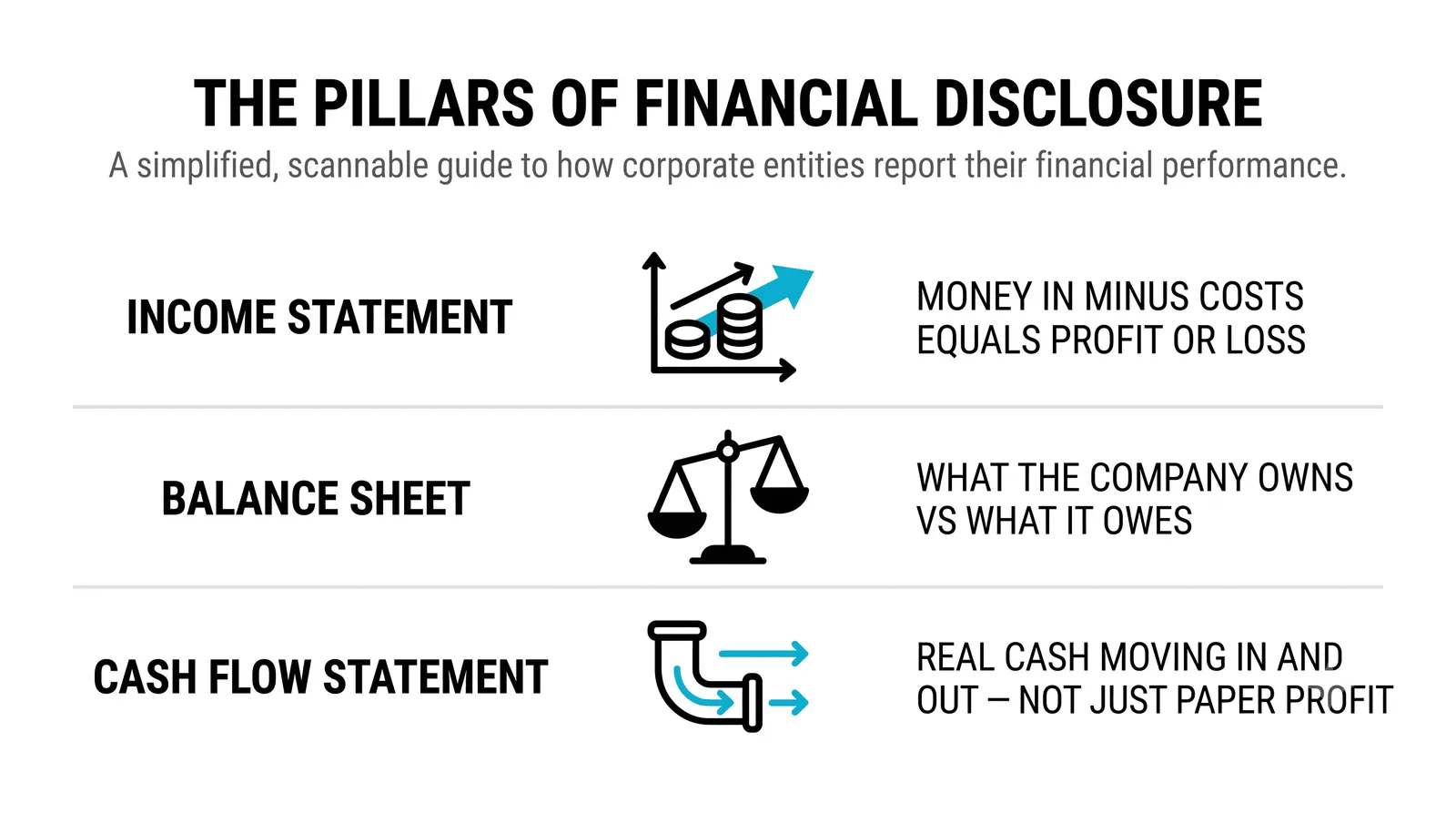
That rhythm creates a recurring test. Four times a year the company has to put numbers on the table, and the market gets to check the story against reality.
What Statements Can and Cannot Tell You
Statements show the past in standardized form. They tell you what happened, measured consistently, over a defined period. That is genuinely useful, and it is also the limit.
They do not show management intent. A CEO's plan for the next two years does not appear anywhere in the income statement. They also do not capture every obligation cleanly. Some commitments sit off the balance sheet or live only in the notes. And they say nothing direct about the future. A great quarter behind you guarantees nothing ahead.
There is a subtler catch: accounting profit involves judgment calls. How quickly to depreciate equipment, when to recognize revenue, how to value inventory. Two honest accountants can produce different profit figures for the same business. This is why the notes exist. They disclose which choices were made, so a careful reader can adjust.
Read statements as evidence, and treat them as incomplete evidence.
How a Trader Should Read Them
You are reading for direction and quality, not for precision. Nobody needs you to rebuild the accounting. You want to know whether the business is improving, whether the profit is backed by cash, and whether the balance sheet can absorb a bad year.
The trend across periods beats any single quarter. One strong quarter can come from a one-off gain or a lucky timing effect. Five quarters of rising revenue and stable margins is a signal. One quarter is a data point.
Statements are the slow layer under the fast price. Price moves every second on flow, sentiment, and news. Statements move every three months and describe the underlying machine. Your technical levels tell you where traders are positioned; the statements tell you what they are positioned on. Confusing the two layers leads to bad decisions in both directions.
One Quarter, Three Documents
Take a hypothetical small coffee-roasting business. Purely invented round numbers for illustration. It closes a quarter with revenue of 200,000, total costs of 150,000, and profit of 50,000.
The income statement tells you the quarter was profitable: 200,000 in, 150,000 out, 50,000 left. What it conceals is timing. Some of that revenue may be invoices customers have not paid yet. Profit on paper can arrive before cash does.
The balance sheet shows assets of 600,000 against liabilities of 250,000. The business owns more than twice what it owes, which looks comfortable. What it conceals is composition. If most of those assets are unsold inventory or a building that would be slow to sell, the cushion is softer than the headline suggests.
The cash flow statement shows cash rose by 30,000 during the quarter. Real money came in, but less than the 50,000 of profit. That 20,000 gap is exactly the kind of thing the cash flow statement exists to expose. Maybe customers paid slowly. Maybe the company spent cash on equipment that never touched the income statement this quarter.
Three documents, one quarter, three different angles. Each one answers a question the other two cannot.
| Document | What It Covers | Question It Answers |
|---|---|---|
| Income statement | Revenue, costs, and profit over a period | Did the business earn money? |
| Balance sheet | Assets, liabilities, and equity on one date | What is the financial position? |
| Cash flow statement | Cash moving in and out during the period | Did real cash come through the door? |
| Notes | Accounting methods and assumptions behind the numbers | How were these numbers built? |
Financial Statements, Answered
Are financial statements public?
Yes, for any company listed on a public exchange. Regulators require them to file quarterly and annual reports, and those filings are freely available through the regulator's database and the company's own investor relations page. Private companies face no such requirement, which is one reason public markets are more transparent than private ones.
Can I trust the numbers in a financial statement?
You can trust them to follow the rules, and you should still read critically. Annual statements are audited by outside accountants, which catches outright fabrication most of the time. Judgment calls and aggressive assumptions can still live inside perfectly legal numbers, so the notes deserve your attention.
Do traders really read financial statements?
Short-term traders mostly react to how the numbers compare with expectations rather than reading the documents line by line. Longer-horizon traders and investors do read them, because the trend in the statements is what anchors a valuation. Even a pure chart trader benefits from knowing when statements drop, since releases move price hard.
What happens when a company restates its statements?
A restatement means the company admits earlier published numbers were wrong and issues corrected versions. Markets treat this harshly, because it damages trust in everything the company has reported. A single restatement can hang over a stock for years, and repeated restatements are a serious red flag.
Next up in this batch is the overview lesson, where you walk through how the three documents connect to each other before taking each one apart on its own. Get comfortable with what a statement is here, and the details will land much faster.