Rate Decisions: How to Read and Trade Them
Interest rate decisions are the scheduled moments when a central bank sets its policy rate - hold, hike, or cut - and they land on pre-published dates with the outcome mostly priced in advance. That last part is what most new traders miss. The decision itself is rarely the surprise. The tradeable information is the decision plus everything wrapped around it: the vote, the statement, the press conference, and what all of that implies for the path of rates after today.

A rate decision is an award envelope at a ceremony where the shortlist was published weeks ago; the envelope only matters when the name inside is a surprise. When the expected name is read out, the room barely reacts. When it isn't, everything moves at once. Your job as a trader is to know the shortlist cold before the envelope opens, and to read the room after it does.
What Actually Happens on Decision Day
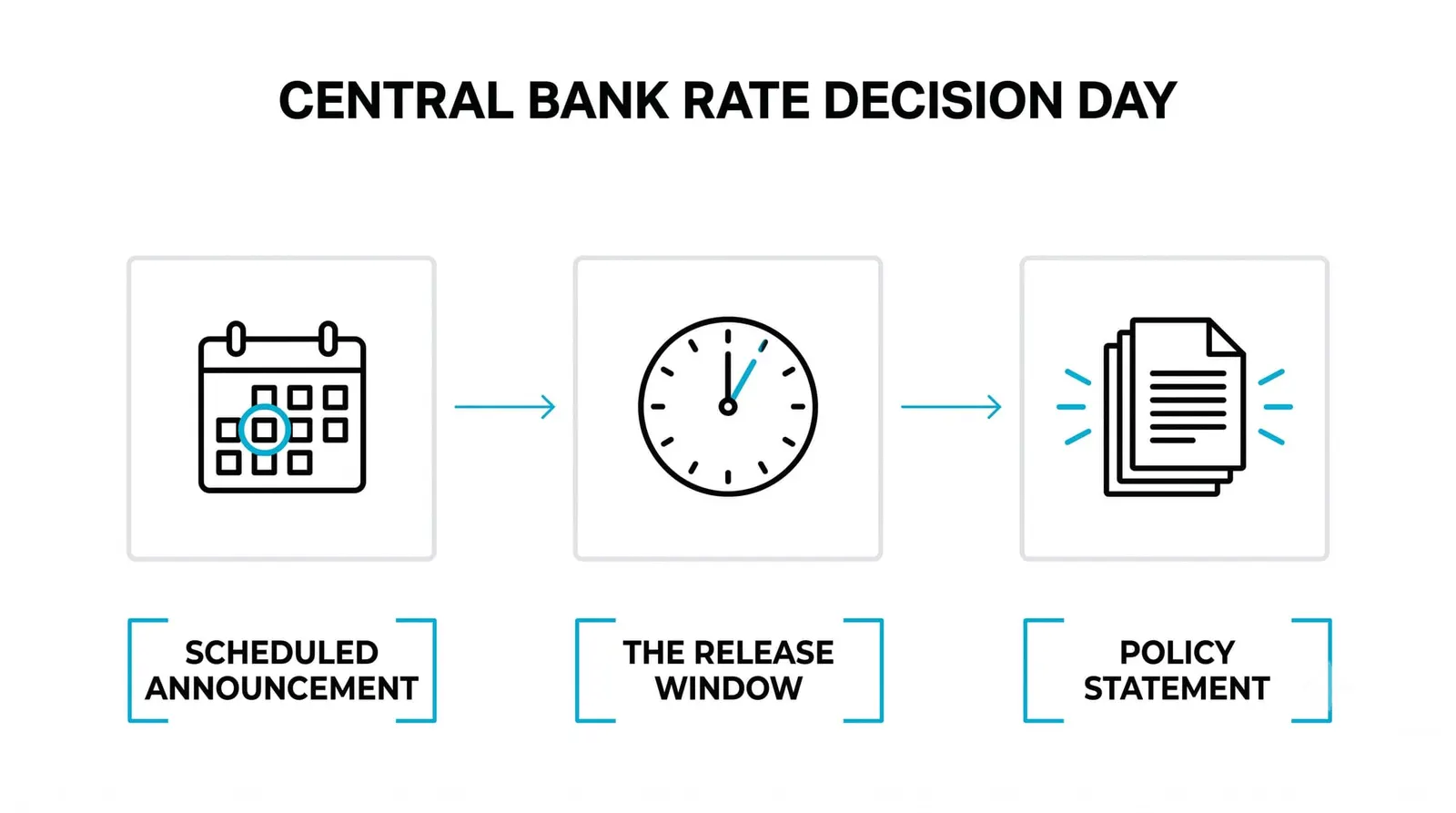
Decision day runs on a fixed sequence, and each stage adds a different kind of information.
First comes the rate announcement itself. At a pre-announced time, the central bank publishes the policy rate. This is the headline number. Because markets price the expected outcome days or weeks ahead, the number alone usually confirms what participants already believed.
Minutes later, or at the same moment depending on the institution, the statement drops. This is the written text explaining the decision: how the committee sees growth, inflation, and the risks around both. The previous lesson covered hawkish versus dovish language in detail; the statement is where that tone lives. Traders compare it line by line against the previous statement, hunting for changed words.
Then, at institutions that hold one, comes the press conference. A senior official reads remarks and takes questions from journalists. This is the least scripted stage. Answers can soften or sharpen the statement's message, and markets often reprice during the Q&A.
Each stage can move prices on its own. A quiet announcement can be followed by a statement that shifts one key phrase, which is then followed by a press conference answer that undoes the statement's move entirely. Treating the decision as a single moment, rather than a sequence, is how traders get caught on the wrong side of a reversal.
The Three Outcomes: Hike, Hold, Cut
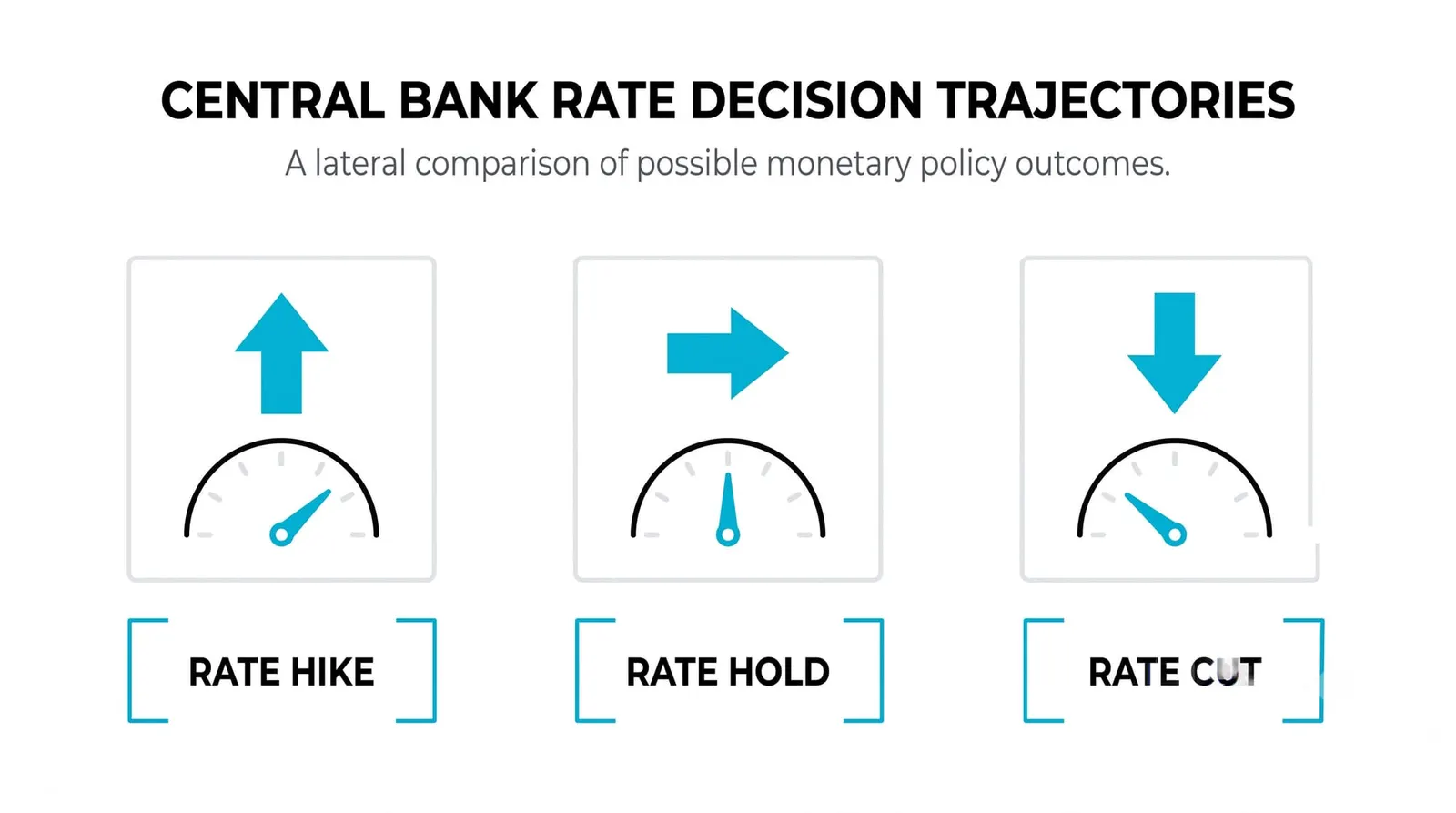
Only three things can happen to the rate, but each one carries a different message about the path ahead.
A hike raises the policy rate. It signals that the committee sees inflation pressure or an overheating economy that needs restraint. A hike that was fully expected still matters if it comes with language pointing to more hikes after it.
A cut lowers the rate. It signals concern about weakening growth, falling inflation, or both. An expected cut can still push a currency lower if the statement suggests the cutting cycle has further to run than markets assumed.
A hold keeps the rate unchanged. New traders treat the hold as a non-event. It is not. A hold is a decision to wait, and the reasons for waiting are spelled out in the statement. A hold paired with language hinting at a coming cut is dovish. A hold paired with language keeping hikes on the table is hawkish. The rate sat still; the message moved.
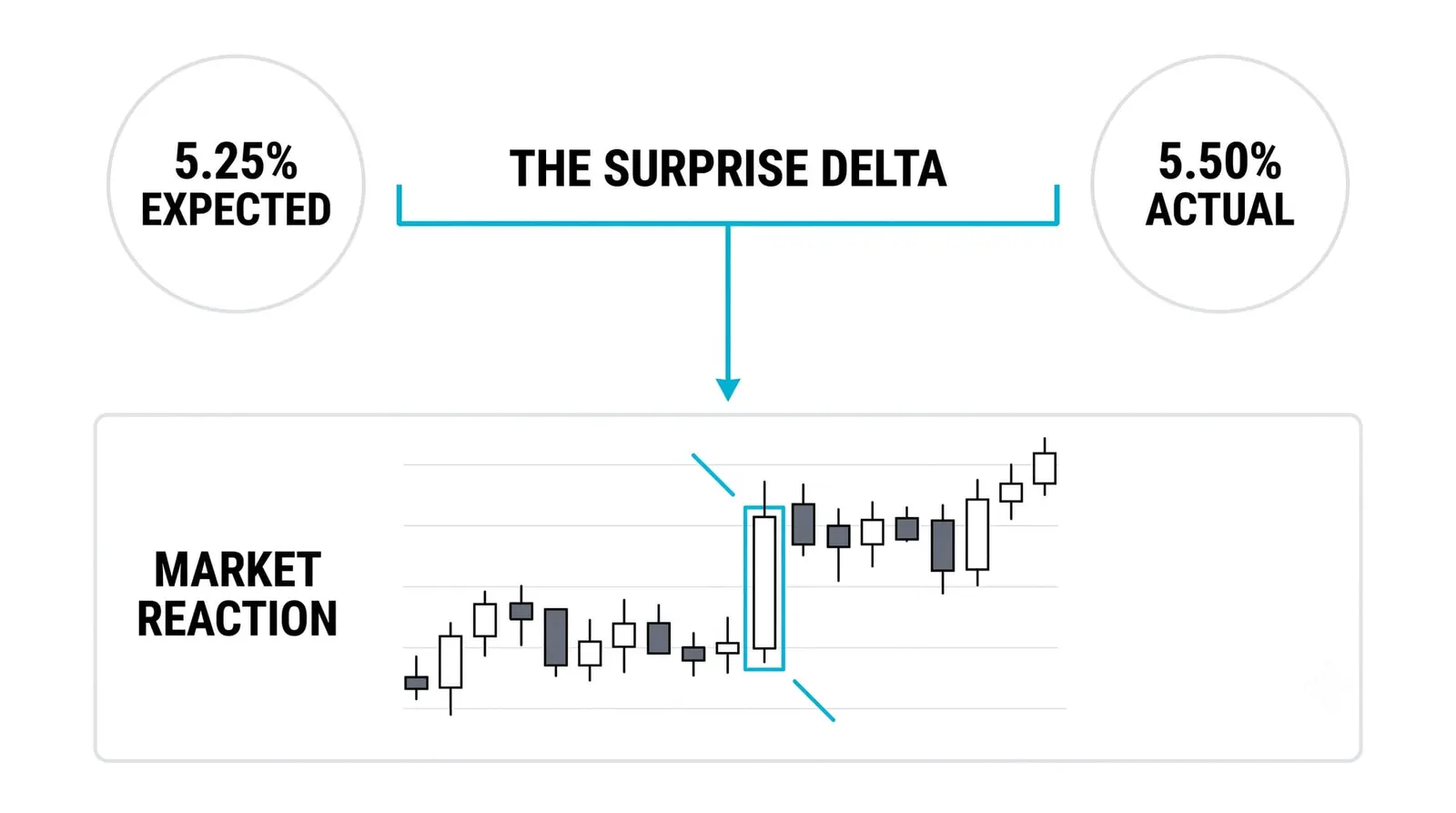
The mechanic here is the same one you learned in the lesson on reading a data release: expected versus actual. The market prices the consensus outcome before the announcement. What moves prices is the gap between what was expected and what arrived, across the whole package, not the headline number alone.
Why the Reaction Is Never Just the Rate
Three layers sit underneath the headline number, and any of them can dominate the market's response.
The vote split is the first. Many committees decide by vote, and the tally is published. A unanimous hold tells one story. A hold with two members voting for a cut tells another: internal pressure is building, and the next meeting looks different from this one.
The statement's tone shift is the second. Committees change their wording deliberately and slowly. When a sentence about future tightening disappears, or a new sentence about downside risks appears, that edit is a signal. Professionals track these edits the way editors track revisions between drafts.
The press conference Q&A is the third. Prepared remarks are controlled. Answers to questions are less so. A single unscripted phrase can confirm or contradict the statement, and algorithms reprice within seconds of it landing.
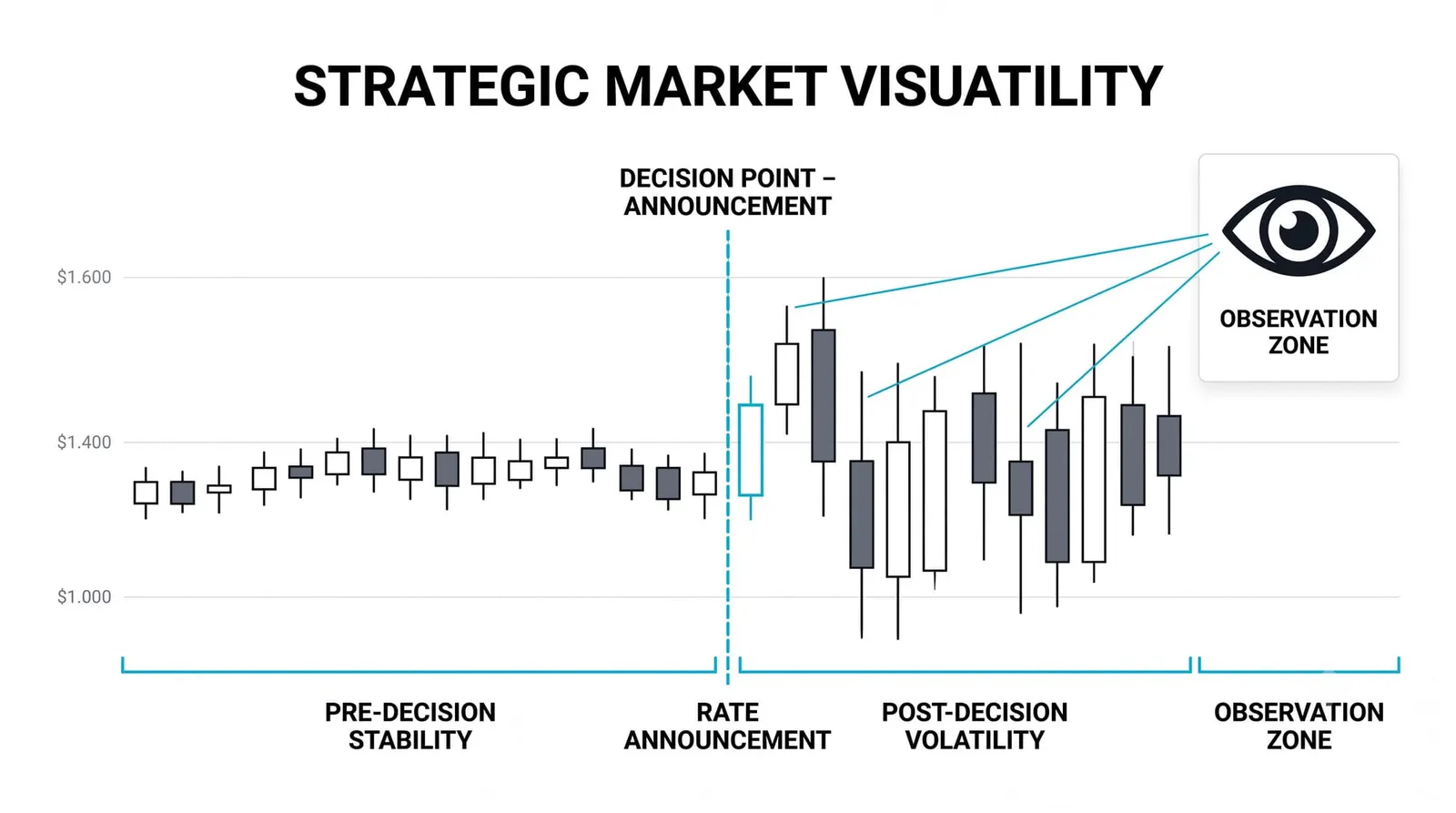
Because these layers arrive in sequence, the first market reaction is frequently wrong in direction or size. Price spikes on the headline, stalls on the statement, then reverses during the press conference as the full package sinks in. The initial move is a guess. The move an hour later is a read.
Trading the Decision Without Getting Run Over
Preparation happens days before the announcement, not minutes before it.
- Know the date and time. Central bank meeting calendars are published well in advance. Mark every decision that touches the currencies or assets you trade.
- Know the consensus. Find what the market expects: the rate outcome, the expected vote split, and the phrases analysts are watching in the statement. Without the consensus, you cannot measure surprise.
- Decide your exposure in advance. Choose before the release whether you will hold a position through it, reduce size, or stand aside. Making that call in the heat of the spike is how accounts get damaged.
- Respect the first minutes. Spreads widen, liquidity thins, and algorithmic orders dominate the opening reaction. Retail orders get filled at poor prices in that window. The first minutes belong to machines.
- Wait for the retest. After spreads normalize, price often returns to test the level it broke from. That retest, with normal trading conditions restored, is where a planned entry has a fighting chance.
Standing aside is a position. Some of the most consistent traders simply do not hold exposure through decisions and re-enter once the dust settles.
One Decision, Three Reads
Here is a hypothetical illustration with round numbers. A central bank is widely expected to hold its policy rate at 4 percent. It holds at 4 percent. Over the following hours, its currency falls 1.2 percent. The rate never changed, so where did the move come from?
Read one: the vote split. The hold passed with two dissents, both favoring an immediate cut. The market now knows a minority on the committee is already pushing to ease. The odds of a cut at the next meeting just rose.
Read two: the statement. The previous statement referenced the possibility of further hikes if inflation proved persistent. That sentence is gone. Removing it quietly closes the door on tightening and tilts the expected path downward.
Read three: the press conference. Asked about inflation, the official calls recent progress encouraging. That single adjective confirms what the vote and the statement hinted at.
Stack the three reads together and the message is clear: the path of future rates just steepened toward cuts, even though today's rate stayed at 4 percent. Currencies price the expected path, not the current setting. The 1.2 percent fall was the market repricing the next several meetings, and every piece of information it needed was public within the hour.
| Outcome | What it signals | Where the surprise usually hides |
|---|---|---|
| Hike | Inflation or overheating needs restraint | How many more hikes the statement implies |
| Hold | The committee is waiting for evidence | Changed wording pointing to the next move |
| Cut | Growth or inflation is weakening | Whether the statement frames it as one-off or a cycle |
| The statement itself | The committee's read on the economy | Single added or removed phrases versus the last statement |
Interest Rate Decisions, Answered
Why does a currency sometimes fall after a rate hike?
Because the hike was already priced in, and the package around it pointed somewhere dovish. If the market expected a hike plus hints of more to come, and instead got a hike with language suggesting it might be the last one, the expected path of rates falls even as the current rate rises. The currency follows the path, not the headline.
What time are rate decisions announced?
Each central bank publishes its announcement time in advance, and the times differ by institution. Some release the rate and statement together, others release the statement minutes after the rate, and press conferences typically follow within the hour where they exist. Check the official calendar of each bank you follow and convert the time to your own timezone before decision day.
Should you trade during the press conference?
For most developing traders, no. The Q&A produces fast, two-way moves on unscripted answers, and spreads can widen without warning. Watching the press conference to understand the message is valuable; holding fresh exposure through it is a risk decision that should be made deliberately, not by default.
What is a dissent in a rate decision?
A dissent is a committee member voting against the majority decision. Dissents matter because they reveal the direction of internal pressure. A growing number of dissents toward cutting, for example, often precedes an actual cut by a meeting or two, which makes the vote split an early-warning signal for the path ahead.
Next in this layer, you will look at forward guidance: how central banks use words deliberately to shape the expected path between meetings, and why that guidance sometimes matters more than any single decision.