Deflation and Stagflation, Explained
Deflation is inflation's mirror: a sustained fall in the general price level that sounds like a gift and behaves like a trap. Stagflation is the worst of both worlds at once, stagnant growth with prices still rising. Both are rare, both are violent for markets, and both break the standard playbook you learned when we covered ordinary inflation.

Think of it this way: deflation is a clock running backward, and stagflation is a clock with two hands pointing in opposite directions. Both tell the wrong time, in different ways. The previous lesson treated rising prices as the normal problem to manage. These two conditions are the deviations from that baseline, and each one inverts something you thought you understood about how economies and markets behave.
Deflation: When Prices Fall
Falling prices feel like good news at the checkout. They are terrible news at the level of the whole economy, because they flip the logic of every buying decision.
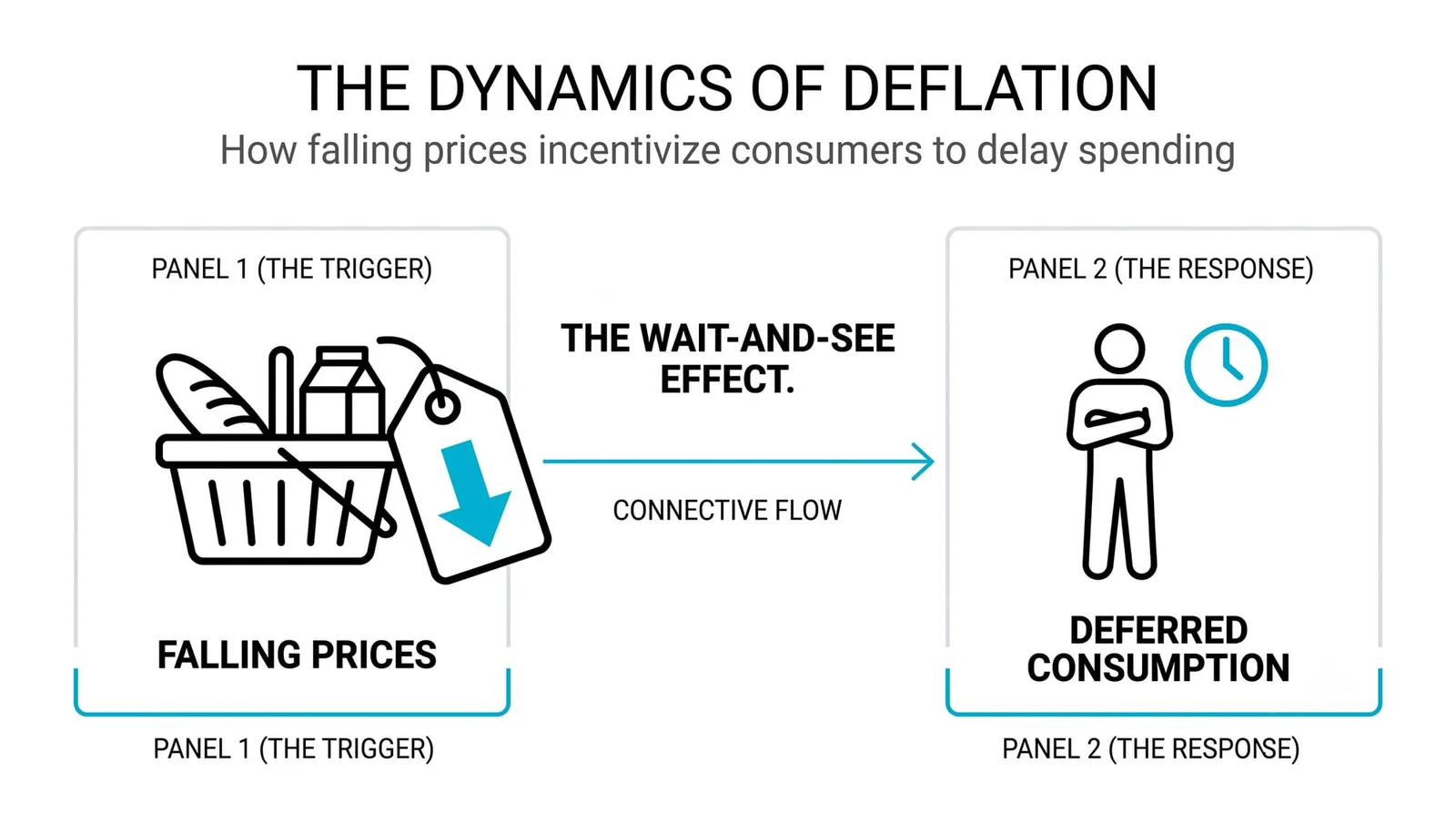
When people expect things to cost less next month, they wait. Why buy the machine, the car, or the inventory today when it will be cheaper later? Multiply that hesitation across millions of households and businesses, and demand shrinks. Shrinking demand forces sellers to cut prices again to attract buyers, which confirms the expectation that prices are falling, which causes more waiting. That self-feeding loop has a name: the deflationary spiral.
The second problem is debt. Loan payments are fixed in nominal terms. Your mortgage or business loan does not shrink when prices fall. But wages, revenues, and asset values do shrink. So the real burden of every existing debt grows heavier even though the number on the statement never changes. Borrowers cut spending to service debts that feel bigger every year, which drains demand further and feeds the same spiral.
Central banks find deflation harder to fight than inflation. Against inflation they can raise rates as high as needed. Against deflation they can only cut rates to zero, and then the conventional tool runs out of room. That asymmetry is why policymakers fear falling prices far more than the public does.
Stagflation: When Growth Stalls But Prices Keep Rising
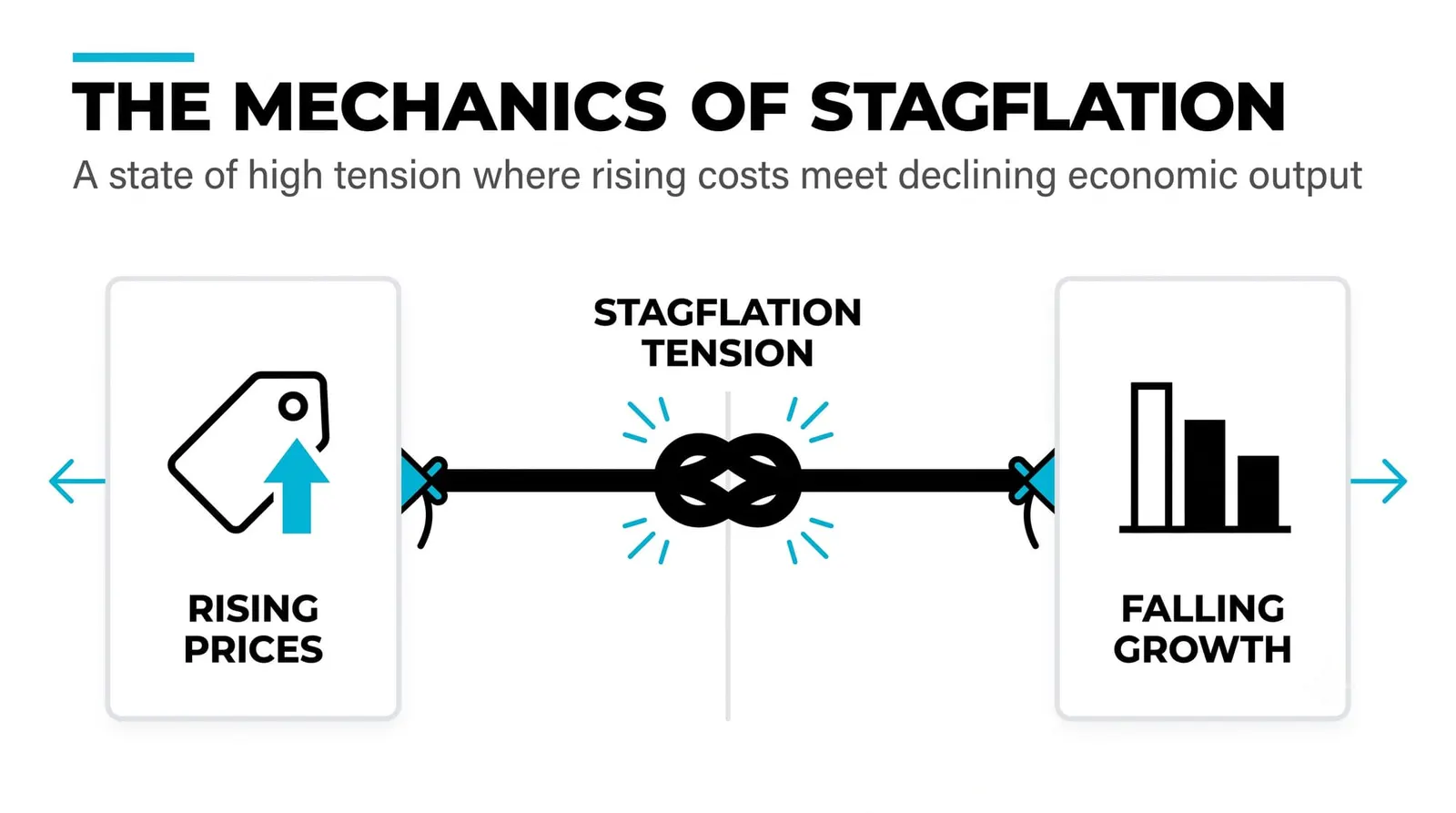
Here the economy presents two problems that demand opposite cures. Growth is flat or negative, unemployment is rising, and yet prices keep climbing anyway, a distortion of the normal cycle.
The policy trap is mechanical. To fight the inflation half, a central bank raises interest rates, which chokes borrowing and spending in an economy that is already weak. To fight the stagnation half, it cuts rates and stimulates, which pours fuel on prices that are already rising. The two tools point in opposite directions, and pulling either lever makes one half of the problem worse.
Stagflation usually needs a supply shock to get started, something that makes production more expensive across the board, like a sudden jump in energy costs. Higher costs squeeze businesses, so they produce less and employ fewer people, while also charging more. Output falls and prices rise at the same time, which the older models said should not happen together.
There is no clean exit. Historically, breaking entrenched stagflation has required inflicting real pain on the economy to kill the inflation half first, then rebuilding growth afterward. That sequence is brutal for workers, borrowers, and markets alike.
Why Both Are Rare but Worth Recognizing
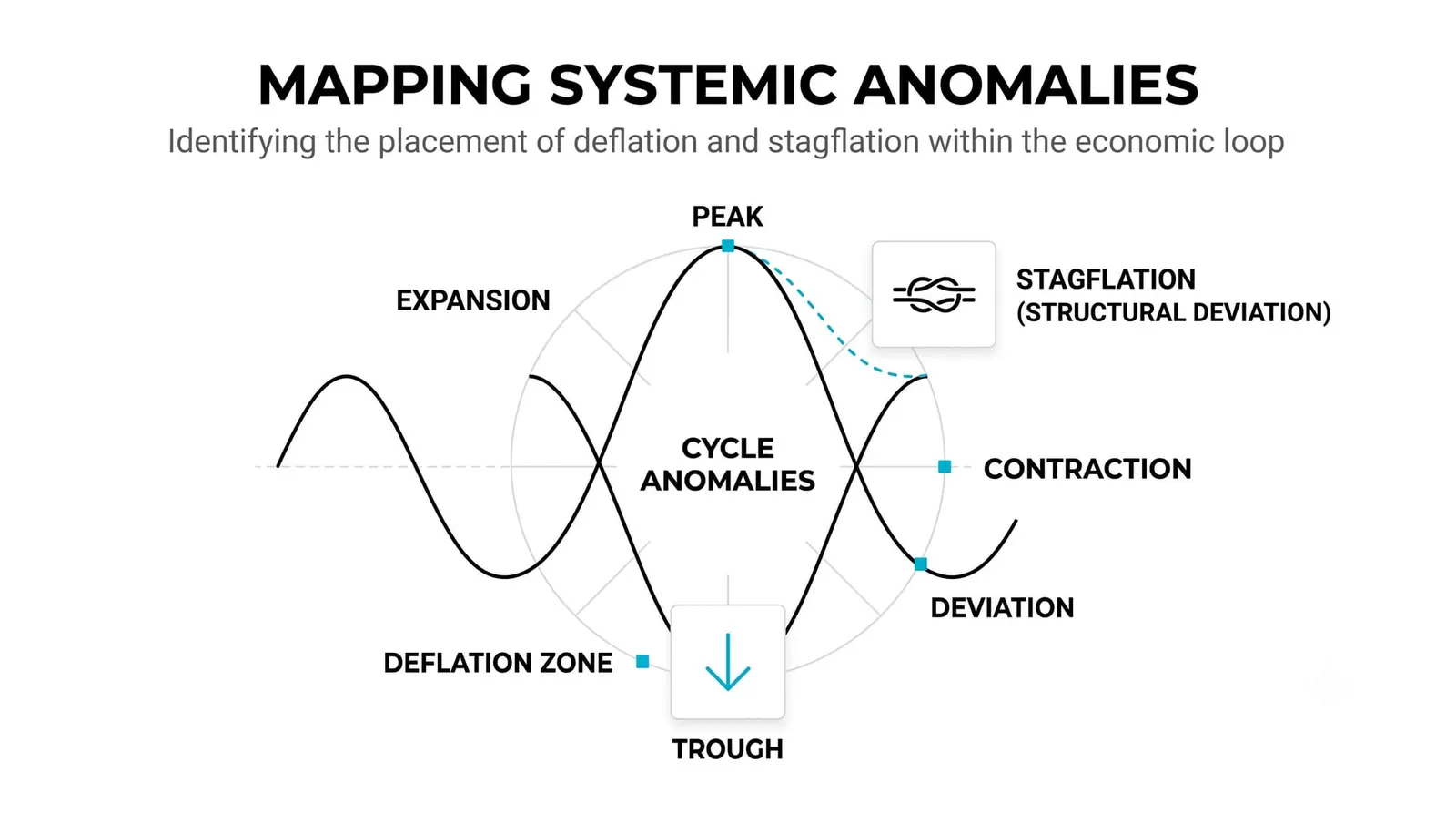
Start with the historical record. Deflation dominated the deep depressions of the past, most famously the 1930s, when falling prices and collapsing demand fed each other for years. In modern managed economies, with central banks committed to positive inflation targets, sustained deflation has become scarce. It still appears, but it is the exception.
Stagflation shocked the 1970s. The models of that era assumed inflation and unemployment moved in opposite directions, so when both rose together after the oil shocks, policymakers were working from a map that did not include the territory they were standing in. The episode rewrote macroeconomics.
Rarity is the point. Because these conditions almost never occur, almost nobody has a tested playbook for them when they arrive. Positioning built for normal inflation gets repriced violently. Correlations between assets shift. Strategies that worked for a decade stop working in a quarter. You will likely trade through long stretches where neither condition matters at all, but recognizing one early is worth more than almost any other macro call you can make.
Two Broken Scenarios in Numbers
These are invented, simplified illustrations with round numbers. They show mechanics, not forecasts.
Scenario one: deflation. Imagine prices fall 2 percent a year for three years. A household has a loan payment fixed at 100 per month. Over the same period, the household's wages fall 5 percent in total. The loan payment never changed. But everything the household earns shrank around it, so those 100 units now take a bigger share of a smaller income. The debt got heavier in real terms without anyone adding to it. Multiply that across an economy and spending collapses under the weight of debts that grow on their own.
Scenario two: stagflation. Imagine growth at zero and inflation at 9 percent. The central bank faces the fork. Raise rates to attack the 9 percent, and the flat economy tips into recession. Cut rates to rescue growth, and the 9 percent climbs higher. Either choice damages something, and everyone in the market knows it, which is why uncertainty itself becomes a drag.
What each does to the major asset classes, in general structural terms:
- Deflation: cash gains purchasing power just by sitting still, so holding it becomes attractive. High-quality bonds do well because their fixed payments buy more over time. Stocks suffer because revenues and earnings shrink with prices.
- Stagflation: stocks get squeezed from both sides, weak earnings and rising discount rates. Conventional bonds lose because inflation erodes their fixed payments. Cash loses purchasing power steadily. Assets tied to real, scarce inputs tend to hold up better than paper claims.
Notice the inversion. In deflation, cash and fixed payments are king. In stagflation, they are the victims. The same portfolio cannot be right for both, which is why telling them apart early matters so much.
| Condition | Prices | Growth | Markets Tend To |
|---|---|---|---|
| Normal inflation | Rise moderately | Positive | Reward stocks and risk assets over time |
| Deflation | Fall persistently | Contracts | Reward cash and high-quality bonds, punish stocks |
| Stagflation | Rise despite weakness | Flat or negative | Punish stocks and conventional bonds together |
| Policy response | Cut rates against deflation, raise against inflation | Stimulus against weakness, restraint against overheating | Stagflation forces a choice where every option hurts |
Deflation and Stagflation, Answered
Why is falling prices a problem if things get cheaper?
Because your personal gain from cheaper goods is outweighed by what the expectation of falling prices does to everyone else's behavior. When buyers delay purchases, demand shrinks, businesses cut jobs and wages, and fixed debts grow heavier in real terms. The cheap goods arrive alongside a shrinking paycheck and a weakening economy.
Which is worse for stocks?
Both are bad, but stagflation is generally the harder environment because it attacks stocks from two directions at once: weak growth hurts earnings while high inflation raises the rate used to discount those earnings. Deflation at least leaves some refuges, like quality bonds and cash, that hold value. Stagflation shrinks the list of hiding places.
Can an economy recover from stagflation on its own?
Eventually, yes, but "on its own" usually means slowly and painfully. If the supply shock that caused it fades, costs can normalize and growth can resume. When inflation expectations become entrenched, though, history suggests recovery required deliberate, severe tightening first. Waiting it out is a strategy with a poor track record.
How would I recognize either one early?
Watch the combination, not any single number. For deflation, look for falling prices alongside falling spending, rising real debt burdens, and rate cuts that stop working. For stagflation, look for inflation staying high while growth data, employment, and output all deteriorate together. One weak report proves nothing; the pattern across several months of data is the signal.
Later in this level, we meet who responds to all of this: how central banks are structured, what tools they actually control, and why their words move markets before their actions do.