Day Trading
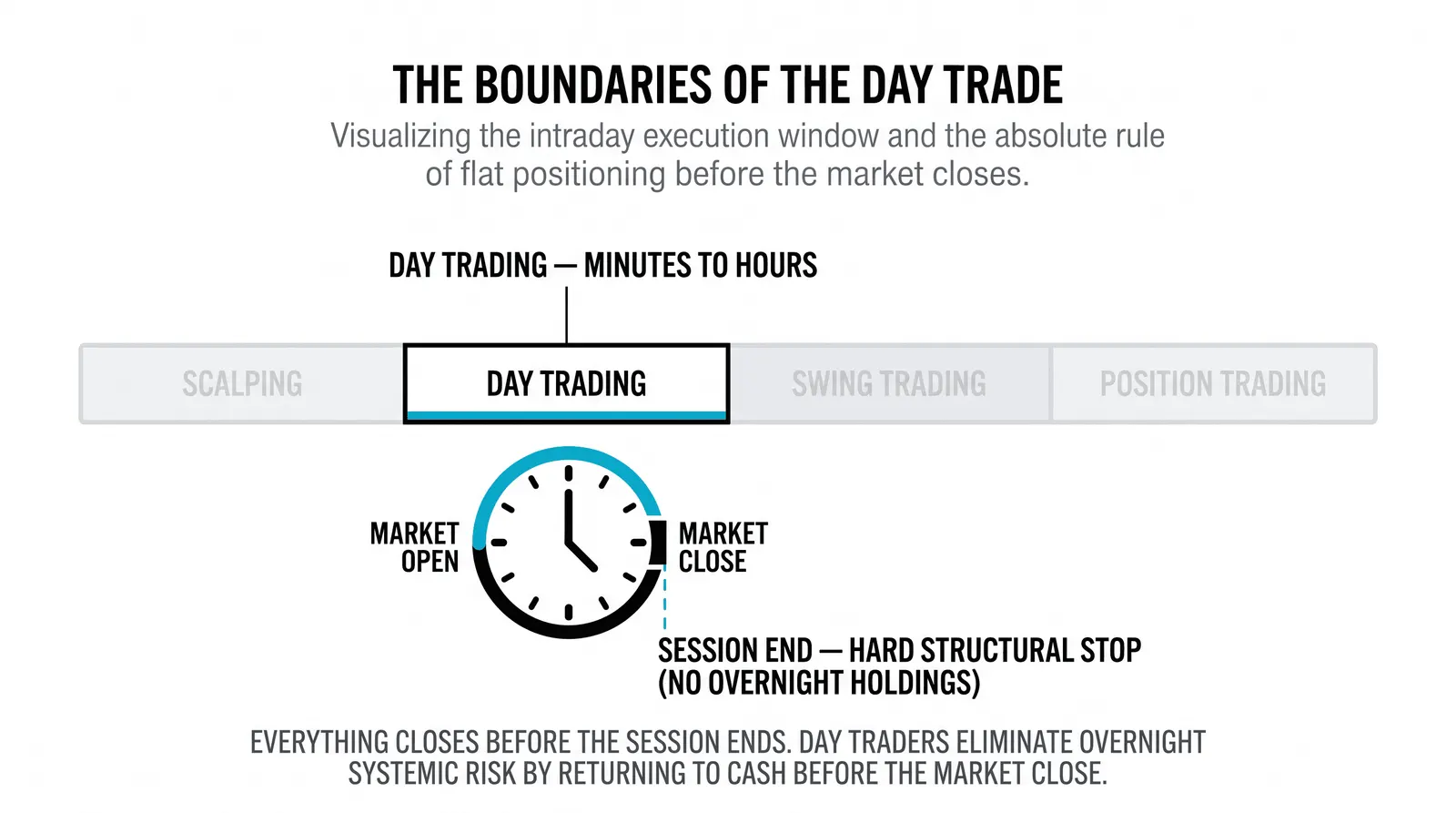
Day trading means opening and closing every position within the same session. You never hold overnight. When the closing bell rings, you are flat, so no gap can hit you while you sleep and no overnight fee accrues on a position you are not watching. That single rule defines the entire style, and everything else follows from it.

Think of a day trader as a shopkeeper who closes the till every evening: nothing gets robbed overnight because nothing is left on the shelf.
What Day Trading Actually Involves
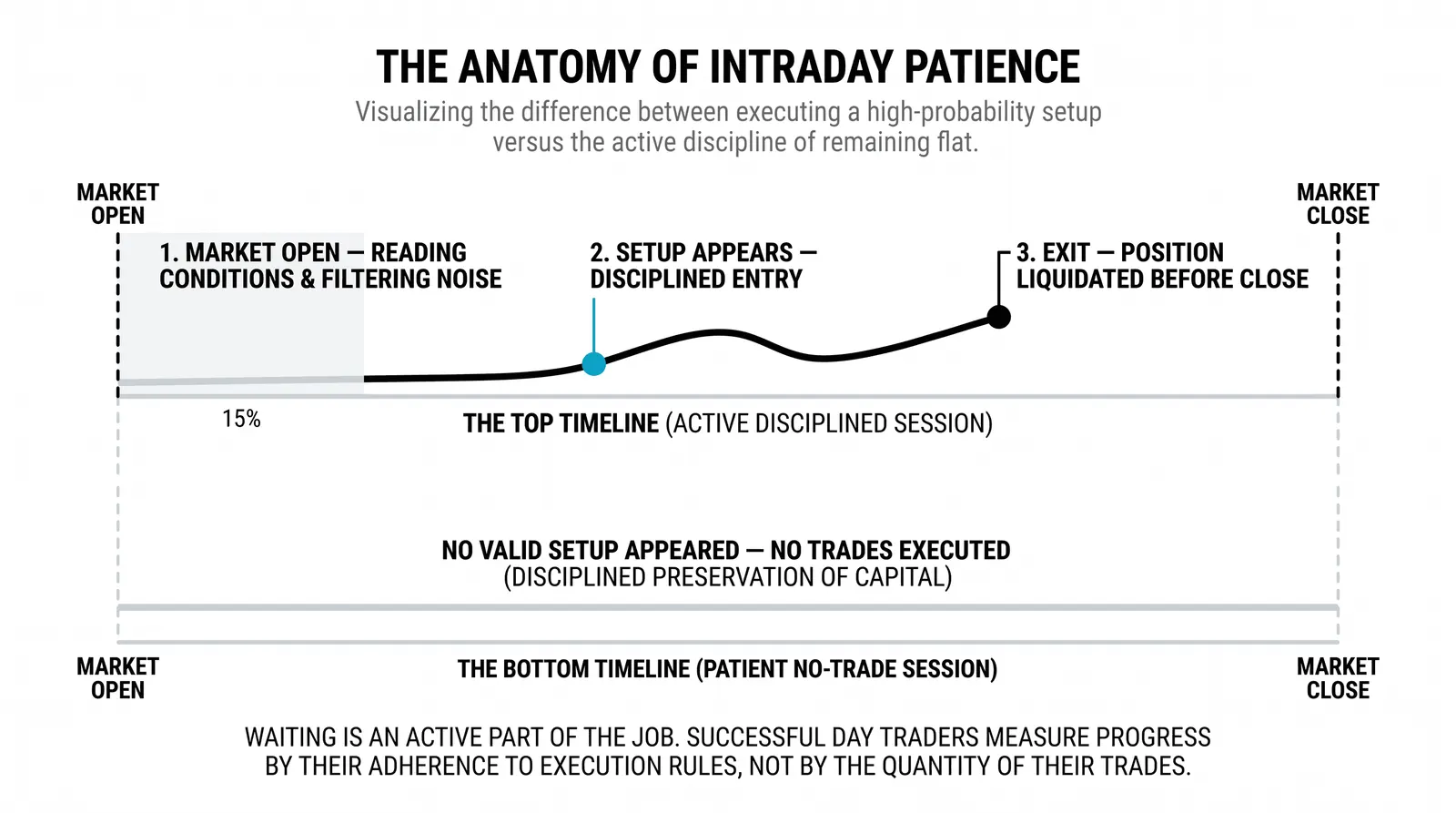
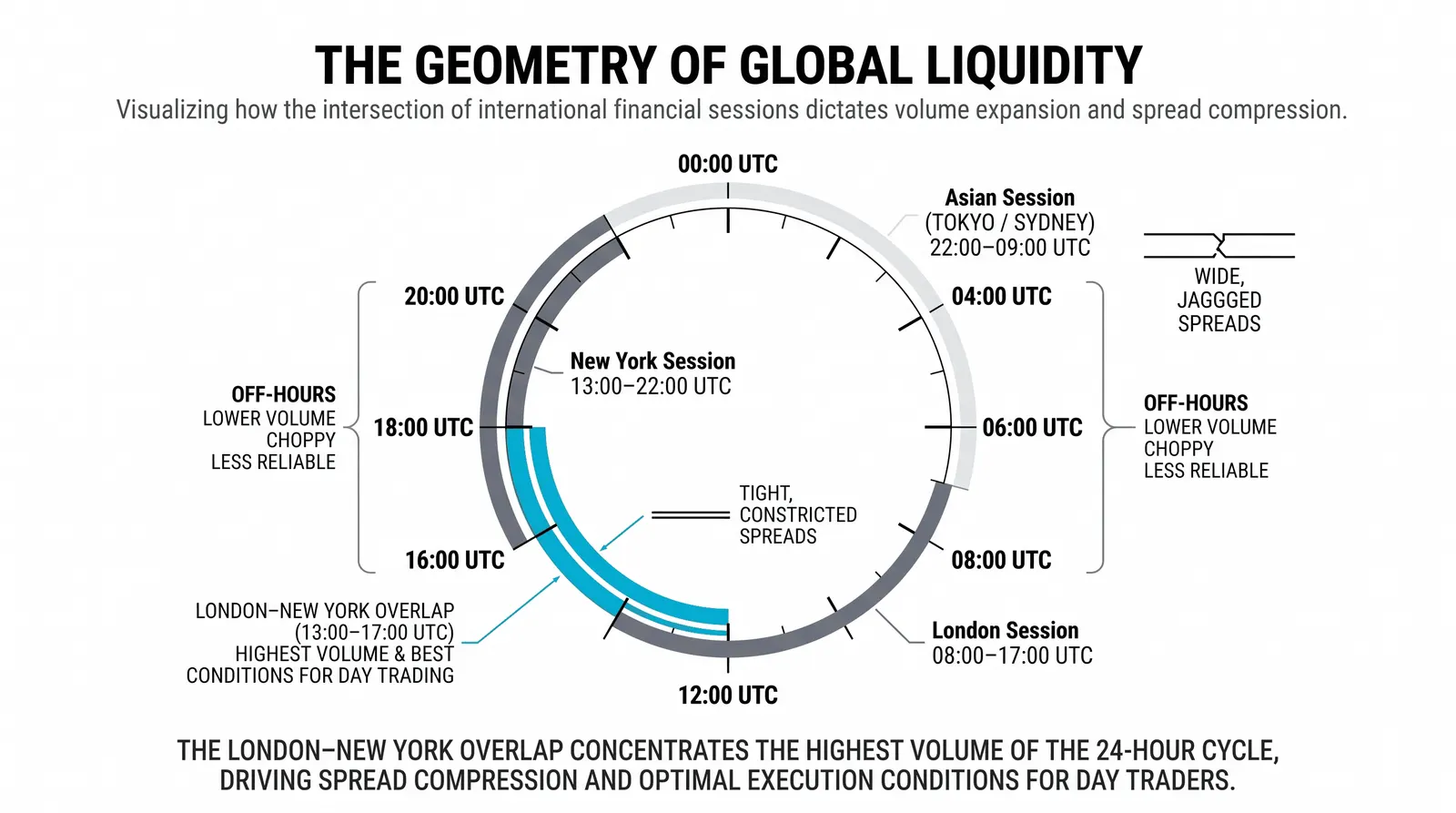
A typical day trader takes one to a handful of positions per day. Not dozens. Each trade is planned around the most active parts of the session, usually the first hour or two after the open, when volume is thickest and moves are cleanest.
Before the open, the trader marks levels, checks scheduled news, and writes down the plan. During the session, the job is execution: take the setups that match the plan, skip everything else. After the close, the trader reviews every trade against that plan.
The work is front-loaded and back-loaded. The middle, the actual trading, is often the shortest part of the day.
What Goes Away at the Closing Bell
Being flat overnight removes three problems. First, gap risk: earnings, geopolitical shocks, and surprise announcements cannot hit a position you do not hold. Second, swap and financing fees on leveraged positions stop accruing. Third, the 2 a.m. temptation to re-litigate a losing trade disappears, because there is no trade to re-litigate.
Something else goes away too, and honest traders admit it: the overnight payoff. Many of the biggest moves in a stock happen between one close and the next open. Day traders give that up entirely. Flat is safe, but flat earns nothing.
That trade-off is the price of sleeping well. Some traders pay it gladly. Others find it too expensive and choose a slower style.
The Shape of a Day-Trading Day
The day has three blocks, and only one of them involves clicking buy or sell.
- Preparation, before the open. Mark support and resistance, note scheduled data and earnings, define the setups you will take and the ones you will refuse.
- Execution, during the session. Trade the plan. When your daily loss limit hits, you stop. Not after one more trade. You stop.
- Review, after the close. Log every trade, screenshot the chart, write what you did and why. This is where day traders actually improve.
Most beginners skip the review because it feels like homework. Then they repeat the same mistake for six months and call it bad luck.
What It Demands
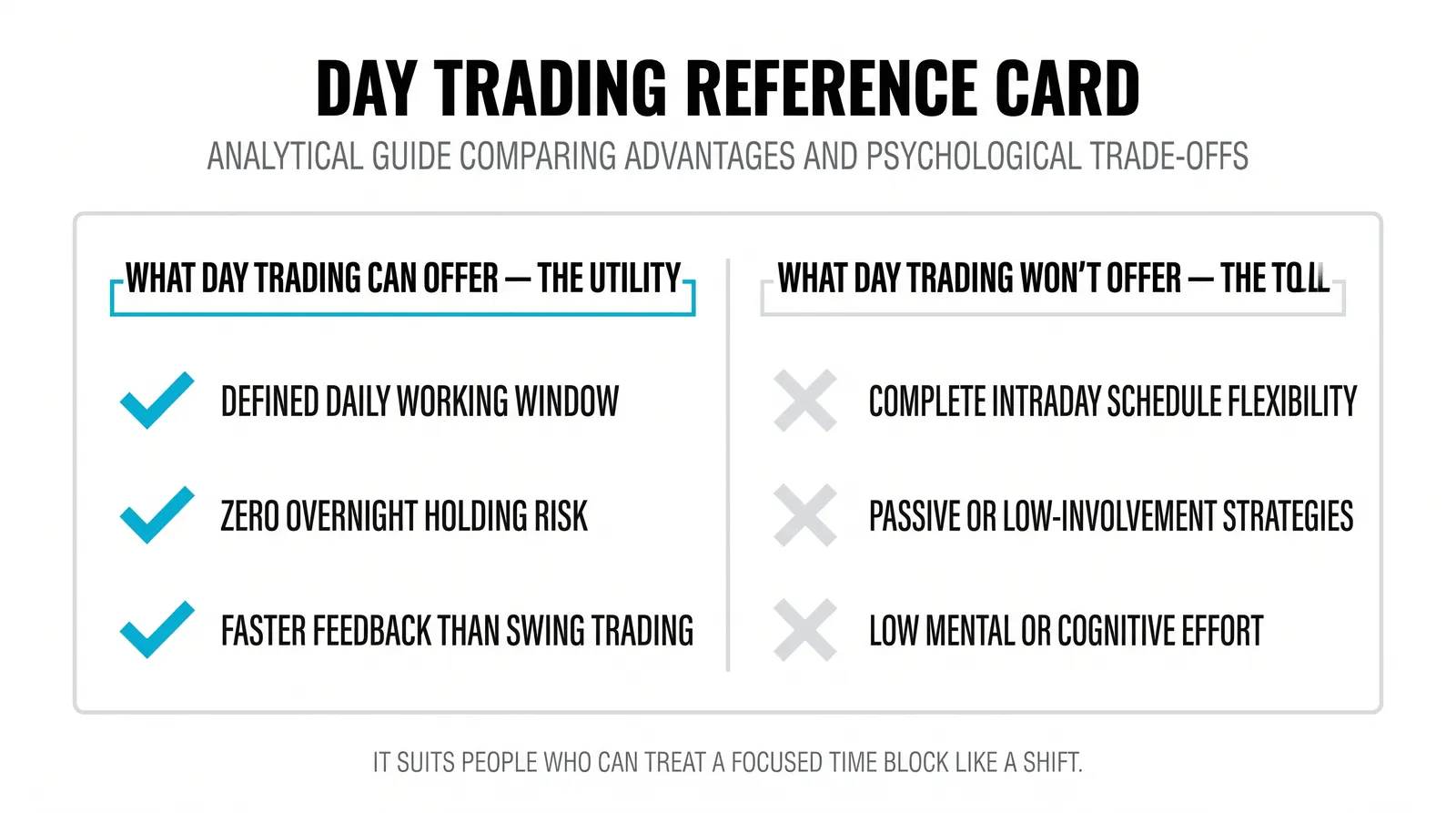
Day trading demands daily availability. The market does not wait for your schedule to clear. If you cannot be present and focused during the session's active hours, the style does not fit your life, and no amount of wanting changes that.
It demands the discipline to stop. A daily loss limit only works if you obey it on the day it hurts most; the sizing behind one is its own lesson in risk per trade. It demands honest record-keeping, because your memory will lie to you and your log will not.
And it demands restraint with time itself. A day trader who trades all day out of boredom is donating money to whoever is on the other side. Fewer, better trades beat constant activity.
A Worked Example
Here is a hypothetical with round numbers. Before the open, a trader studies a stock sitting at 100. Resistance is marked at 106, support at 98.
The plan: buy a break above 102, with a stop at 99.8 and a target at 105.5. Risk per share is 2.2, potential reward is 3.5. Position size is set so a stopped-out trade loses a fixed, pre-decided amount.
By midday, one of two things has happened. Price broke 102, ran to 105.5, and the target filled. Or price stalled, reversed, and the stop took the trader out for the planned small loss. Either way, the position is closed before the bell. Win or lose, the trader does not carry it home and hope. Rules beat hope at 3:55 p.m.
Who It Fits, and Who Should Not Touch It
Day trading fits people with several focused hours available most days, a tolerance for rapid decisions, and the temperament to follow rules when money is moving. It suits those who want risk contained within a session and who genuinely enjoy the review process.
It does not fit anyone who cannot watch the open. It does not fit people who check prices between meetings, who freeze under time pressure, or who treat a stop-loss as a suggestion. If your job or your temperament keeps you from the screen, a slower style will serve you better and cost you less.
Day Trading vs Scalping vs Swing Trading
| Scalping | Day Trading | Swing Trading | |
|---|---|---|---|
| Typical holding time | Seconds to minutes | Minutes to hours, same day | Days to weeks |
| Decisions per week | Dozens to hundreds | Roughly 5 to 25 | A handful |
| Overnight exposure | None | None | Full, including gaps |
| Screen time required | Constant during session | Focused blocks, mainly the open | Short daily check-ins |
None of these is superior in the abstract. Each trades one resource for another: time, attention, or overnight risk. Pick the one your life can actually sustain.
Questions About Day Trading
Do day traders really hold nothing overnight?
By definition, yes. If you carry a position past the close, that position is a swing trade, not a day trade. Some traders run both styles in separate accounts, but the day-trading book ends every session flat.
How many hours a day does it take?
Plan on two to four hours: preparation before the open, focused trading during the active part of the session, and review after the close. The trading itself is often under two hours. The surrounding work is what makes it a real commitment.
How much capital do I need?
Enough that your planned risk per trade is a small fraction of the account, and enough to meet any regulatory minimums in your market. Some jurisdictions set specific thresholds for frequent day traders, so check the rules where you live before funding an account. Start smaller than your enthusiasm suggests.
Is day trading a job?
It behaves like one: fixed hours, preparation, performance review, and no pay guarantee. Most people who try it do not make consistent money, and anyone who promises you an income from it is selling something. Treat it as a skill you build slowly, with money you can afford to lose while learning.
If the structure appeals to you but the hours do not, the next style worth studying is swing trading, which keeps the planning and the review but stretches the timeline so the market fits around your life instead of the other way around.