Scalping
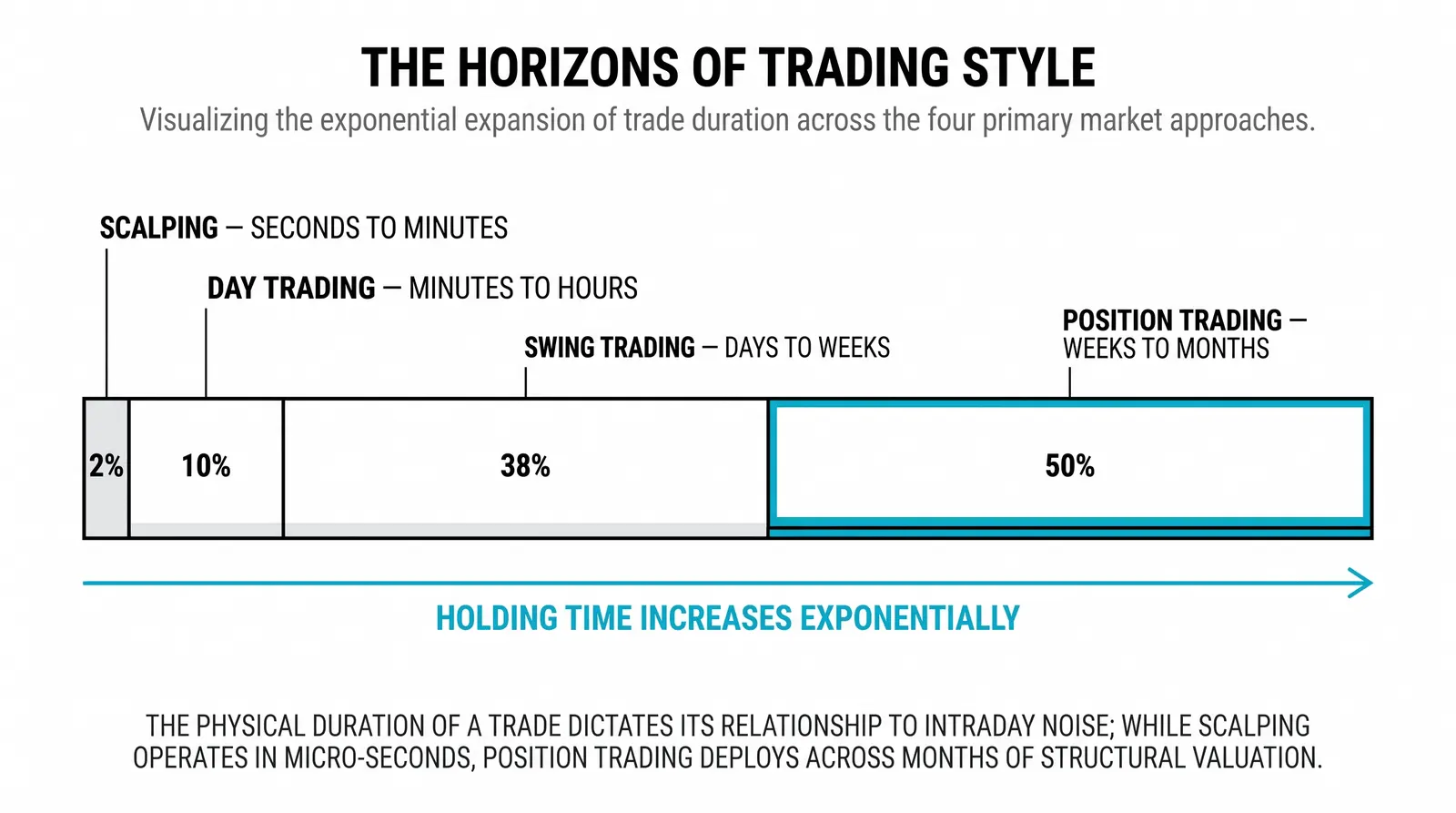
Scalping is the fastest trading style there is: positions last seconds to a few minutes, targets are small, and the goal is to collect many tiny moves rather than wait for one big one. A scalper might take twenty trades in a morning where a swing trader takes two in a month. The profit per trade is small. The idea is that repetition does the heavy lifting.

Think of it this way: a scalper collects coins while most traders wait for banknotes. That sounds easy until you realize the coins are scattered on a moving conveyor belt and someone charges you a fee every time you bend down.
What a Scalp Actually Looks Like
A scalp starts and ends inside minutes. Sometimes seconds. You enter, the price moves a small amount in your favor, and you exit. There is no sitting through pullbacks, no giving the trade room to breathe, no hoping it turns into something bigger.
The target is measured in fractions of the day's range. If a market typically moves 2.00 in a session, a scalper might be hunting 0.10 at a time. That is five percent of the day's entire movement, taken in one quick bite.
Stops are tight from the moment you enter. There is no wide stop with a plan to reassess later, because the whole trade lasts less time than a coffee break. If the price moves a small amount against you, you are out. No debate.
And the volume of decisions is high. A scalper may take ten, twenty, or forty trades in a single session. Each one requires an entry decision, a management decision, and an exit decision, all made fast.
What Scalping Demands From You
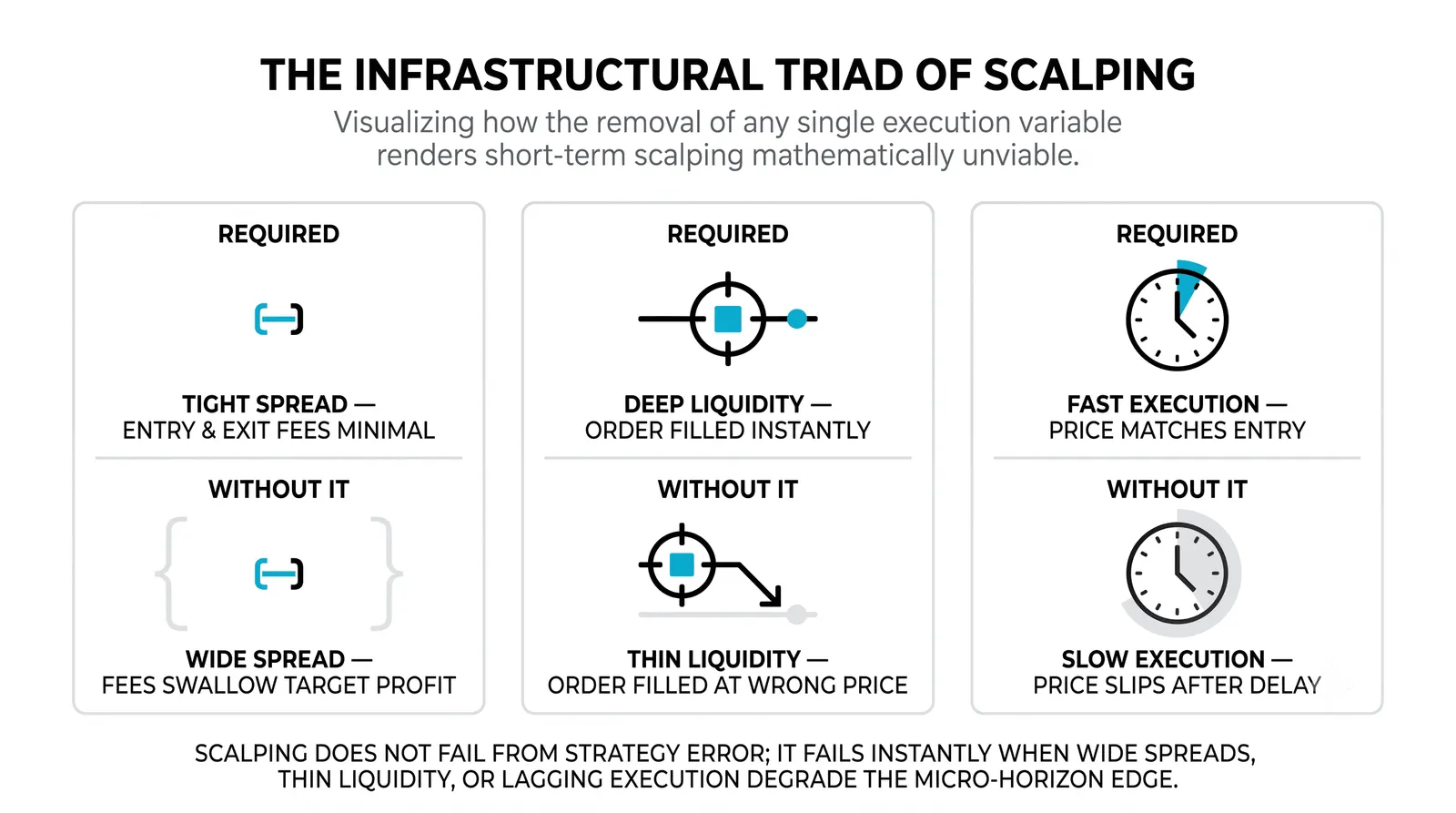
The first requirement is a fast platform. When your target is a few ticks, a two-second delay between clicking and filling can turn a winner into a loser. Serious scalpers pay for direct, low-latency execution because they have to.
The second requirement is cheap trading. Commissions, fees, and spreads hit scalpers harder than any other style, for reasons the math section below makes plain.
The third requirement is hours of unbroken attention. A scalper cannot step away mid-session to take a call or answer the door. The opportunity set appears and disappears in seconds. Miss the moment and it is gone.
The fourth requirement is instant decision-making. Hesitation is fatal when your target is smaller than the spread of a slow moment. By the time you have weighed the pros and cons, the trade has already happened without you.
Most people do not have all four of these. That is not an insult. It is a filter.
Costs Are the Silent Opponent
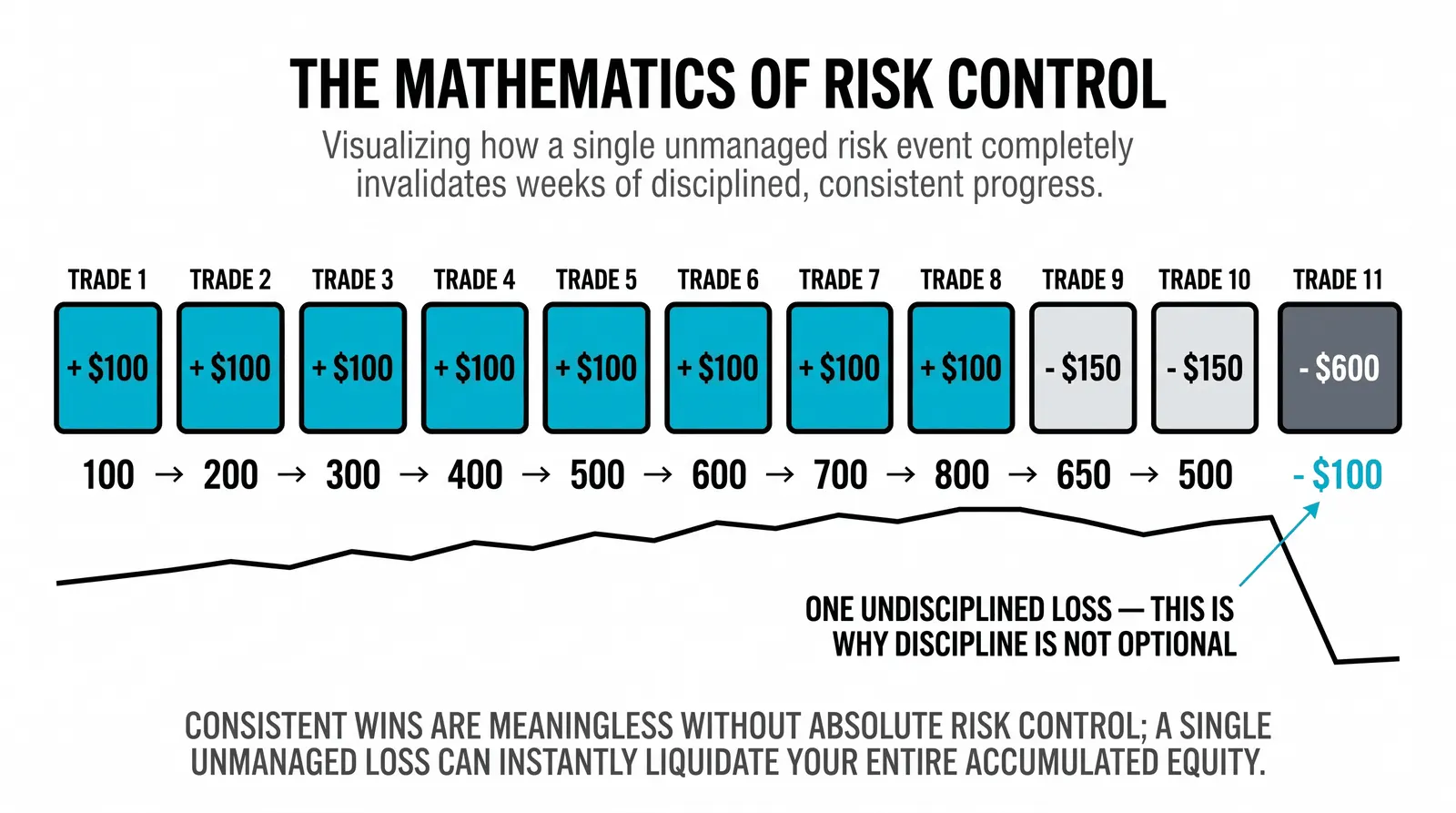
Most scalping content skips what comes next. The smaller your target, the bigger the slice that costs take from it.
Say your target is 0.10 per trade. Say your spread plus fees come to 0.04 per round trip. You are paying a 40 percent tax on every trade before the market has any say in the outcome. A swing trader targeting 4.00 with the same 0.04 cost pays one percent.
Same market. Same broker. Wildly different burden.
This is why scalpers obsess over spreads and fight for every fraction of a cent in fees. It is also why a strategy that looks profitable on a chart can lose money in a real account. The chart does not show the toll booth.
The Honest Math of Small Edges
Run a hypothetical with round numbers. You take ten scalps a day. Each targets 0.10 of profit with a 0.08 stop. You win 55 percent of the time, which most traders would call a good hit rate.
Before costs, the day looks like this: 5.5 winners times 0.10 is 0.55 gained. 4.5 losers times 0.08 is 0.36 lost. Gross profit: 0.19 per day. Respectable.
Now subtract costs. Ten round trips at 0.04 each is 0.40. Your 0.19 gross day is now a 0.21 losing day. A 55 percent win rate, and you are bleeding.
To break even at those costs, you would need to win roughly eight of ten trades. Almost nobody sustains that. This is the math that quietly ends most scalping careers.
It also explains a pattern you will notice among professionals: they scalp only the cheapest-spread, most liquid markets. Deep, heavily traded instruments where the spread is a single tick and fees are negotiated low. They are not picking those markets for excitement. They are picking them because the math only works there.
Who Scalping Actually Fits
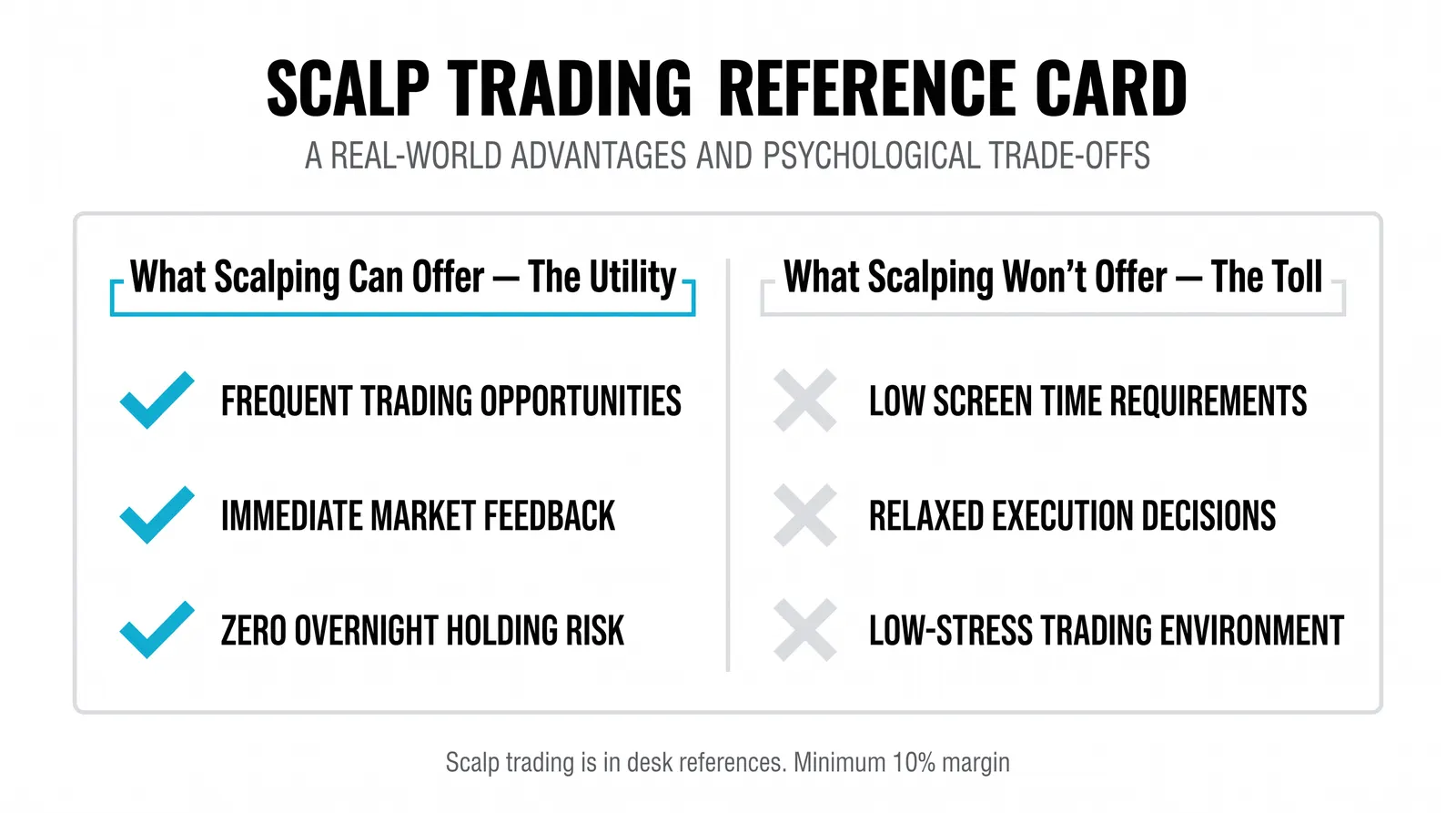
Scalping fits a narrow profile. Full attention for hours at a stretch. Fast hands and a fast connection. And a flat emotional response to losing, because at this speed you will take clusters of losses inside a single hour and you cannot afford to flinch, revenge-trade, or freeze.
It almost never fits a beginner. The feedback loop is too fast to learn from. A swing trader gets days to review a mistake. A scalper gets seconds, and the tuition for those seconds adds up quickly.
It never fits someone with a day job. Scalping is the day job. The opportunities cluster in specific windows, usually around session opens and high-volume periods, and you either are at the screen or you are not trading.
Be suspicious of anyone selling scalping as easy money for busy people. The style is the most demanding on time, attention, and cost structure of any approach in this course. That does not make it bad. It makes it a specialist's game.
Scalping vs Day Trading vs Swing Trading
| Scalping | Day Trading | Swing Trading | |
|---|---|---|---|
| Typical holding time | Seconds to minutes | Minutes to hours | Days to weeks |
| Decisions per day | 10 to 50+ | 1 to 10 | 0 to 2 |
| Screen time required | Continuous, full sessions | Several focused hours | Minutes to an hour daily |
| Sensitivity to costs | Extreme | Moderate | Low |
Read the last row twice. Everything else on the table is a preference. Cost sensitivity is a constraint, and it gets harsher as your holding time shrinks.
Questions About Scalping
Is scalping profitable?
It can be, for a small minority with cheap execution, deep focus, and a tested edge. For most retail traders it is not, because costs consume the small targets before skill enters the picture. The worked example above is the norm, not the exception. Treat any claim of easy scalping profits as marketing until proven otherwise.
How much capital does scalping need?
More than the marketing suggests. Because per-trade profits are tiny, meaningful returns require either large position size or high frequency, and both raise risk and cost. You also need enough capital to absorb the inevitable losing streaks without your position sizing collapsing. Underfunded scalpers get ground down by fees even when their read on the market is decent.
Which markets suit scalping?
The most liquid ones with the tightest spreads. Major currency pairs, large index futures, and the most heavily traded large-cap stocks are the usual choices, because a one-tick spread keeps the cost burden survivable. Thin, jumpy, wide-spread markets make the math from the earlier section even worse. If the spread is wide, scalping there is donating.
Can I scalp part-time?
Realistically, no. Scalping demands continuous attention during specific high-liquidity windows, and the cost structure punishes casual participation. If your available time is an hour here and there, a slower style fits your life far better. Part-time traders who want short holding periods are usually better served by selective day trading than by true scalping.
If scalping's pace appeals to you but the demands do not, the next style worth studying is day trading: same-day positions, real but manageable cost pressure, and room to think between decisions. That comparison is where most traders find their actual fit.