The Two-Way Auction: How Price Finds Value
A two-way auction is the simplest honest model of a market: sellers keep offering higher, buyers keep bidding lower, and the price you see is the last place the two sides agreed to trade. Nobody announces fair value. There is no committee, no opening statement, no closing verdict read aloud. Value is discovered the hard way, through repeated probes and refusals, and the chart is the record of that negotiation.

Think of a salary negotiation. The candidate opens high, the employer opens low, and the final number matters less than the overlapping range both sides could actually live with. Markets work the same way, except the negotiation never fully ends and both sides are anonymous crowds rather than two people in a room.
The previous lesson framed the market as an auction and asked who is buying, who is selling, and where they agree. This lesson stays out of that framing. What follows is the mechanics: how the probing actually works, what evidence a failed probe leaves behind, and how a range of agreed prices gets built one refusal at a time.
Sellers Test Higher, Buyers Test Lower
Every session runs the same loop. Sellers push price higher to find out how much buyers will pay. Buyers push price lower to find out how little sellers will accept. Neither side knows the answer in advance, so both sides experiment.
A probe that succeeds keeps going. A probe that fails gets refused, and the refusal is the information. When sellers push price up and buyers refuse, the evidence shows up in three places: long upper tails on the candles, volume dying as price stretches, and a fast retreat back into the range. The market reached up, found no takers, and came home.
The mirror image holds at the bottom. When buyers let price fall and sellers refuse to keep selling down there, you see long lower tails, volume drying up on the push down, and a quick recovery. Sellers tested the floor, found no business, and stopped offering.
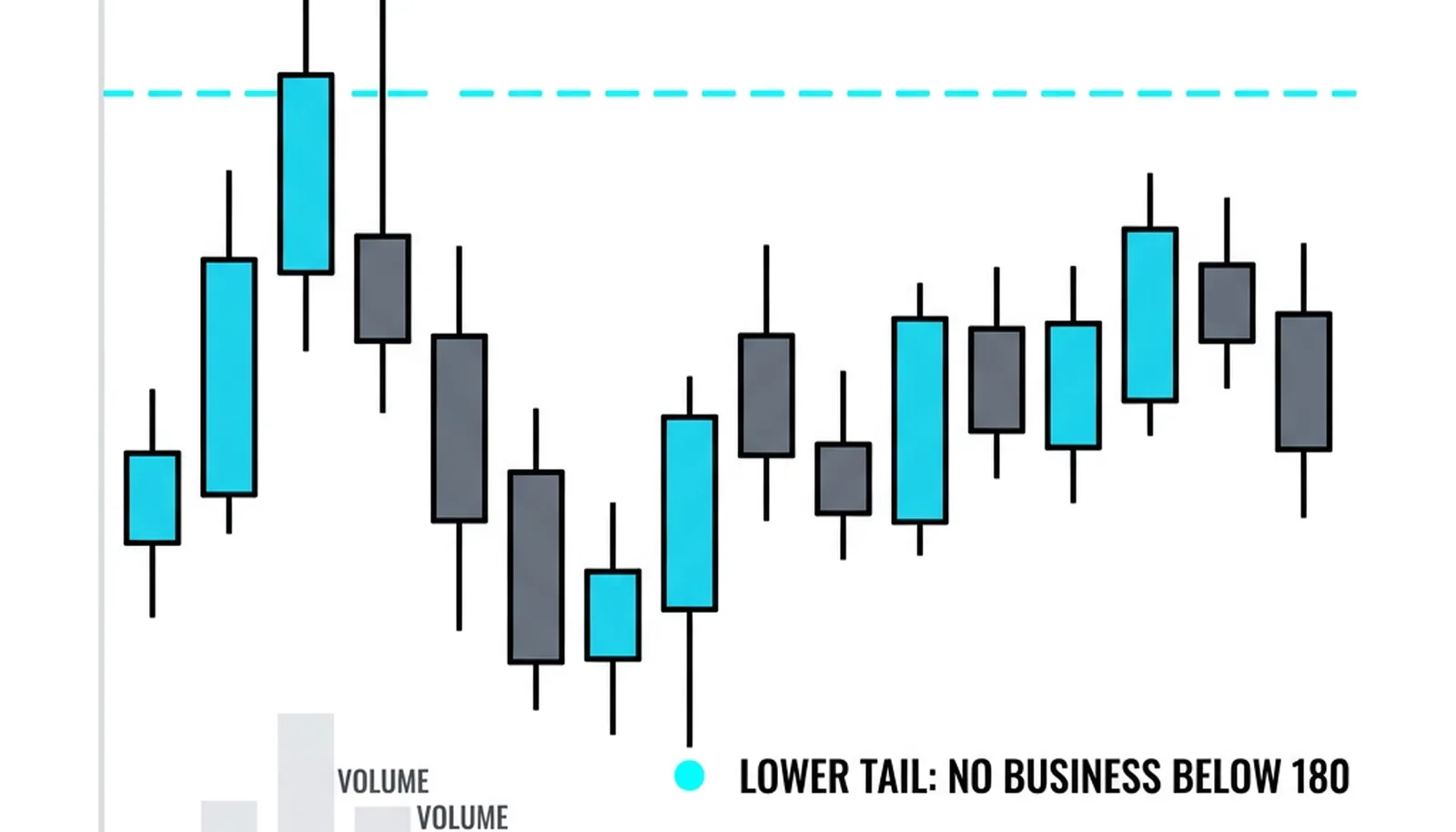
Each refusal narrows the negotiation. A rejected high tells you where buyers will not follow. A rejected low tells you where sellers will not chase. Probe by probe, the two sides bracket the territory where deals actually get done.
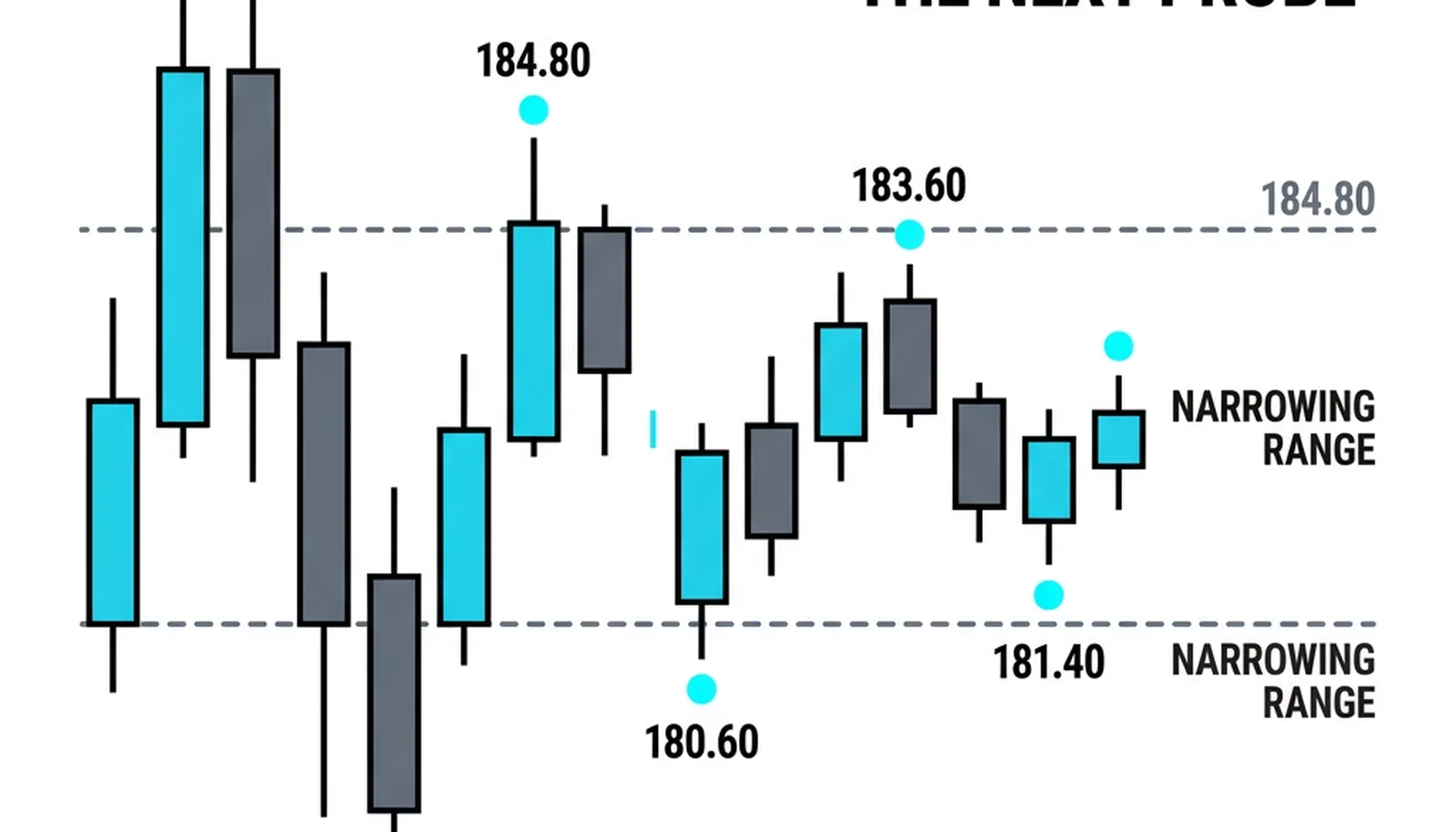
The classic accumulation and distribution framework described this behavior over a century ago as the composite operator testing supply and demand, and the vocabulary has changed less than the charts have.
Read the loop as a sequence, not a single bar:
- The probe: price pushes to a new level, often on a burst of activity.
- The test: does business continue there, or does participation fade?
- The verdict: acceptance means the range extends; refusal means a tail, dying volume, and a fast return.
- The narrowing: each verdict trims the space the next probe needs to explore.
Where the Business Gets Done
Volume is the receipt. Opinions are free, but a filled order costs money, so the prices where the most volume changes hands are the prices where both sides genuinely agreed to transact.
Business concentrates where both sides trade willingly for a simple reason. A buyer who thinks price is cheap and a seller who thinks price is fair can both act at the same level without regret. That overlap is rare. At the extremes, one side always feels cheated, so deals dry up fast.
This is why the middle of a session's range usually carries the heaviest volume while the edges carry the tails. The edges are where probes failed. The middle is where the negotiation succeeded. When you later learn to read a volume profile, that fat middle is the value area, and its busiest single price is the point of control. For now, the principle is enough: value is not calculated, it is accumulated, one agreed trade at a time.
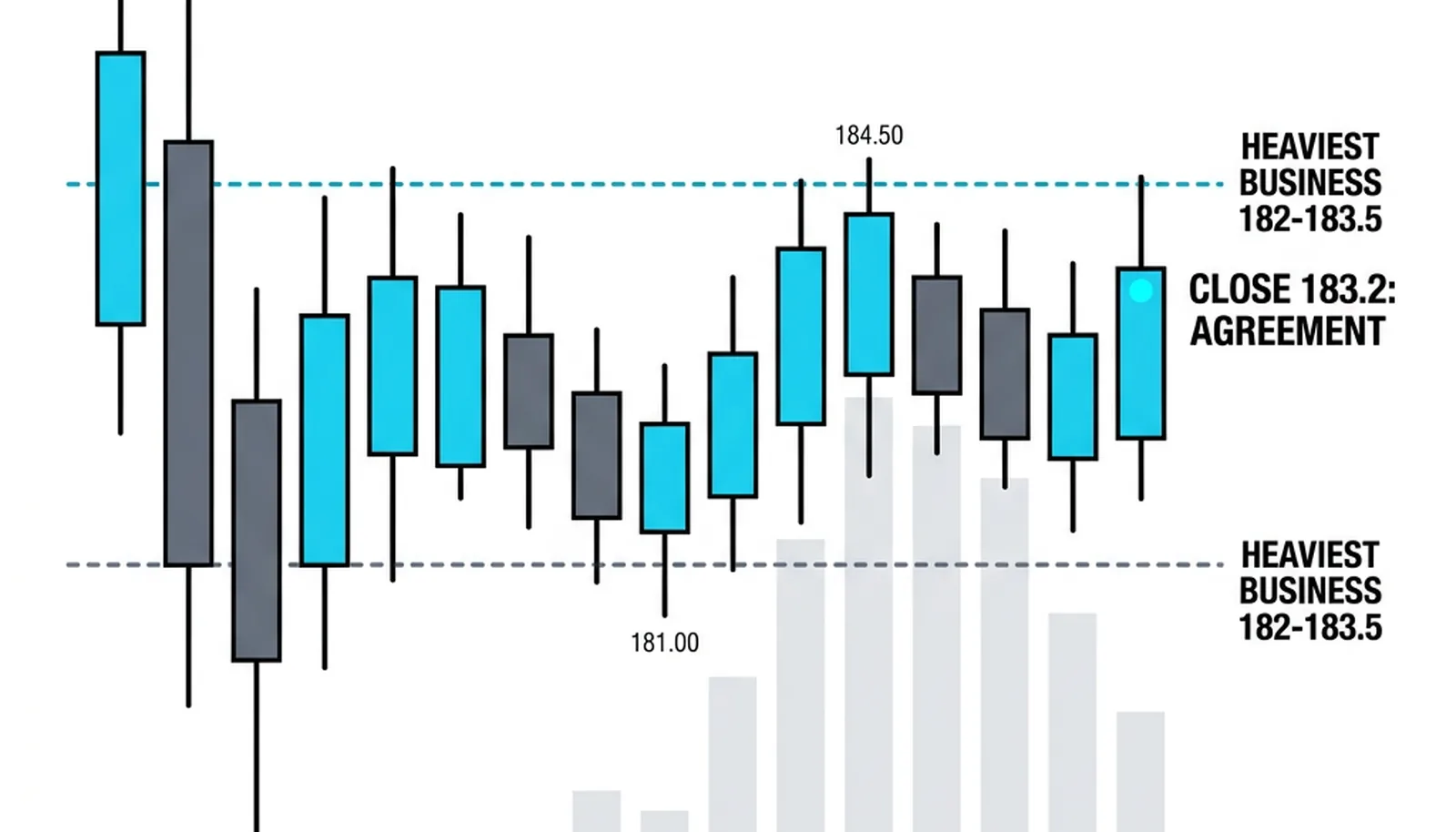
Markets do not vote on value. They transact it.
When One Side Quits
The auction does not always converge. When new information keeps arriving, the negotiation keeps moving, and a trending session is the auction failing to agree. Sellers probe higher and buyers keep accepting. Or buyers press lower and sellers keep accepting. No refusal means no bracket, and no bracket means no established value, only a moving dispute.
This makes agreement the exception worth marking, not the default. Most chart-reading mistakes come from assuming a range exists when the market is still arguing. A balanced session, where both sides refuse the extremes and pile into the middle, is a completed negotiation. A trend day is an unfinished one.
The second honesty beat is harder. All of this evidence is read after the fact. A probe looks exactly like a breakout while it is happening. The push to a new high with strong volume could be the start of a markup or the final test before rejection, and in real time the two are indistinguishable. Only what happens next, refusal or acceptance, tells you which one it was.
So trade the response, not the probe. The probe is a question. The refusal or the follow-through is the answer.
One Day of Price Discovery
Here is a hypothetical session, all numbers invented and round, showing the loop from open to close.
A stock opens at 182. Sellers test higher immediately, and price runs to 186.2 on expanding volume. Then buyers refuse. Volume dies at the top, price falls back fast, and the candle closes at 183.1 with a long upper tail. The probe asked whether business existed above 186. The answer was no.
Next, buyers let price slide. The dip reaches 179.4 on shrinking volume, sellers refuse to keep offering down there, and price recovers to 181.8. A long lower tail. The probe asked whether sellers would transact below 180. The answer was no.
For the rest of the session, price oscillates between 181 and 184.5. The heaviest volume of the day prints between 182 and 183.5. The close lands at 183.2, almost exactly where the day opened.
The read at each probe was identical in structure: watch the push, watch the participation, wait for the verdict. The tails proved that 186 and 179 were prices the two sides would not do business at. The volume pile between 182 and 183.5 proved where they would. The range from 181 to 184.5 is the zone the two sides actually agreed on, and the close sitting inside it confirms the negotiation ended in agreement, not argument.
| Zone | Who Acts | The Evidence | The Read |
|---|---|---|---|
| 184.5 to 186.2 | Sellers probe, buyers refuse | Long upper tail, dying volume, fast retreat | No business above; upper boundary set |
| 182 to 183.5 | Both sides trade willingly | Heaviest volume of the session | Agreed value; the heart of the range |
| 181 to 182 | Buyers defend, sellers accept | Repeated holds, steady participation | Lower edge of agreement |
| 179.4 to 181 | Buyers probe, sellers refuse | Long lower tail, volume dries up, quick recovery | No business below; lower boundary set |
The Two-Way Auction, Answered
What is a two-way auction in trading?
A two-way auction is the continuous negotiation where sellers offer progressively higher prices and buyers bid progressively lower ones until trades occur. Both sides actively test the other, and the prices where deals actually get done define value for that session.
How do markets discover fair price?
Markets discover fair price through repeated probes and refusals rather than any calculation or announcement. Price explores upward until buyers stop transacting and downward until sellers stop transacting, and the zone between those refusals, where volume accumulates, is the discovered value.
What is price rejection at a level?
Price rejection is a failed probe: the market tested a level, found no willing counterparties, and retreated. Its fingerprints are a long tail on the candle, volume fading during the push, and a fast move back into the prior range.
Why does volume concentrate at value?
Volume concentrates at value because that is where a buyer and a seller can both act without feeling cheated. At the extremes, one side always refuses, so few trades print; in the middle, both sides participate, so the receipts pile up.
Next, the auction gets a map: the value area and the point of control, where this discovery process leaves its clearest signature.