Trading Options
Options are contracts that give you the right, but not the obligation, to buy or sell an asset at a set price before a set date, and you pay a fee called the premium for that right. That single sentence contains the whole instrument. Everything else is detail about how the price of that right moves and who ends up paying whom.

Think of an option like a deposit that reserves the right to buy a house at today's price for the next three months, without any obligation to go through with the purchase. If the house price jumps, your reservation is suddenly valuable. If it doesn't, you walk away and lose only the deposit.
Options are not a first instrument. They sit on top of everything you have already learned about forex, stocks, indices, and commodities, and they add a layer of pricing that those markets simply do not have. Read this lesson as a map of the territory, not an invitation to trade it tomorrow.
The Vocabulary in Plain Language
Four words carry almost the entire subject. Learn them cold before anything else.
- Call: the right to buy the asset at the strike price. You buy a call when you expect the price to rise.
- Put: the right to sell the asset at the strike price. You buy a put when you expect the price to fall.
- Strike: the set price written into the contract. It never changes for the life of that option.
- Expiry: the deadline. After this date, the contract ceases to exist.
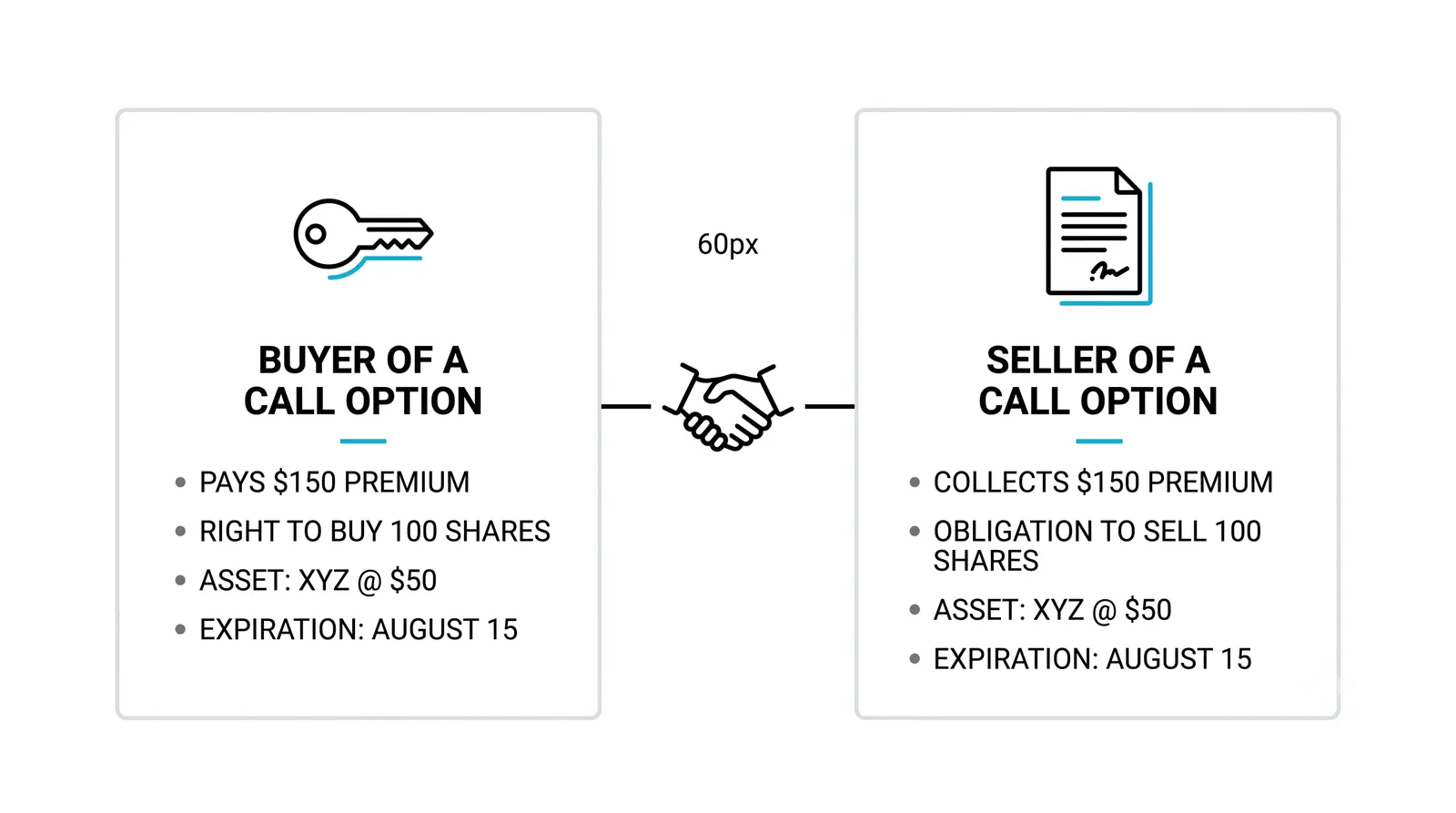
- Premium: what you pay to buy the option, or what you collect when you sell one.
Every option quote you will ever see is just these pieces arranged together: underlying asset, call or put, strike, expiry, premium. A "June 100 call at 3" is a complete description of a trade.
What You Are Really Trading
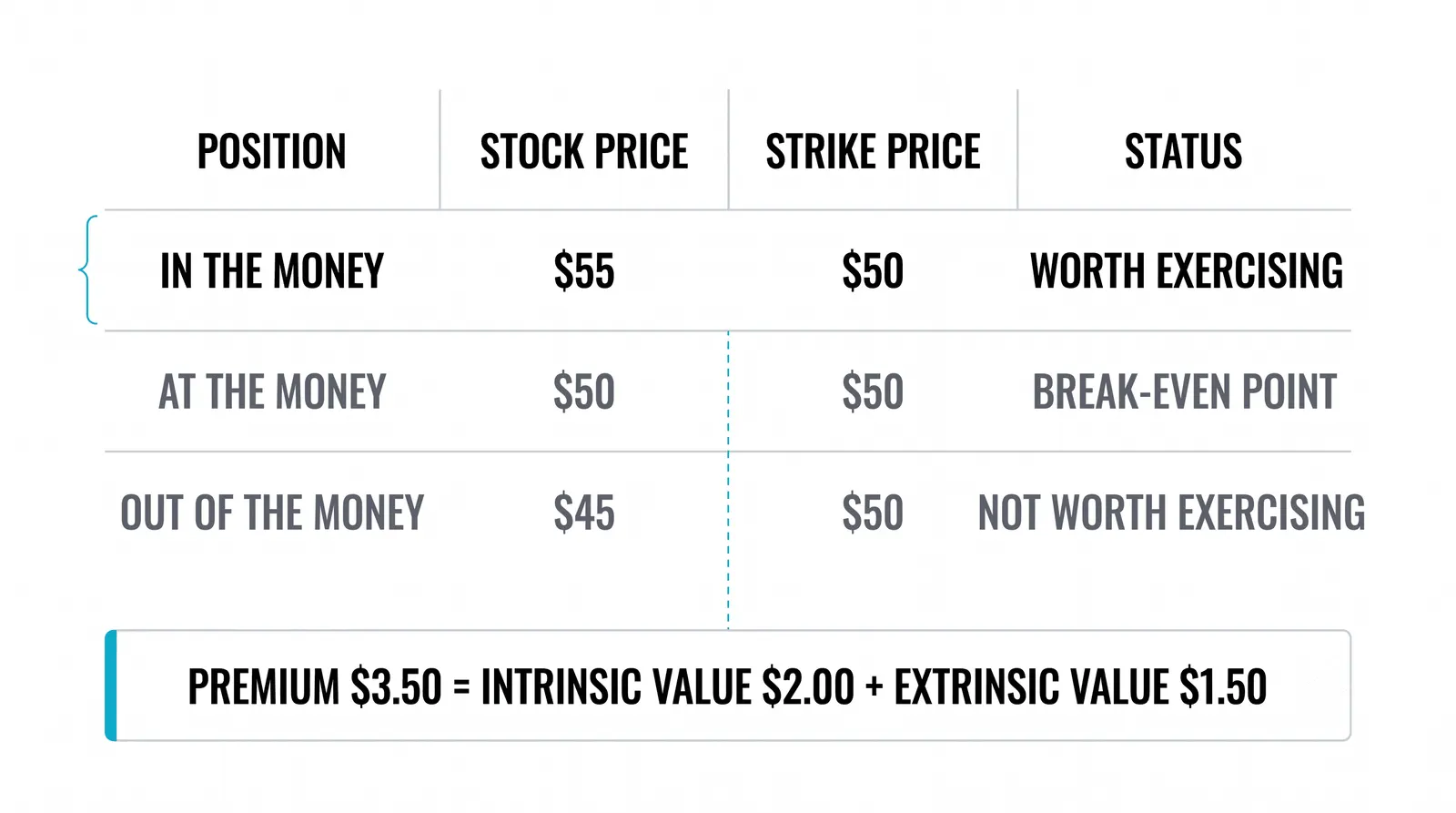
This surprises everyone the first time. When you trade an option, you are trading the premium itself, and the premium moves for three reasons, not one.
First, the underlying price. If the stock rises, calls get more expensive and puts get cheaper. This is the input everyone expects.
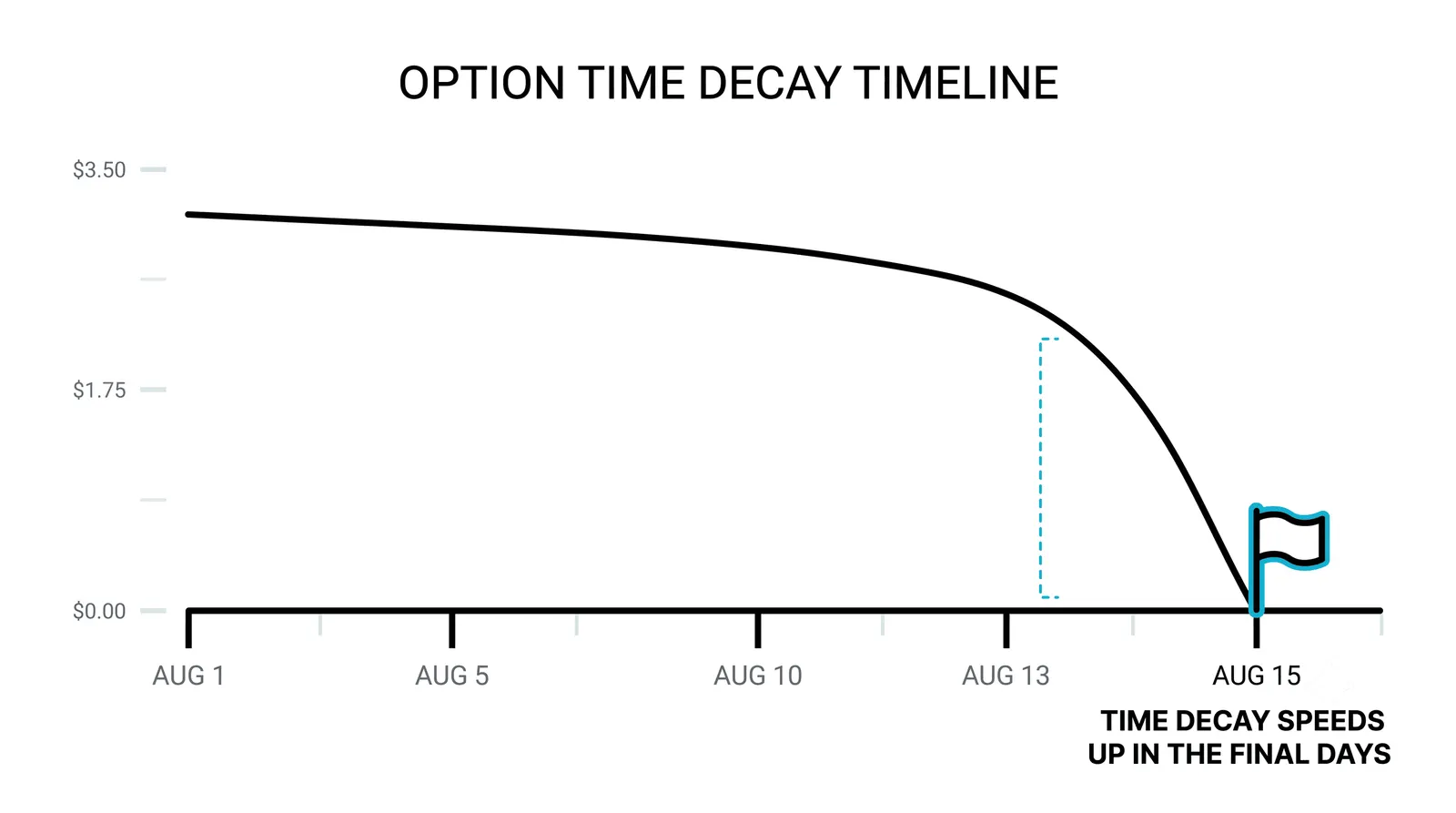
Second, time. Every day that passes, the option has less life left, and less life means less chance for something useful to happen. The premium bleeds a little each day, and the bleeding speeds up near expiry. Traders call this time decay.
Third, expected movement. If the market expects big swings, premiums rise, because a wild market makes any right more valuable. If the market goes quiet, premiums sag, even if the price has not moved at all.
Direction is only one of three inputs. You can be right about where the asset goes and still lose money because time ran out or because expected movement collapsed after the news came out. This is the single most common way new options traders lose, and almost nobody warns them about it beforehand.
The Two Basic Plays
Strip away the complexity and there are only two positions: you buy an option, or you sell one.
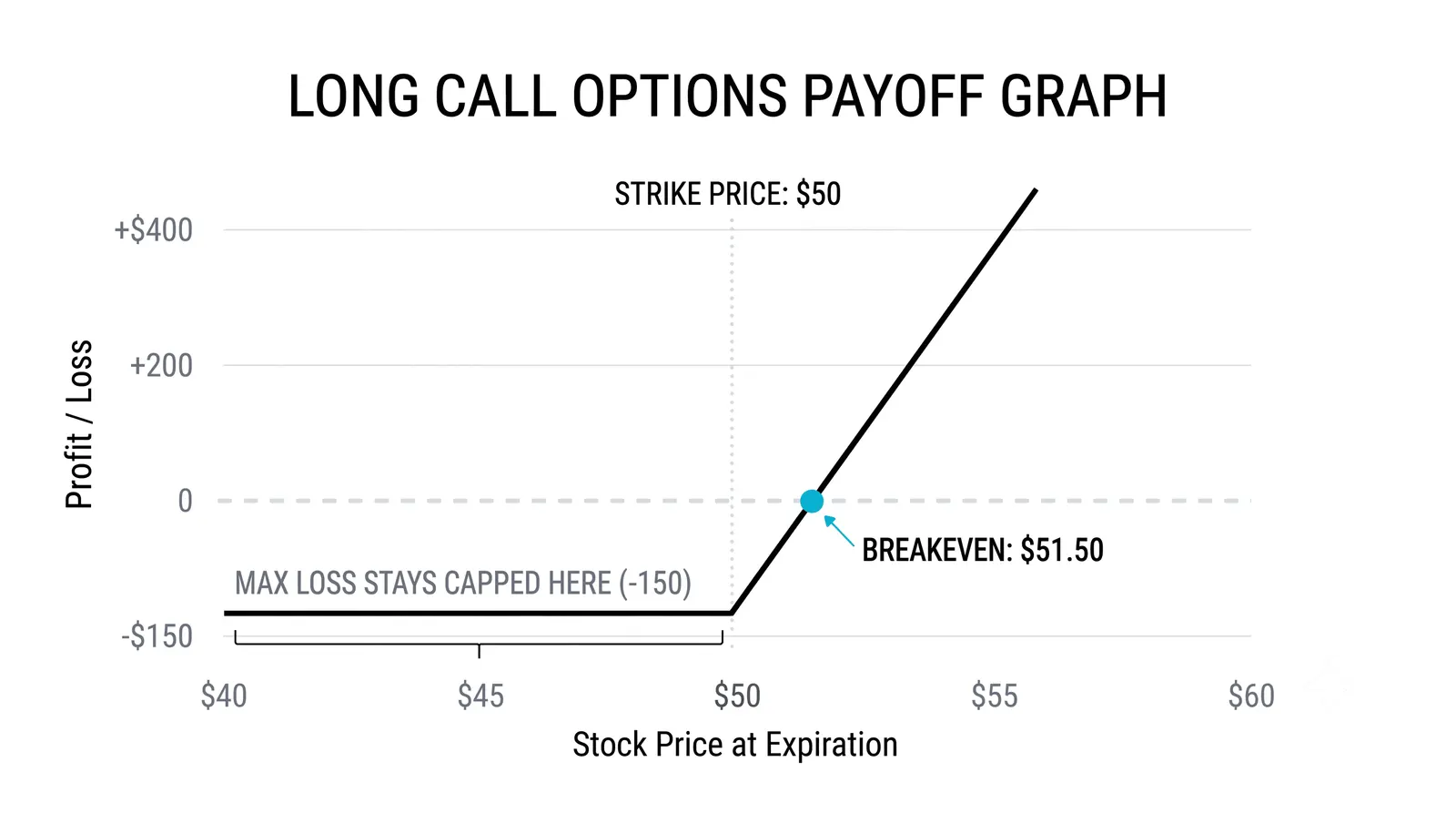
Buying an option. Your risk is limited to the premium you paid. That is the appeal, and it is real. But the trade needs direction and timing together. The clock drains value daily, so a slow grind in your favor can still lose money. Buyers win less often than they expect, and when they win, the percentage gains can be large.
Selling an option. You collect the premium up front and take on the obligation. If you sell a call and the price rockets past the strike, you must deliver at the strike, and your loss can be many times the premium you collected. Selling is a trade of small frequent wins and rare large losses. It feels wonderful right up until it doesn't.
Neither side is smarter. They are opposite temperaments: the buyer pays for possibility, the seller rents out possibility and hopes nothing happens.
Why Options Attract Traders
The appeal is genuine, and it comes in three parts.
Defined maximum risk for buyers. You know the worst case on entry: the premium. No gap through a stop, no surprise. For traders who have been stung by slippage in fast markets, that certainty is worth paying for.
Flexibility. Because calls and puts can be bought or sold and combined, you can build positions for rising markets, falling markets, or markets you expect to sit still. No cash instrument lets you profit directly from nothing happening.
Capital efficiency. Controlling exposure to 100 shares through an option costs a fraction of buying the shares. That cuts both ways, of course. Smaller outlay also means the percentage swings on your money are violent.
Why Options Punish the Unprepared
Now the other side of the ledger, and it is a long side.
They expire. Every other instrument in this course lets you wait. An option does not. Time works against the buyer every single day, including weekends and holidays. You are not just forecasting a move; you are forecasting its schedule.
Pricing depends on expected volatility, not just direction. Buy a call before a big announcement, watch the stock jump, and you can still lose money if the market had already priced in an even bigger jump. Being right is not enough. You have to be more right than the premium already assumes.
And the learning curve is the steepest of anything in this course. Stocks ask you one question: up or down. Options ask four: which direction, how far, by when, and how much movement is already priced in. Most people who blow up in options were competent stock traders who underestimated that jump.
A Worked Example
Hypothetical numbers, kept round for clarity. A stock trades at 100. A call option with a 105 strike, expiring in one month, costs 2.
Scenario one: the stock rallies to 110 within a week. Your call is now worth at least 5, because it gives you the right to buy at 105 something trading at 110. You paid 2, so you have gained 150 percent on the premium while the stock itself gained 10 percent. This is the magnification that draws people in.
Scenario two: the stock does nothing for three weeks, then rallies to 110 in the final days. Same destination, same size of move. But your option may expire worthless or nearly so, because the rally arrived after the clock had eaten the premium. Direction was right both times. The outcomes were opposite.
Timing is a cost in options. The example carries the lesson by itself.
Buying Calls, Buying Puts, Selling
| Buying a call | Buying a put | Selling an option | |
|---|---|---|---|
| What you pay or collect | Pay the premium | Pay the premium | Collect the premium |
| Maximum loss | The premium paid | The premium paid | Large, potentially many times the premium |
| What must happen to win | Price rises above the strike, fast enough to beat time decay | Price falls below the strike, fast enough to beat time decay | Price stays on the safe side of the strike until expiry |
Notice the asymmetry in the last row. Buyers need something to happen. Sellers need nothing to happen. Both can lose, but they lose in opposite ways.
Who Options Actually Fit
Options fit traders who have already mastered a cash market and want defined-risk structures on top of it. If you can read a chart, manage a position, and control your sizing in stocks or forex, options give you new shapes for views you already know how to form.
They do not fit beginners, and they do not fit anyone hoping the leverage-like magnification will substitute for an edge. It will not. It will magnify the absence of one just as efficiently.
If you are still building consistency in a cash market, stay there. Options will wait. The premiums will still be mispriced, or not, when you are ready to judge them.
Questions About Options
Are options good for beginners?
No. Options add time decay and volatility pricing on top of directional judgment, which makes them the hardest instrument in this course to trade well. Build a track record in a cash market first, then consider options as a defined-risk tool.
How much capital do options need?
Buying single options can start with a few hundred in account currency, since the premium is the full cost of the position. Selling options requires far more, because the broker must cover the large potential obligation, and many accounts will not permit it at all without approval and margin.
Can an option expire worthless?
Yes, and most out-of-the-money options do exactly that. If the price never reaches a level where your right has value, the contract expires and the premium is gone entirely. That total loss is the buyer's defined risk, and it happens often.
Why did my option lose value when the stock did nothing?
Because time passed and the market's expected movement may have fallen, and both of those drain the premium regardless of price. An option is a wasting asset. A flat stock is not a neutral event for an option buyer; it is a slow daily loss.
Your next step is not a trade. It is watching a live options chain for a few weeks alongside the underlying chart, tracking how premiums respond to moves, to quiet days, and to the approach of expiry. That observation habit, built now, is what separates the traders who use options deliberately from the ones who donate premiums to those who do.